Italian academics condemn US-Israeli attacks on Iran’s scientific, research centers
TEHRAN – Chancellors of two Italian universities have censured the brutal attacks conducted by the US and the Israeli regime on Iranian universities, as well as research and educational centers.
The rector of the University of Milan, Marina Brambilla, and the chancellor of Unimore University (University of Modena and Reggio Emilia), Maria Chiara Rioli, have expressed their deep solidarity with Iranian academics and students.
Brambilla confirmed that the university is well aware of the consequences of armed conflicts for education and research systems, stating that the University of Milan condemns all forms of war and violence without exception, as they run counter to the principles of civil coexistence.
She highlighted that the main responsibilities of universities are to promote peace and talks, and that their top priority should be supporting students, safeguarding their lives, and ensuring students’ rights to express their ideas and engage in participation under safe conditions, ISNA reported.
Rioli, the chancellor of Unimore University, condemned US-Israel assaults, highlighting the importance of preserving the right of security for academics, and expressing support for Iranian scholars and students.
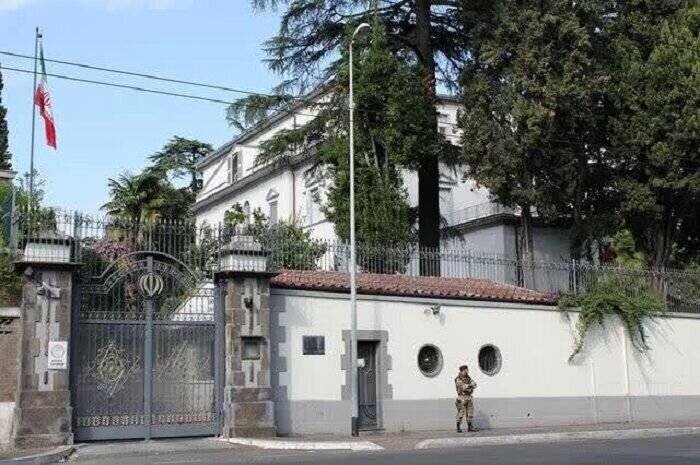
The Italian academics made the remarks in response to an official letter sent by Iranian Ambassador to Rome, Mohammad-Reza Sabouri.
The letter by Sabouri elaborated on the irreparable and destructive consequences of military strikes on educational centers, which led to the martyrdom of a group of professors, students, and researchers.
Highlighting the effective and constructive role of the two countries’ universities in fostering scientific collaborations, and the Iranian students majoring in Italy, the official called on them to adopt a clear stance against attacks targeting Iranian universities.
Over 30 Iranian universities had been directly attacked by the United States and Israel since the war began in late February, according to Minister of Science, Research and Technology Hossein Simaei-Sarraf.
Five university professors and more than 60 students had been killed in the strikes, added Simaei-Sarraf, describing attacks on Iranian infrastructure as “crimes against humanity.”
“The main reason the enemy targeted this sensitive infrastructure was that they did not want us to gain access to this technology,” he said, adding that many Iranians abroad have contacted the university, offering to help fund its restoration.
On April 7, Iran’s ambassador to the United Nations accused the United States and Israel of committing “unprecedented barbarism” by deliberately targeting Iranian universities and scientific institutions, calling the strikes war crimes that no amount of threats or military pressure can extinguish.
In a series of letters to the UN Secretary-general and the Security Council this week, Ambassador Amir Saeid Iravani detailed a systematic campaign of state terrorism.
He cited an airstrike early on April 6 that severely damaged Sharif University of Technology in Tehran, including its faculties of civil engineering and electrical engineering, as well as research institutes for nanotechnology and environmental studies. That attack followed a similar strike on April 3 that hit Shahid Beheshti University, damaging its Laser and Plasma Research Institute.
“The intentional targeting of scientific institutions and universities constitutes a clear violation of international humanitarian law and amounts to a war crime,” Iravani wrote.
The Iranian government’s spokesperson, Fatemeh Mohajerani, speaking at a news conference at Shahid Beheshti University, echoed that defiance.
“The enemies cannot extinguish the lamp of Iranian science,” the spokeswoman said, adding that recent attacks were meant to undermine the achievements of the 47-year-old revolution and sever the bond between the nation and its homeland.
“These miscalculations are wrong. Iran is the common denominator of all Iranians. Those who have a homeland will stand behind their country, and Iranians living abroad will never give in.”
Scientific, educational MOU
In 2025, Shahid Beheshti University and the University of Salento, Italy, signed a memorandum of understanding to foster scientific, research, and educational ties.
During a meeting held in Tehran, Mahmoud-Reza Aqamiri, the chancellor of Shahid Beheshti University, and Fabio Pollice, the chancellor of the University of Salento, explored avenues for expanding scientific ties. They also became familiar with the capacities of the two universities, the ministry of science, research, and technology reported.
Based on the signed MOU, the two universities would cooperate in several areas, such as promoting educational, research, and cultural progress through holding joint educational courses for undergraduate and post-graduate students in selected fields, as well as providing sabbatical leaves for faculty members and Ph.D. students.
It also included conducting research projects, holding workshops and seminars collaboratively, sharing academic data, publishing joint articles, exchanging post-graduate students, as well as organizing faculty members’ meetings.
Also, Allameh Tabatabai University of Tehran and the University of Salento, Italy, signed an MOU to enhance scientific collaborations in social and human sciences.
During the meeting held in Tehran, Shoja Ahmadvand, the chancellor of Tabatabaei University, and Pollice discussed ways to expand scientific cooperation, Mehr news agency reported.
Teaching Persian and Italian languages, holding short-term courses, exchanging students and professors, launching an archaeology major and a Persian-Italian journal, conducting Erasmus+ projects in emerging fields such as artificial intelligence, and donating books to the libraries of the two universities were among the points proposed by Ahmadvand, which was well-received by the Italian side.
For his part, Pollice suggested holding virtual Persian and Italian language courses, organizing online meetings among faculty members of the two universities and the two peer scientific groups to help them become more familiar with the existing capacities, fostering interactions between professors of the two universities, and exchanging professors and students for short-term courses with the aim of paving the way for long-term exchanges.
MT/MG
Photo: The Iranian embassy in Rome
Leave a Comment