The South Lebanon death marsh, where Israeli ambitions wither
Strike-back doctrine and asymmetric warfare turn Israeli occupation into a losing gamble
TEHRAN — The landscape of the confrontation between Hezbollah and Israel has undergone a seismic shift, marking the definitive end of an era. While the fragile ceasefire was initially framed as de-escalation, the reality on the ground has revealed a systematic campaign of Israeli violations that has forced the Resistance’s transition into a new, more lethal doctrine.
Hezbollah has officially abandoned its policy of silence toward these breaches, a stance that previously deferred responsibility to the Lebanese government. Today, the Resistance enforces a strike-back equation where Israeli infractions trigger precise kinetic responses against the point of origin.
Reciprocity in fire
The past few days have provided a lucid illustration of this new reality. On April 27, the deadliest day since the truce nominally began, Israeli airstrikes and artillery fire killed at least 14 people across southern Lebanon. The victims, including women and children, were targeted in towns such as Bint Jbeil, Kfar Tibnit, and Taybeh, where Israel continues its pattern of domicide.
This deliberate destruction of civilian infrastructure, including mosques and bridges, has been met with a level of retaliation that has stunned the Israeli military command.
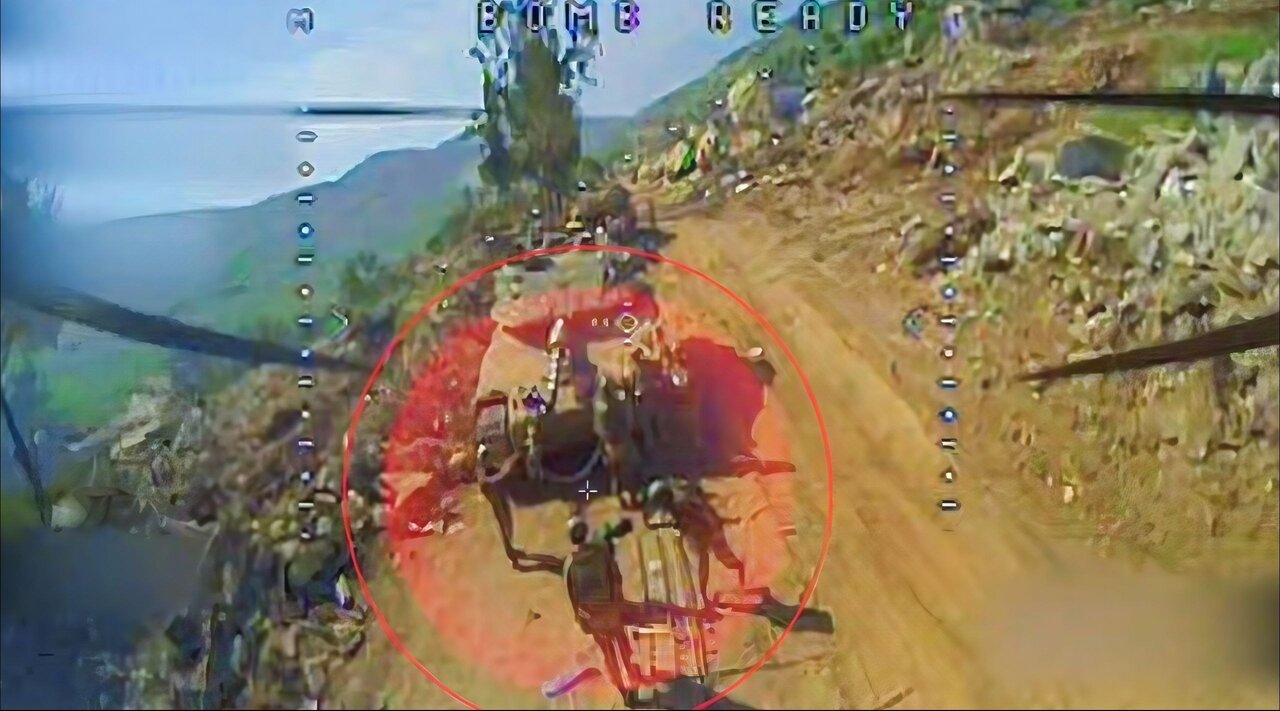
Hezbollah’s response has been swift. In direct retaliation for the Bint Jbeil massacre, the Resistance deployed swarm drones and anti-tank missiles to incinerate an Israeli tank and a D9 bulldozer involved in home demolitions. Similar operations in Bayyada and Taybeh targeted artillery positions and troop concentrations, utilizing advanced fiber-optic FPV drones that rendered Israeli electronic jamming efforts useless.
The trap of the death marsh
Battlefield analysis reveals that the equation has shifted fundamentally in favor of the Resistance.
Hezbollah’s field command has transformed the geography of the South into a death marsh for Israeli forces. By simultaneously striking the enemy’s vanguard and its support echelons, the Resistance has induced a state of tactical blindness within the Israeli army.
The integration of 21st-century precision weaponry with the high-intensity, martyrdom-seeking spirit of the 1980s has made the maneuvering of Israeli columns a logistical nightmare.
This operational paralysis has shattered the “victory” narrative that Benjamin Netanyahu continues to market to his domestic audience, especially ahead of the upcoming elections. The deterrence equations have been recalibrated with geometric precision: the “Yellow Zone” for the “Yellow Zone,” the northern occupied territories for areas north of the Litani, and Haifa and Tel Aviv for Dahiyeh.
When Israel attempts to terrorize Beirut, the Resistance ensures the sirens wail in the center of the regime’s territories, proving that no settlement in the north is safe so long as southern Lebanon is under fire.
Sovereign mandates
In an address delivered on April 27, Hezbollah Secretary-General Sheikh Naim Qassem articulated a political framework forged in the heat of battle.
He categorically rejected direct negotiations with Israel, labeling them a “pointless” exercise and a “grave sin” designed to pressure the Resistance into disarmament. Qassem made it clear that the “Field” is the only legitimate representative of Lebanese interests, and its mandates are non-negotiable.
Hezbollah’s five conditions for any lasting arrangement are absolute: a total end to Israeli aggression by land, sea, and air; the unconditional withdrawal of every Israeli soldier from all occupied Lebanese territory; the release of all detainees; the dignified return of displaced residents to their towns; and a comprehensive reconstruction program funded by the aggressors.
The Resistance will not accept a return to the pre-March 2 status quo, nor will it allow the U.S. to use negotiations as a back door for possible treacherous “normalization” with Tel Aviv.
Political scavengers and the agony of the South
Despite the battlefield superiority of the Resistance, a parallel conflict is being waged within the Lebanese political arena.
The government of President Joseph Aoun and the so-called U.S. mediators are being accused of acting as political scavengers, attempting to steal credit for a new equation that was achieved solely through the sacrifices of the Lebanese people, the Resistance, and its ally Iran.
These efforts to present a truce as a state achievement are viewed as a betrayal by the communities of the South, who have endured systematic destruction while the central government flirted with normalization.
Furthermore, many in the Lebanese political scene and Western-aligned media have largely disregarded the agony of the South. While daily shelling and the razing of ancestral homes have left over 2,500 dead and 7,000 injured since March, these actors remain preoccupied with the theatrics of U.S. diplomacy and their own power. This obscures the role of Israel and the U.S. as primary aggressors.
At the Tehran Times, we are deeply shaken yet further emboldened by the injury of our columnist Sondoss al-Asaad. Wounded this month in Israel’s indiscriminate airstrikes on civilian neighborhoods, her ordeal highlights the daily risks endured by civilians living next to a rabid occupying power that threatens their land and safety.
However, the events have failed to dampen the spirit of the people, who recognize that their alliance with Iran and the “Unity of the Arenas” have been effective barriers against total Israeli annexation.
Tehran’s strategy of linking the Lebanese front to the broader regional negotiations has effectively hampered Tel Aviv’s freedom of action.
The reality is simple: the Resistance has redefined the terms of the war, and the future of Lebanon will be written by the fighters who have turned the border into a graveyard for Israeli ambitions.
Leave a Comment