Why should Lebanon’s president avoid meeting Netanyahu?
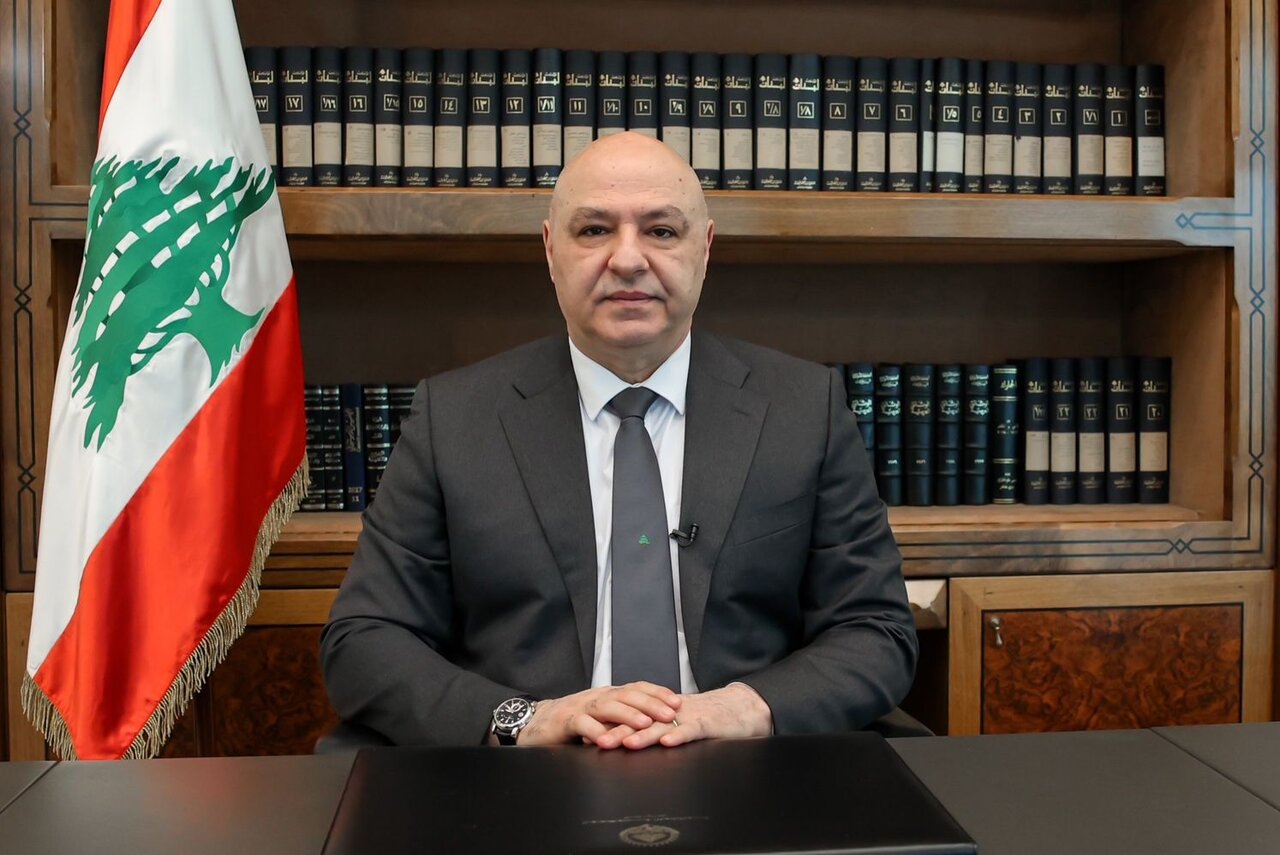
TEHRAN – Lebanese President Joseph Aoun has said it is “not appropriate” to meet Israeli regime Prime Minister Benjamin Netanyahu at this time, amid mounting pressure from Washington to hold direct talks.
President Aoun’s remarks are justified as the Zionist regime continues occupying Lebanese territory, demolishing villages, and killing civilians.
In the latest bid to pressure the Lebanese President, a statement from the U.S. embassy in Beirut has encouraged Aoun to accept an invitation from U.S. President Donald Trump to meet Netanyahu at the White House this month.
But should President Aoun meet Netanyahu at all? The cost of the image that Trump is seeking, a three-way photo with Netanyahu, and the losses it would entail far outweigh any imagined benefit. This cost exceeds what both the President of the Republic and the Lebanese state can bear politically and nationally.
The issue is not about trying to avoid angering Trump, as some in Lebanon suggest. Rather, it fundamentally concerns the role, position, and meaning of the Lebanese presidency as an institution that represents all Lebanese.
The risks of such a photo opportunity that Trump and Netanyahu seek can be summarized as follows:
First: The issue carries serious internal implications. Netanyahu appears daily, openly boasting about the assassination of Hezbollah Secretary-General Sayyed Hassan Nasrallah and the killing of thousands of Lebanese, and even takes pride in the terrorist “pager” operation.
He went so far as to present President Trump with a “golden pager” in a clearly symbolic display.
For a large segment of Lebanese society, Netanyahu is seen as an enemy leader who arrogantly boasts about killing Lebanese from different sects. A photo of the Lebanese president standing beside him would be interpreted domestically as a painful symbolic blow to a broad portion of the population, deepening divisions rather than contributing to stability.
Meanwhile, Netanyahu operates from a position of political arrogance and assumes that Lebanon is in a position of need and that the balance of power favors him. He would go to the White House not to offer concessions, but to extract commitments related to disarming Hezbollah, incite divisions among the Lebanese, and potentially provoke civil conflict.
This is reflected in Netanyahu’s long delay in responding to Aoun’s last initiative to end the Israeli aggression in Lebanon. When he eventually agreed, the regime symbolically gained from a direct meeting and quickly announced an alleged “agreement” with the Lebanese government against Hezbollah, without offering Lebanon any political or security concessions or a genuine ceasefire.
Second: The invitation comes at a time when Netanyahu faces serious accusations before the International Criminal Court (ICC) for war crimes and crimes against humanity, and when the International Court of Justice (ICJ) has found “reasonable grounds” to believe that the Zionist regime has committed acts that amount to genocide in Gaza.
UN rights agencies and human rights organizations have stated that the threshold for an Israeli genocide in the Gaza Strip has already been met.
This reality makes any photo with him a political and moral liability in itself, regardless of the substance of the discussion. Publicly sitting with someone accused of such actions would be interpreted as symbolic normalization with a figure under international legal scrutiny.
Notably, even countries allied with the Zionist regime, maintaining close political, security, and economic ties, have explicitly stated their willingness to comply with international arrest warrants should Netanyahu visit their territory. This indicates that avoiding meeting him has become a diplomatic option even within the regime’s own allied camp.
Third: The clearest indication of the political cost of such imagery appeared during the Sharm el-Sheikh summit aimed at ending the genocidal war in Gaza. When President Trump asked Egyptian President Abdel Fattah el-Sisi to invite Netanyahu, several participating leaders threatened to withdraw if he attended, including Turkish President Recep Tayyip Erdogan and a number of Arab leaders.
This demonstrates that the issue with Netanyahu is not the substance of negotiations, but the symbolism of appearing publicly alongside him and the moral and political cost of that image.
Fourth: Netanyahu is increasingly described in global discourse as one of the most widely rejected and disliked leaders in world public opinion, perhaps the most polarizing at this stage. This characterization is not ideological rhetoric but is based on a growing body of credible polling, particularly in Europe and North America, showing an unprecedented collapse in his personal image, even within societies that have traditionally supported the Israeli regime.
This shift in public opinion is a direct result of the scale of the humanitarian catastrophe in Gaza, the regime’s war crimes in Palestine, Lebanon, Syria, and the war with Iran, as well as Netanyahu’s own escalatory rhetoric, which has contributed to the Zionist regime’s growing political and moral isolation.
In light of the above, and based on a cold, rational analysis that carefully weighs costs against benefits, a White House meeting would be high in cost and low in value for both the Lebanese president and Lebanon.
It would be a meeting for the sake of optics alone: an image Netanyahu needs to rehabilitate himself internationally, and one Trump seeks as a personal achievement. Lebanon, however, would gain no guarantees, no agreements, and no tangible benefits, while bearing the full symbolic and political cost.
Leave a Comment