Dozens of IOF casualties as Lebanon ceasefire extended
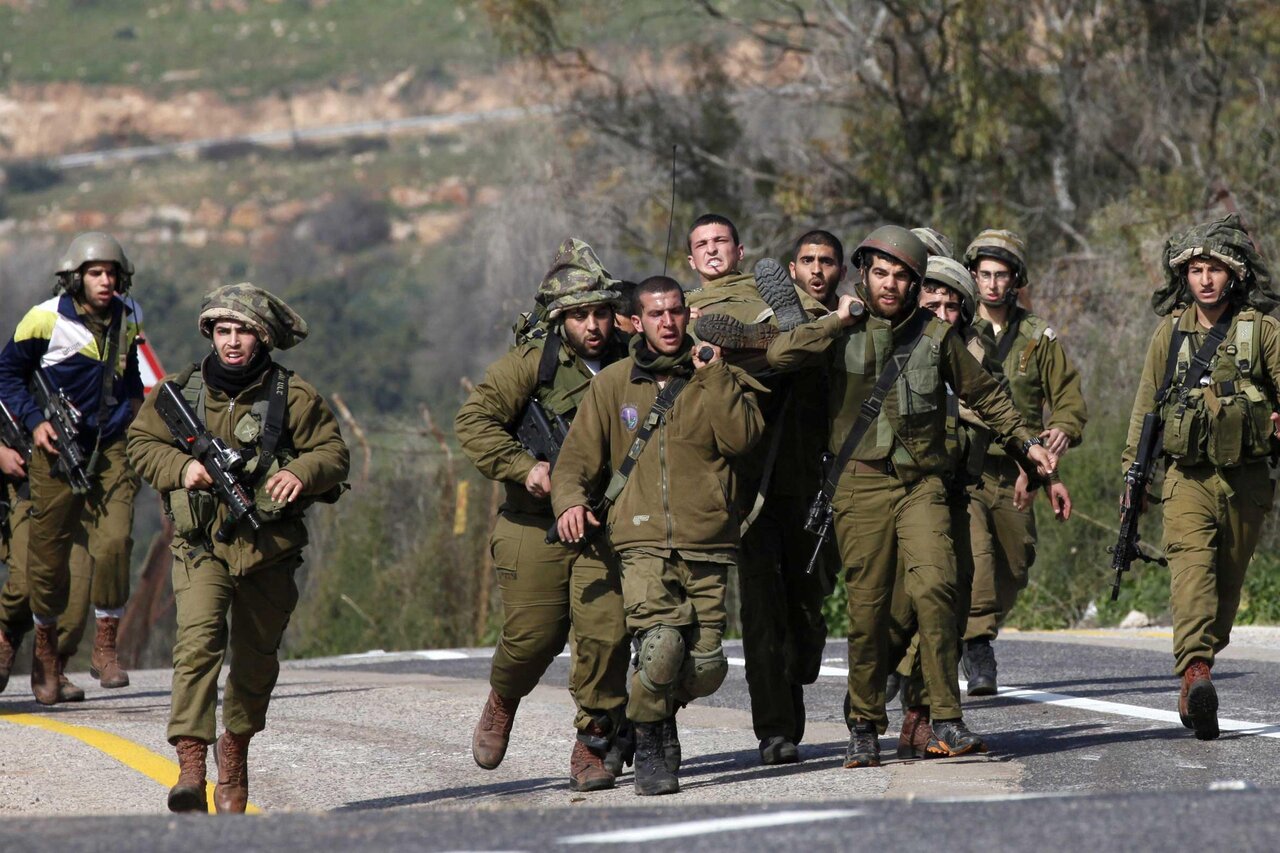
TEHRAN – The Zionist regime admits major casualties in southern Lebanon after Hezbollah launches more retaliatory attacks over the regime’s ceasefire violations.
Israeli Occupation Forces (IOF) admit 45 of its soldiers were injured in southern Lebanon in the past 48 hours alone. The IOF further acknowledged that since its illegal ground invasion began on March 2, the total number of wounded soldiers has risen to 735, including 44 in critical condition and 100 moderately wounded. Strict IOF censorship prevents independent verification, and the number of serious injuries is likely higher.
The regime’s media outlets reported that while the IOF is aware of multiple Hezbollah operations carried out over the past several days, it has chosen not to publicly disclose them, another sign of the Zionist regime’s censorship policy.
Hezbollah’s military media wing quoted the deputy director of Rambam Hospital in Haifa as saying, “We have many wounded here suffering from limb injuries due to the fierce battles in Lebanon. This truly reminds me of the days of the First and Second Lebanon Wars.”
The ceasefire agreement between Lebanon and the Zionist regime has been extended by three more weeks. According to Hebrew media, the extension has angered settler leaders in northern Israel, who fear their settlements could become a second “Gaza Envelope.”
On Friday, Hezbollah announced its fighters shot down a Zionist regime’s Hermes 450 (Zik) drone over the Tyre – Al Housh area using a surface-to-air missile, in response to the violations of Lebanese airspace. Separately, Hezbollah fighters targeted a gathering of IOF soldiers in Qantara with a raid, achieving a confirmed hit. That operation came in response to the regime’s attacks on civilians in the town of Tallin.
Hezbollah Secretary-General Sheikh Naim Qassem stressed that a ceasefire means a complete halt to all hostile actions. He added that the resistance does not trust the Zionist regime and remains ready to respond to any violations.
Earlier, Hezbollah issued six statements.
First: “In response to the attack on civilians in At-Tiri town,” fighters targeted an IOF gathering in Taybeh town with appropriate weapons.
Second: “In response to the attack on civilians in At-Tiri town,” fighters targeted an IOF gathering in Taybeh with a loitering glider.
Third: “In response to the regime’s violation of Lebanese airspace,” fighters shot down an IOF reconnaissance drone in Majdal Zoun town.
Fourth: “In response to the regime’s targeting of the outskirts of Kounin town with artillery shells,” fighters targeted an IOF gathering of soldiers and vehicles near Jamil Bazzi School in Bint Jbeil with artillery shells.
Fifth: “In response to the demolition of homes in the villages of southern Lebanon,” fighters blew up an IOF bulldozer while it was demolishing homes in Rshaf town.
Sixth: “In response to the targeting of Yater town in southern Lebanon,” fighters targeted the Shtula settlement with a rocket barrage.
Suleiman Frangieh, head of Lebanon’s Marada Movement and a member of the Maronite Church (the largest Christian body in Lebanon), said Hezbollah’s resistance stems from occupation, and current developments in Southern Lebanon give it full legitimacy to continue.
Addressing Hezbollah’s resistance fighters, he said: “As a Maronite Christian Lebanese, I stand with you, and if history is fair, it will record your sacrifices and that you are defending the future of our children and this country. We must benefit from the achievements being made in the south.”
He emphasized that Hezbollah has proven its ability to stand firm, highlighting that the IOF was unable to enter southern Lebanese towns such as Bint Jbeil and Khiam, and that this has changed the rules of engagement.
Frangieh stressed that the United States acts pragmatically according to its interests, citing Vietnam, Afghanistan, and Syria as examples, where it abandoned allies when priorities changed, warning against relying on its guarantees.
He criticized Lebanon’s official reliance on Washington, calling it the Zionist regime’s main ally, and said: “We turn to a mediator we know prioritizes the other side,” emphasizing that the U.S. always acts in its own interest.
Frangieh said U.S. President Donald Trump is clear in his support for the Israeli regime and has fueled conflict in the region for the sake of Netanyahu. He questioned the logic of relying on the Zionist regime’s primary ally as a neutral mediator, asking why Lebanon is rushing into direct negotiations when indirect talks could continue.
He added that Washington’s pattern is to eventually abandon others, saying: “Do not ask if the Americans sell us out, but when they will do it.”
The Zionist regime’s direct talks with Lebanon were further criticized by Frangieh, who said no one rejects peace in principle, but asked: “What kind of peace?” He warned that direct negotiations, pushed without national consensus, are a major risk that could lead to disaster, internal conflict, or long-term war with the Israeli regime.
He blamed the Lebanese state for failing to hold meaningful national dialogue, arguing that one cannot be both sovereign and aligned with Zionism, since the Zionist regime does not recognize Lebanon’s existence. He called for inclusive internal dialogue, warning that the current path serves external interests and risks internal strife.
Meanwhile, outrage is growing after the IOF killed another Lebanese journalist. Amal Khalil of Al-Akhbar newspaper was targeted in an IOF airstrike along with other civilians in the southern town of Tayr Harfa. Her colleague Zeinab Faraj was seriously injured.
The Committee to Protect Journalists (CPJ) condemned the regime over Khalil’s killing. The CPJ said the Red Cross was granted “limited access” to the site under “active fire.” It evacuated Khalil’s wounded colleague Zeinab and two other civilians before being forced to withdraw.
The CPJ said the Red Cross had to wait for the Zionist regime's authorization to re-enter the site and search for Khalil, before she was found dead.
Reporters Without Borders said the IOF had received messages from the organization and from journalists asking it to allow ambulances to reach Khalil.
“The Red Cross signaled they were unable to get through because of ongoing Israeli (regime) bombardment. So that is callous disregard, on top of what appears to be a deliberate and targeted killing of a journalist.”
Lebanon’s President Joseph Aoun accused the occupation regime of “deliberate and consistent targeting of journalists” and “crimes against humanity,” saying the regime targets journalists to conceal its actions in Lebanon.
Lebanese Parliament Speaker Nabih Berri denounced the killing as a crime against the media and freedom of expression.
Hezbollah’s Media Relations Office mourned the journalist and strongly condemned the “brutal and treacherous crime” committed by the Zionist regime.
Hezbollah called Khalil a courageous field reporter known for her steadfastness in southern Lebanon. She was killed while doing her job, exposing Zionist crimes, thus joining a “convoy of martyred journalists,” Hezbollah added.
Hezbollah stated that the deliberate targeting of Khalil and the injury of her colleague Zeinab Faraj reflect deep-seated hostility toward all Lebanese nationals, regardless of their role. The attack also reveals desperate and failed attempts to silence independent voices and undermine the media that expose the Zionist regime’s violations.
The media office of Lebanon’s Amal Movement offered condolences to the Lebanese media community and to Khalil’s family. It stressed that the continued targeting of journalists constitutes “a clear war crime and a blatant violation of international laws and norms.”
An Israeli drone struck a civilian car, killing two people, as journalists sheltered under a tree. A second drone strike targeted their own car. Khalil contacted a colleague to describe the scene before moving near a house for protection while awaiting evacuation.
About 30 to 60 minutes later, after access had been denied, another strike hit the house where the journalists had taken shelter. Red Cross vehicles were allowed in only ten minutes after that strike. This was a deliberate killing, since their presence was publicly known.
In 2024, the female journalist revealed she had received an “Israeli regime death threat.”
Earlier this month, two journalists were killed in separate Israeli strikes in Lebanon: Ghada Dayekh (Sawt al-Farah radio) and Suzan Khalil (Al-Manar TV). Last month, three were killed in a targeted strike in Jezzine: Ali Shoeib (Al-Manar TV), reporter Fatima Ftouni, and her brother, cameraman Mohamed Ftouni (both from Al Mayadeen TV).
Amal Khalil was a veteran field journalist known as the “correspondent of the South,” who refused to back down from threats and continued working despite airstrikes and gunfire until her death.
Her killing aligns with a Zionist regime policy of slaughtering journalists to prevent the truth from reaching a global audience. The regime has also killed around 250 journalists in Gaza amid its genocidal campaign there.
Leave a Comment