Why does Hezbollah insist on resisting Israel in Lebanon?
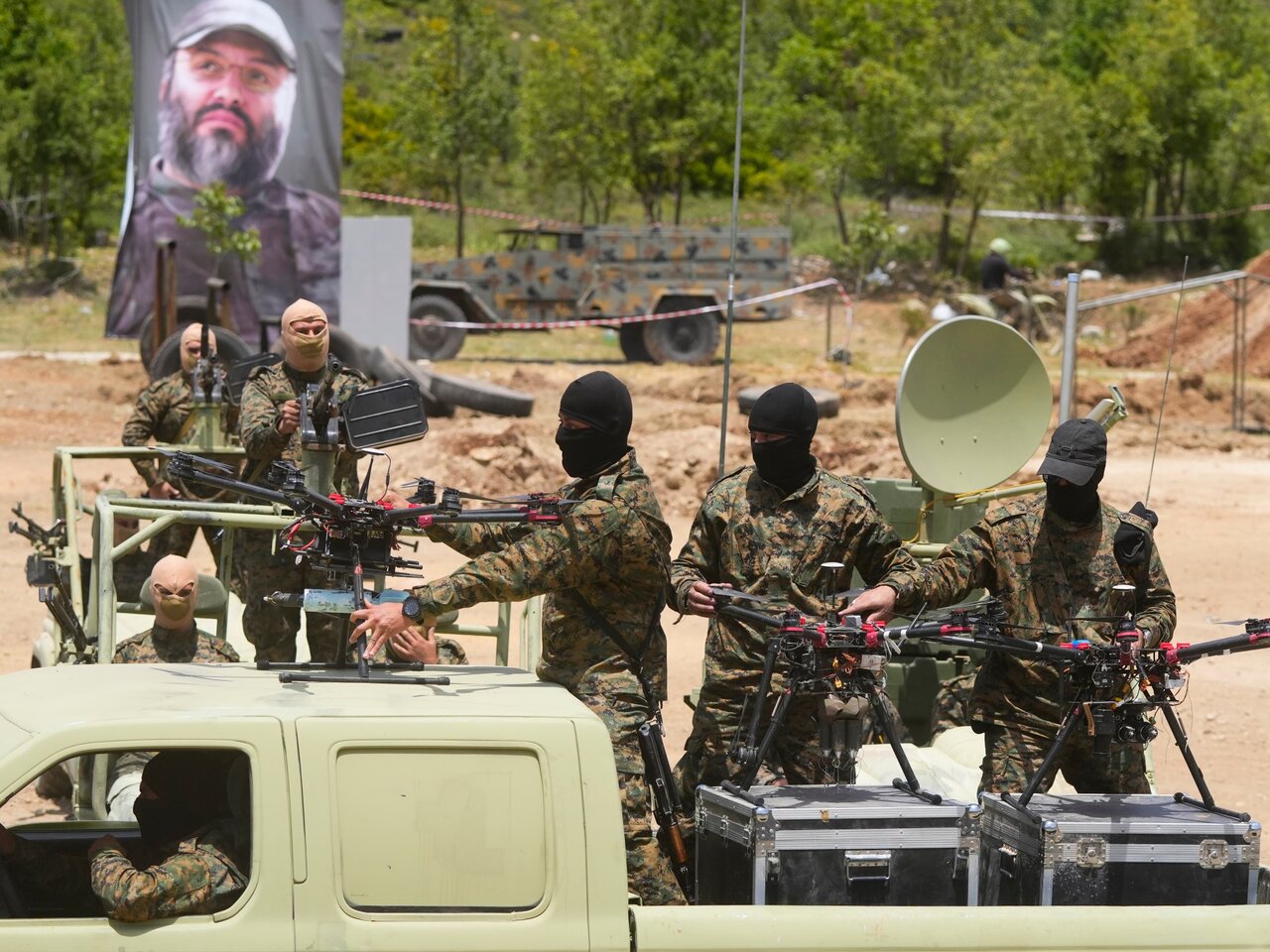
TEHRAN – Hezbollah follows a strategy of tactical response with a strategic objective, aimed at reshaping the rules of engagement.
At this stage, military retaliation is no longer just a limited tactic, but carries clear strategic dimensions. Hezbollah’s insistence on responding to Israeli violations in southern Lebanon reflects a broader strategic approach focused on preventing the erosion of the rules of engagement that took shape after the 2006 July War.
The resistance movement does not treat these violations as isolated incidents, but as repeated tests of the deterrence equation and attempts by the Zionist regime to impose a new security reality, now referred to as the so-called “yellow line”, as seen in Gaza. This would allow the occupation regime greater operational freedom without paying a corresponding price.
Here, Hezbollah’s military doctrine becomes a strategic necessity rather than a tactical choice in southern Lebanon. The resistance movement, as Lebanon’s strongest deterrence, understands that any leniency in confronting these Israeli violations could be interpreted as a sign of weakness, encouraging the Zionist regime to expand its aggression and breaches, whether through direct targeting or intelligence and air missions.
Therefore, even a limited and calculated response carries a dual message: that southern Lebanon is not an open arena, and that maintaining the balance of deterrence, which prevents a slide into full-scale war, remains a key consideration.
This equation adopted by Hezbollah in southern Lebanon does not operate in isolation. The region today is more complex than ever, with the genocidal war in the Gaza Strip continuing in one form or another and tensions rising on multiple fronts.
This overlap between battlefield arenas makes any escalation in southern Lebanon part of a broader landscape, where the calculations of regional powers, chief among them Iran, intersect.
Accordingly, Hezbollah’s responses are not understood solely within a domestic Lebanese framework, but as part of a regional deterrence network led by the Axis of Resistance, aimed at restraining the Zionist regime’s military expansion in Arab and Islamic countries and redefining rules of engagement that reflect the resilience and cohesion of resistance fronts.
Meanwhile, the government of Benjamin Netanyahu faces unprecedented internal and external pressure, pursuing policies that appear increasingly risky. This raises a key question: will this escalation lead to the imposition of a new deterrence equation, or will it open the door to a broader regional explosion whose consequences could spiral out of control?
Hezbollah continues to pursue its strategy of tactical responses with strategic objectives and the reshaping of engagement rules. Military retaliation is no longer a limited tactic, but one with clear strategic weight. The Lebanese Resistance is fully aware of this and has accumulated extensive experience managing war with the Zionist occupation regime. It understands that any reduction in the level of response will be read as weakness, potentially inviting greater escalation. Therefore, insisting on a strong response is not only about maintaining the balance of deterrence, but also about reestablishing rules of engagement that may have been weakened by rapid regional developments.
These rules, formed after the 2006 war, are based on mutual retaliation, meaning any major attack will be met with a painful response. This was recently reaffirmed by the Hezbollah Secretary-General, Naim Qassem, who stressed that the Resistance will not allow any occupation to remain on Lebanese territory.
Current developments indicate an effort to reinforce and build upon this principle, making responses faster, broader, and perhaps less confined by geographic boundaries. This shift reflects Hezbollah’s recognition that the Zionist regime is testing the limits of deterrence, and that traditional responses are no longer sufficient to prevent a slide toward a new equation imposed by Tel Aviv.
What Hezbollah is doing unfolds within an extremely complex regional scene, with multiple active fronts. It is increasingly clear that the conflict is no longer confined to a single front, but has become an interconnected network of confrontations, from Gaza to southern Lebanon, and potentially extending again to direct confrontation with Iran.
This overlap significantly raises the level of risk and threat, as escalation in one arena can easily spread to others.
For example, in Gaza, the situation continues to deteriorate on the humanitarian level and possibly the military one, while the occupation regime seeks to entrench a policy of security control and impose new rules of engagement.
On the Lebanese front, especially in the south, the regime’s deadly ceasefire violations are escalating daily, creating conditions ripe for a broader explosion.
Today, deterrence calculations, amid ongoing war and open fronts, are reduced to two options: either test and solidify the rules of engagement, or face collapse in military, political, and strategic terms. Hezbollah understands this equation well. It also recognizes that the Zionist regime, under a far-right government, is driven by internal considerations related to political survival on one hand and an expansionist agenda on the other, while simultaneously seeking to impose new regional rules.
The leadership crisis in Israel, along with the political gamble led by Netanyahu and his allies, is using a strategy of moving forward to escape mounting internal crises. These include a rising and increasingly unified opposition, growing international pressure, and battlefield setbacks against the specialized operations carried out by Hezbollah in southern Lebanon.
This approach carries significant risks for the Zionist regime itself, as it may produce the opposite of restoring deterrence. The regime could find itself facing multiple fronts that further drain its military and economic capabilities.
Moreover, continuing the war without a clear political horizon will deepen its international isolation and increase pressure against it.
Several possible scenarios may unfold in the coming phase amid ongoing clashes between Hezbollah and the occupying regime:
First: Continued controlled escalation within certain limits, without sliding into full-scale war. This appears to be the most likely short-term outcome in the absence of a political solution, with battlefield dynamics remaining decisive.
Second: Hezbollah succeeds in imposing a new deterrence equation on the ground, leading to stricter rules of engagement that limit Israeli violations and potentially push toward a withdrawal from Lebanese territory.
Third: A wide regional explosion, the most dangerous scenario, where any miscalculated escalation could trigger a broader multi-front war. Although not the most likely at present, it remains a real possibility.
Today, the region stands at a critical juncture, where military calculations intersect with political will in an extremely complex landscape. This war is unlikely to be short, contrary to what some believe.
Hezbollah’s insistence on strong responses reflects a deliberate effort to reestablish deterrence and prevent the Zionist regime from imposing new rules or expanding further on Lebanese territory under the guise of direct talks with the Lebanese government.
Leave a Comment