Lebanon’s talks with Israel are a ‘cunning deception’
TEHRAN – The head of Lebanon’s Loyalty to the Resistance parliamentary bloc has lashed out at direct talks with the Zionist regime of Israel.
Mohammad Raad reaffirmed the bloc’s stance against direct negotiations with Israel, denouncing any ceasefire that allows the regime to carry out attacks on Lebanese land.
“Any supposed truce that grants the occupying enemy in Lebanon a special exemption to open fire or carry out any movement or field action in confrontation zones and within Lebanese territory, whether to secure a position, plant explosives, carry out an assassination, demolish a house or facility, or bulldoze land, is not a truce at all,” Raad warned.
He emphasized that such a truce is “a cunning deception and a way of misleading others, serving as a cover for Israeli regime aggression and turning a blind eye to the enemy’s continued violations and breaches.”
The ambassadors of Lebanon and Israel to the U.S. have so far held two rounds of direct talks in Washington. The first round was held on April 15 with the mediation of U.S. Secretary of State Marco Rubio. The second round was held on April 23. This time, Rubio was not present.
Raad said, “The authorities should be ashamed before their people and withdraw from what has been called direct negotiations with the Zionist enemy,” expressing concern over insistence on “this mistake and dragging the country into something worse than the ill-fated May 17 agreement of the early 1980s.”
The MP from the Hezbollah faction added, “Any official communication or meeting between a Lebanese and an Israeli party during the ongoing war between Lebanon and the Zionist entity will never gain national consensus and will constitute a clear constitutional violation that cannot be justified by any pretext or alleged interest.”
Parliamentarian Ali Fayyad, also a member of the Loyalty to the Resistance bloc, said that “a ceasefire is meaningless as long as the Israeli regime continues its hostile acts, assassinations, bombardment, and gunfire, and persists in the destructive devastation of border towns while insisting on freedom of movement.”
Fayyad warned that the Israeli regime and the United States are trying to revive the status quo that existed before March 2, when the Zionist regime escalated its aggression against Lebanon, in a worse form, and promote it to justify direct negotiations. He added, according to Xhinua, that without a full Israeli withdrawal from Lebanese territory, the people retain the right to resist occupation and restore full sovereignty.
He also emphasized that “any Israeli regime attack against a Lebanese target gives the Lebanese resistance the right to respond proportionally according to the field situation.”
The statements by the two lawmakers followed after President Donald Trump announced a three-week extension of the ceasefire between Lebanon and the Israeli regime.
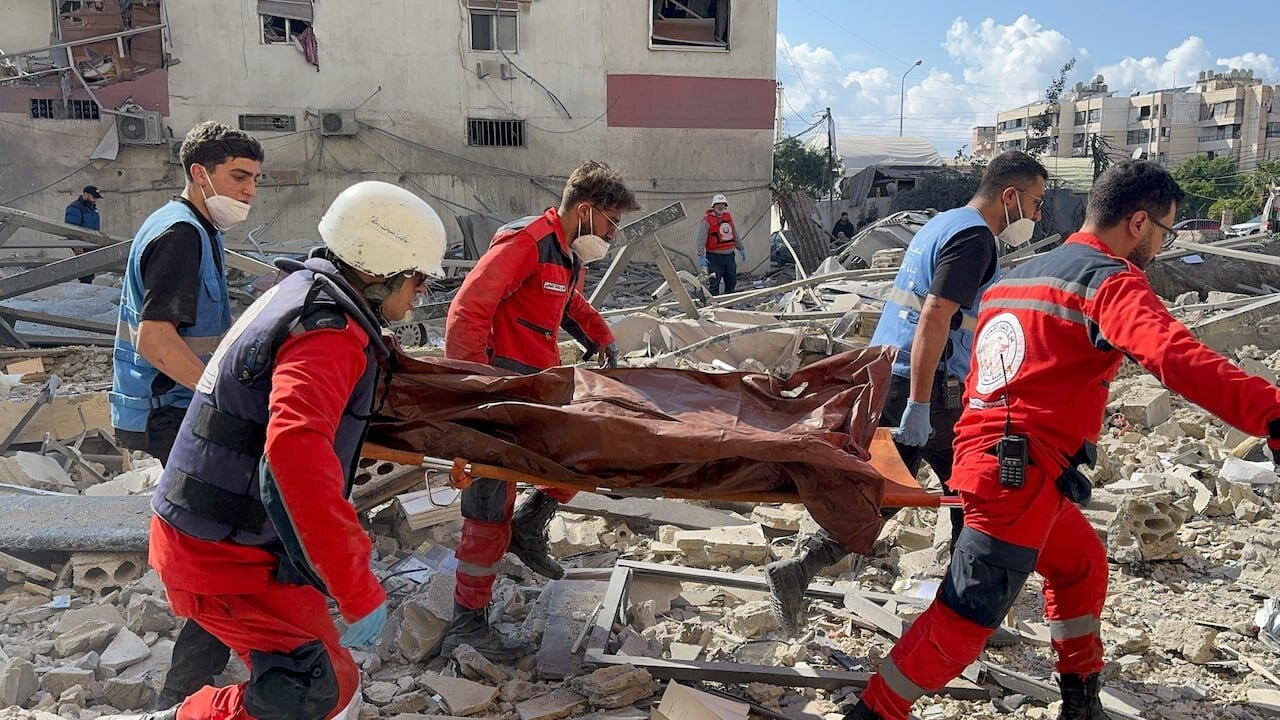
On Friday, the occupying regime killed at least four Lebanese civilians. Despite Trump’s earlier declaration this month that he would not allow the Zionist regime to bomb Lebanon again, the regime has violated the truce by carrying out multiple attacks and continuing the destruction of infrastructure in Lebanese border villages, prompting Hezbollah to respond.
This is reflected in Zionist, Western, and some regional media outlets, which show a pattern of framing Hezbollah’s actions against Israeli Occupation Forces (IOF) in southern Lebanon within a narrative of “continuous violations” and “initiating escalation.”
A sample of news and reports from various traditional media outlets, representing different viewpoints, reveals a similar discourse pattern.
Hezbollah’s actions are framed as ongoing breaches and escalation, while IOF activities are portrayed as disciplined and legitimate defensive responses.
This pattern appears through the frequent use of negatively charged terms to describe Hezbollah’s actions, such as “attacks,” “violations,” “escalation,” and “targeting attempts”, reinforcing the image of a party initiating violence and breaking agreements, regardless of where the action originates or is directed.
In contrast, IOF attacks are described in technical, goal-specific language, such as “targeting platforms,” “neutralizing immediate threats,” “closing the loop,” and “protecting settlements,” implying legitimacy or suggesting that the IOF operates on sovereign Israeli regime-controlled territory.
The media discourse also relies on repeatedly quantifying violations attributed to Hezbollah, reinforcing a false impression of deliberate escalation by one side, while minimizing or omitting any counter-context and presenting IOF attacks as unquestionable responses.
It is also notable that Zionist and Western media largely omit Hezbollah’s statements regarding the motives behind its actions or its statements that the Zionist regime has violated the agreement, except in rare instances.
There is also a disparity in how sources are handled: IOF statements are presented as factual reports requiring no scrutiny, and much of the media discourse simply echoes these statements regarding Hezbollah operations. Many reports depict the IOF’s aggression as restrained and controlled.
The psychological and media propaganda is evident. There is little to no representation of the impact of IOF attacks on Lebanon, including the bulldozing of villages and the erasure of their demographic memory. For example, villages targeted for demolition are presented as confirmed hubs of “Hezbollah activity.”
This pattern highlights how many media platforms, including some in West Asia, serve the Zionist regime’s political agenda.
Leave a Comment