Environmental storytelling project unveiled in memory of martyred students
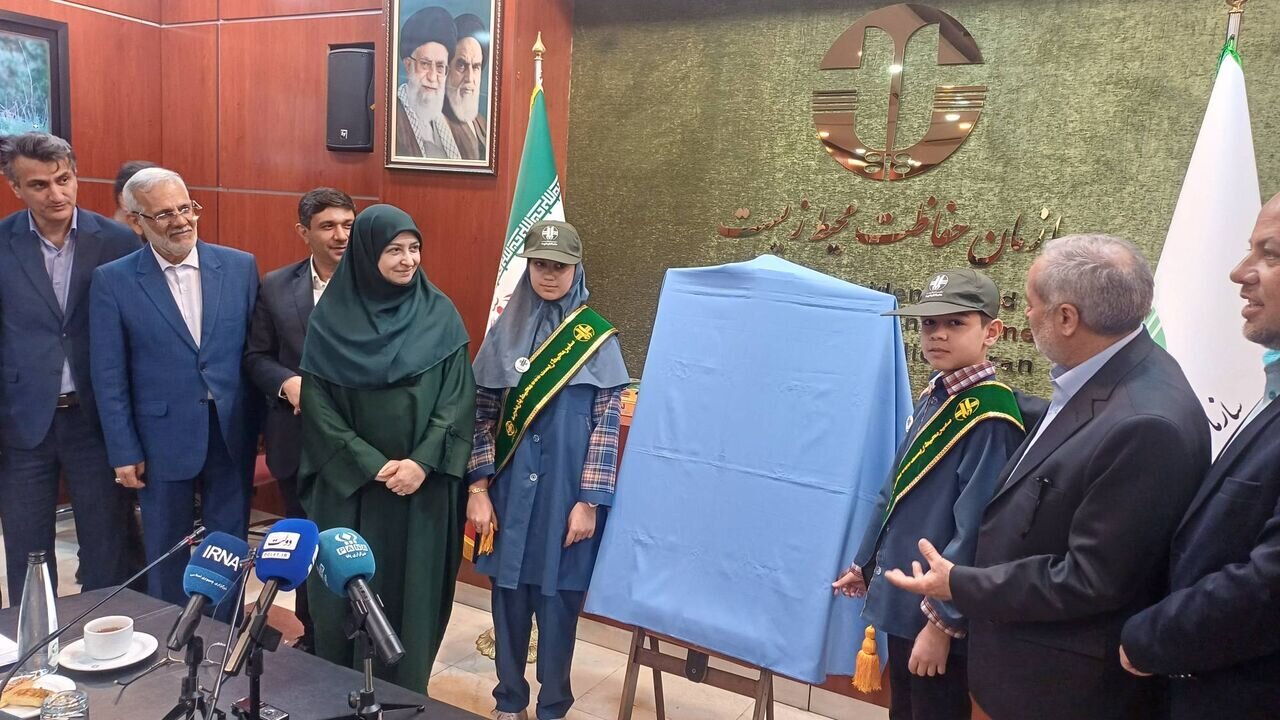
TEHRAN – The Department of Environment (DOE) and the Ministry of Education unveiled on Sunday an environmental storytelling project in memory of the students martyred during the US-Israeli war against the country.
DOE Head, Shina Ansari, and Education Minister Alireza Kazemi, attended the unveiling ceremony, IRNA reported.
The initiative, named after Makan Nasiri, is actually a subcategory of an earlier project that aims to train eco-friendly students, or environmental helpers. Both projects aim to enhance the students’ environmental literacy.
Makan was one of the 168 school children killed by the deadly US strike on Shajareh Tayyebeh elementary school on the first day of the imposed war, February 28.
The US Tomahawk missiles left nothing of his small, fragile body, but a wrinkled blue sweater and a pair of cream-colored sneakers.
The project considers Makan an environmental helper whose mission was left incomplete after his martyrdom. Now, other students should follow his path.
Addressing the event, Hadi Kiadaliri, the deputy head of the DOE for education and public participation affairs, voiced deep regret over the martyrdom of students, saying the students with small and big dreams were part of humanity that is lost.
The pain and suffering that their families and society are going through go beyond any political, social, cultural attitudes, and any religion, he added.
The project to train eco-friendly students kicked off in the Iranian year 1375 (1996). Back then, it was limited to a few provinces. However, the project faced some challenges that highlighted the need for its revision.
In January 2023, the DOE and the Ministry of Education unveiled the logo and the poster of the national plan for the project.
Highlighting the role of education in developing values such as responsibility, the official said teaching environmental issues to children will contribute to instilling eco-friendly behaviors in them, which will later turn into sustainable habits. Investing in children will enhance lifelong social outcomes.
If adults are responsible for current changes, children will play the same role in the future. The training needs to be constant and accessible, he added.
For his part, Kazemi noted that the integration of environmental teachings into textbooks, from preschool to high school, is on the agenda to help promote the culture of preserving the environment.
The educational courses will not be limited to students; they have the capacity to train parents and teachers, as well.
Apart from textbooks that involve formal training, the Ministry of Education focuses on informal training that would promote students’ social participation in practice.
The official also announced the ministry’s readiness to expand training by establishing a vocational training center to provide practical skills in the environment sector, and even utilize available capacities to organize educational courses.
Education is the key to bringing about any change in economy, culture, and social life; therefore, providing skills and training, proper behaviors will play a key role in improving the current situation, Kazemi highlighted.
The official went on to say that students who are environmental helpers have to be introduced and lauded; they should be allowed to have a more influential role, and feel more responsible for participating in environmental conservation programs.
In February, DOE and the Education Ministry discussed the possibility of developing a national education curriculum to promote environmental responsibility and awareness among children.
Referring to the inefficiency of short-term and incoherent teaching, Mohammad Medadi, an official with the DOE, said that achieving sustainable development and boosting the country’s resilience are not possible without institutionalizing an environmentally friendly attitude and lifestyle in society. So, educational approaches need to be reviewed, he added.
Environmental protection education should be taught from preschool to high school. In addition to scientific training, it should focus on ethical aspects based on cultural, religious, and social teachings.
The initiative also aims to train and empower parents and teachers, the official further noted.
Promoting environmental protection among children
In October 2025, the DOE and the Institute for Intellectual Development of Children and Young Adults (IIDCYA) signed a memorandum of understanding to promote environmental protection among children and young adults.
The MOU was inked by Kiadaliri and Hamed Alamati, the IIDCYA director, at the place of IIDCYA in Tehran.
The signing ceremony was concurrent with the second day of National Children’s Week, which was observed nationwide from October 7 to 13, with the theme ‘children, joy of life’.
In May 2025, the DOE, in cooperation with the Ministry of Education, implemented an environmental project under the theme ‘education is the key to change’.
The main objectives of the project were to promote environmental literacy and promote a culture of environmental responsibility among students, Mehr news agency reported.
It also aimed to share environmental knowledge of the students utilizing the peer educators’ capacities; change students’ attitude and promote social responsibilities; make students familiar with indigenous, climatic, and local features; as well as boost students’ participation as environmental ambassadors (or eco-friendly individuals) in raising environmental awareness at school, home, and other places.
MT/MG
Leave a Comment