Warnings raised over threats to UNESCO-listed Sassanid landscape in southern Iran
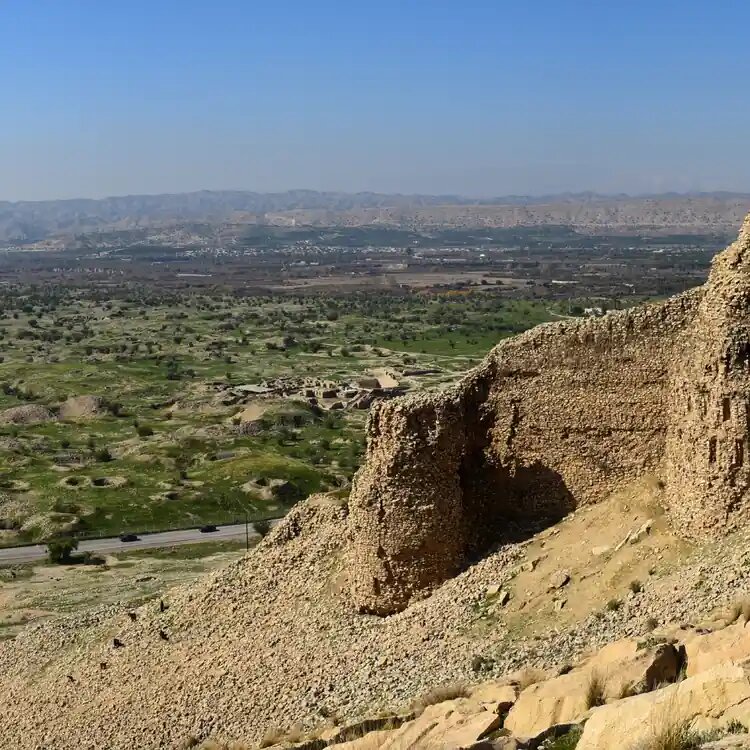
TEHRAN - Iranian cultural heritage authorities have issued a warning over a series of escalating threats facing the UNESCO-listed Sassanid Archaeological Landscape of Fars Region, citing structural decay, incomplete excavations, and ongoing legal and management challenges that risk undermining one of the country’s most significant historical ensembles.
Afshin Ebrahimi, director of the Sassanid archaeological landscape base in Fars province, said in remarks published by ISNA that erosion of architectural and decorative elements, abandoned excavation projects, and unresolved legal disputes over site boundaries are among the most pressing concerns. He added that tourism infrastructure remains incomplete in several areas, limiting both visitor access and effective site management.
The Sassanid Archaeological Landscape of Fars Region comprises eight sites spread across three key zones, Firuzabad, Bishapur, and Sarvestan, and dates from the rise to the fall of the Sassanid Empire between 224 and 651 CE. The complex includes fortified structures, palaces, urban layouts, rock reliefs, and early examples of domed architecture that influenced later Islamic building traditions.
Ebrahimi pointed to unfinished and abandoned excavations in the ancient city of Gor in Firuzabad as a major issue, alongside the continued burial of the dead within the protected zones of Ardashir Palace and the historic city of Bishapur. He also highlighted delays in preparing restoration and structural reinforcement plans for the Qal'eh Dokhtar fortress in Firuzabad.
“Some of the most visible damage can be seen in Bishapur,” Ebrahimi said, noting significant erosion affecting plaster decorations and architectural surfaces. Weathering has also impacted several rock reliefs carved into cliffs in the region, while sedimentary stone blocks at the Anahita Temple in Bishapur show signs of deterioration requiring urgent conservation measures.
In addition to physical degradation, Ebrahimi cited incomplete visitor pathways and unresolved legal complications concerning the boundaries and buffer zones of the heritage sites as ongoing administrative challenges.
Despite these issues, authorities say a series of conservation and development measures have been implemented over the past two years using national and provincial funding, as well as contributions from Iran’s Oil Ministry under corporate social responsibility initiatives.
Efforts have focused on improving visitor access and site organization in parts of Bishapur, Tang-e Chogan valley, and the Sassanian Palace of Sarvestan. According to Ebrahimi, these interventions have already contributed to an increase in visitor engagement.
Several restoration and protection projects have also been completed or are underway. These include lighting installations at Ardashir Palace in Firuzabad, conservation work at both Ardashir Palace and Sarvestan Palace, and emergency stabilization of three major rock reliefs in Tang-e Chogan. New sanitation facilities have also been added at Sarvestan Palace and Ardashir Palace to improve visitor amenities.
On the research front, archaeological work has resumed at key locations. The first excavation season at a structure believed to be associated with the Palace of Valerian in Bishapur has been conducted, alongside initial excavations in the northern courtyard of Ardashir Palace in Firuzabad.
The Sassanid landscape is widely regarded as a cornerstone of Iran’s cultural heritage, reflecting a synthesis of Achaemenid, Parthian, and Roman influences. The urban planning of sites demonstrates early innovations that later shaped both Sassanid and Islamic cities.
Architectural features across the sites include early dome construction using squinches, particularly in chahar-taq structures—square chambers with four arched openings that became a defining element of Sassanid religious architecture. These forms are closely linked to the expansion of Zoroastrianism during the Sassanid era and continued to influence mosque and tomb design in the Islamic period.
Ebrahimi said ongoing administrative correspondence and specialized studies are being conducted to address current threats, with the aim of implementing comprehensive conservation and restoration strategies.
“The ultimate goal is to move toward integrated management of this World Heritage property, improve the visitor experience, and ensure sustainable protection of its historical assets,” he said.
Experts warn that without coordinated and timely interventions, the combination of natural erosion, human activity, and administrative delays could pose long-term risks to the integrity of the site, which remains a vital testament to one of the ancient world’s most influential empires.
AM
Leave a Comment