The ghost of Beaufort Castle
TEHRAN – The diplomatic language surrounding the conflict in southern Lebanon has undergone a fundamental shift. For months, international statements had been couched in the cautious lexicon of border clashes and temporary security measures.
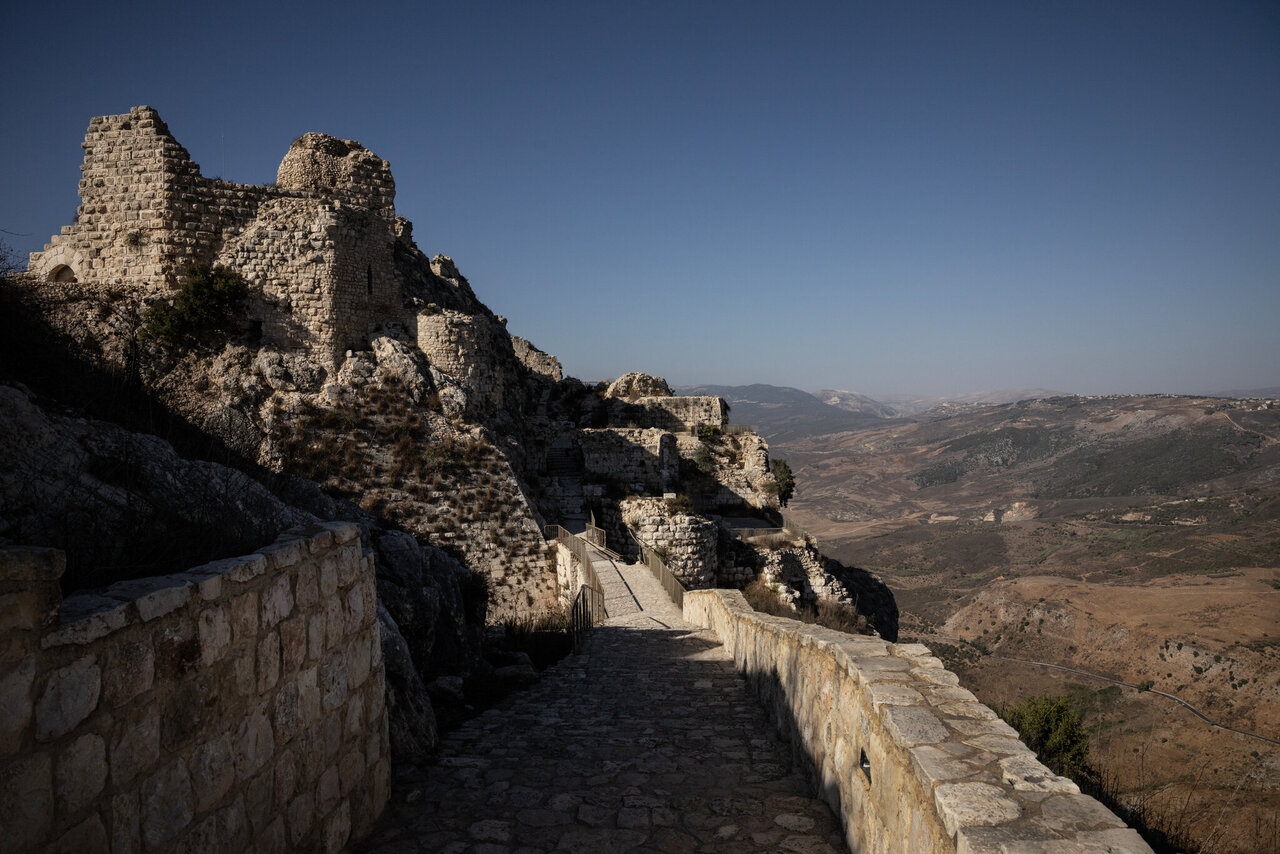
But as Israeli armor pushed past the Litani River and the evil-favored flag of the occupiers was hoisted over the ruins of Beaufort Castle, the terminology changed decisively.
France’s convocation of an emergency UN Security Council session laid bare an uncomfortable reality: Israel’s deepest ground offensive into Lebanese territory in nearly a quarter-century is increasingly being viewed as a grinding, open-ended occupation, even by international friends of Israel.
This military escalation unfolds against a backdrop of immense human devastation. Since early March, the campaign of aggression has claimed over 3,200 lives and driven more than 1.2 million Lebanese civilians from their homes, turning entire southern villages into uninhabitable fields of rubble.
Despite Washington’s claim of brokering a pause, the rhythm of murderous airstrikes has persisted, occasionally punctuated by massive operations like April’s “Eternal Darkness” campaign, which leveled over 150 sites in a matter of minutes.
What was initially presented to the international community as a “limited maneuver to push non-state actors” back from the Galilee has metastasized into a sprawling regional crisis that threatens to drag all sides into a permanent quagmire.
The diplomatic shield cracks
Inside the UN Security Council chamber, the pushback against Israel’s forward march was uncommonly severe, reflecting a deep alienation among traditional European allies.
Leading the charge, French Ambassador Jérôme Bonnafont characterized the offensive as a “major strategic mistake,” arguing that nothing can justify the scale of civilian casualties or the forced displacement of hundreds of thousands of people.
Bonnafont warned that planting flags at historical sites like Beaufort Castle represents a “worrying return to the past” that will fuel long-term regional instability.
The condemnation grew more acute from other permanent members. Russian Envoy Vassily Nebenzia drew a straight line between the devastation in Gaza and the unfolding campaign in Lebanon, accusing the U.S. and Israel of executing an identical blueprint aimed at establishing large-scale territorial control.
China’s Fu Cong expressed profound alarm over the breach of internationally recognized borders, noting that pushing north of the Litani represents a dangerous reversal of boundaries established after the 2000 withdrawal.
Even the United Kingdom’s representative, James Kariuki, described the offensive as a “reckless and disproportionate escalation” that pushes Lebanon’s fragile executive authority toward total collapse.
Faced with this wall of international censure, Israeli Ambassador Danny Danon remained defiant, insisting that his nation was left with no choice and vowing that the military would operate “wherever necessary to defend its citizens, whether in the south or north of the Litani River.”
Reliving the ‘Lebanese Mud’
To understand the visceral outrage rippling through regional capitals, one must look at the geography of the invasion.
The visual of Israeli forces hoisting a flag over Beaufort Castle (Qala’at al-Shaqif) has acted as a lightning rod for historical trauma.
The centuries-old crusader fortress served as a primary bastion during Israel’s 18-year occupation of southern Lebanon, an era that ended in a costly and bitter retreat in 2000.
For regional commentators and Lebanese officials, the return of Israeli troops to this specific peak is absolute proof that the rhetoric of border security is merely a veneer for an old expansionist ambition.
Arabic editorials in outlets such as Al Akhbar and Al Mayadeen argue that Washington and Israel have actively sought the erosion of the UNIFIL peacekeeping mandate to eliminate international witnesses to a slow-motion annexation.
The anxiety over a prolonged occupation is echoed within the borders of the occupied territories. In Hebrew-language media, centrist and liberal analysts have resurrected a deeply unsettling phrase from the consciousness in the occupied territories: “Botz HaLevanoni:” the Lebanese Mud.
Commentators in publications such as Haaretz warn that Prime Minister Benjamin Netanyahu is dragging the regime into an unwinnable, multi-decade security zone simply to stave off his own domestic political reckoning.
Former military commanders have expressed serious concern over strategic overextension, noting that maintaining division-level operations in the terrain of southern Lebanon, while simultaneously being engaged in waging war on other fronts, is breaking the spine of Israel’s reserve soldier system.
Opposition leaders have seized on this to argue that planting flags on medieval fortresses does nothing to guarantee the safe return of displaced Israeli families to the Galilee.
Figures whose ambition to replace Netanyahu has been increasingly visible, such as Naftali Bennett and Yair Lapid, accused the Prime Minister of “completely ceding Israeli sovereignty to Washington,” calling the visible dependence on American instructions a “national humiliation.”
Simultaneously, the political cost for Washington is mounting at home. Progressive American lawmakers, including Ayanna Pressley, Debbie Dingell, and Yassamin Ansari, have launched sharp public broadsides against the administration, pointing out the immense hypocrisy of calling for diplomatic solutions while continuing to ship the heavy munitions used to level Lebanese towns.
This domestic friction is mirrored in public sentiment; recent polling data reflects a steady erosion of public support for Netanyahu’s approach among the American electorate, particularly as anti-war coalitions voice anger over what they see as U.S. complicity in a two-front occupation.
Scorched earth vs. defiant resistance
Prime Minister Nawaf Salam, who has been widely criticized for his hostilities against the Lebanese Resistance, has described Israel’s strategy as a deliberate “scorched-earth policy” intended to permanently alter the demographic and physical landscape of the border region.
Hospitals, agricultural infrastructure, and entire residential quarters have been systematically targeted, fueling fears among the civilian population of a West Bank-style permanent fragmentation. Yet, the military push past the Litani has failed to achieve its primary objective of breaking the resistance.
Instead of forcing a capitulation, the offensive has stiffened Hezbollah’s resolve. In a series of recent addresses, Hezbollah chief Sheikh Naim Qassem has struck an uncompromising tone, asserting that the Lebanese population is being presented with a false choice between humiliation and occupation.
Qassem has explicitly warned that northern Israeli towns will remain entirely unsafe as long as Israeli troops remain on Lebanese soil, declaring that the group’s vast arsenal is a sovereign internal matter that will never be surrendered as a concession during talks.
By pushing deeper into the southern hills, Israel may have hoped to dictate terms from a position of absolute strength; instead, it has reawakened a historical cycle of resistance.
Leave a Comment