General Hollywood: Pentagon’s propaganda operation on silver screen: Part 2
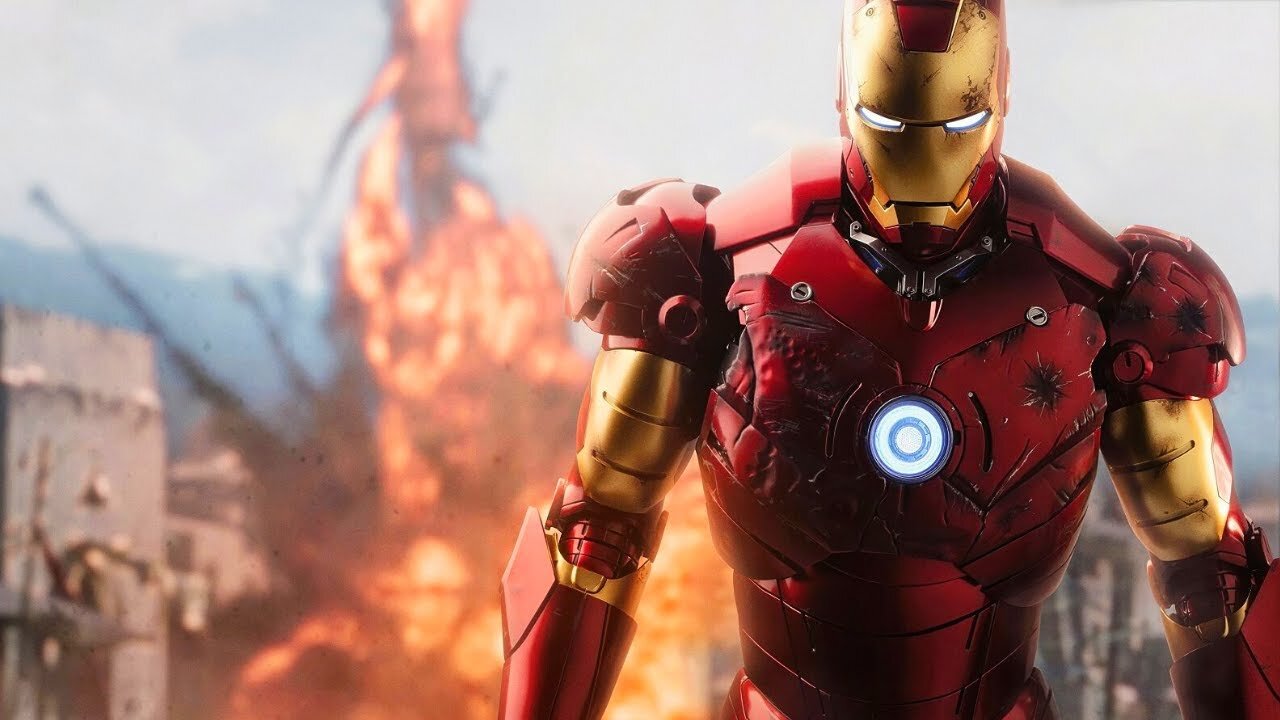
TEHRAN-Sci-Fi cinema, and especially the superhero genre, presents an opportunity that the Pentagon would never pass up. Since these stories often contain military themes and are heavily dependent on action sequences, many superhero genre films have relied on military production assistance. Among these films are the first two installments of the "Iron Man" trilogy, the "Hulk", "Captain Marvel", and others.
Superheroes as Pentagon’s PR
In the book "Superheroes, Movies, and the State: How the US Government Shapes Cinematic Universes", it is noted:
“The reliance of superhero filmmakers on this assistance is a particular boon to the armed forces, as the genre is one of the best PR and propaganda vehicles available.”
Tom Secker and Tricia Jenkins explain in the book that superheroes are almost always exceptional individuals with powers beyond what any ordinary person can manifest or experience, and thus these protagonists function as individual metaphors not just for the DOD but for US exceptionalism more broadly.
In these narratives, superheroes have not only the responsibility but also the right to visit large-scale, lethal violence on their opponents because someone special has to police a world that is full of threats, which is often how the DOD aims to position itself in global affairs.
That’s what Roger Stahl, professor of communication studies and the director of "Theaters of War" (2022) had mentioned in his interview with Tehran Times:
“On a grand scale, Hollywood narratives embrace US exceptionalism – that the US military is exempt from international law and that it is normal for it to routinely bomb others, violate sovereignty, and spread a web of bases everywhere. That principle is sacred, and it is hard to think of a film that seriously challenges it.”
"Iron Man” fights for the War on Terror
The "Iron Man" franchise was aligned with Pentagon preferences in many ways, and perhaps no superhero franchise has been customized to such an extent. The character of Tony Stark — a billionaire weapons manufacturer who fights terrorism in Afghanistan using an advanced armored suit — became a full-fledged promotional symbol for the US Air Force.
The book "Superheroes, Movies, and the State" reveals that, for the production of "Iron Man" (2008), the Air Force provided extensive support, including filming access at Edwards Air Force Base and the use of F-22 and C-17 aircraft, as well as HH-60 helicopters.
Stahl explained that during the research for the documentary "Theaters of War", one of the most surprising things he discovered was the depth of the script review process:
“Sometimes it's pages and pages of detailed script notes that excise sections and add whole characters.”
This was precisely the price that the "Iron Man 1" project paid in exchange for the Pentagon’s support: the producers were required to submit the screenplay to the Pentagon for final approval.
The result was that the final film became a neutered version of the original concept. Tom Secker and Matthew Alford note in the book "National Security Cinema" that the original 2004 screenplay for "Iron Man" was explicitly anti-war and anti-military-industrial complex.
In that version, Tony Stark was unwilling to allow his inventions to contribute to the killing of civilians. Howard Stark (Tony’s father) and Justin Hammer were portrayed as two corrupt industrial-military tycoons who stole technologies and sold them to North Korea and other governments opposed to the US. However, through its exertion of influence, the Pentagon transformed Tony into a kind-hearted weapons manufacturer who merely removes a few “bad apples” from the system while leaving the broader structure untouched.
This "deradicalization" process continued during the 2007 script development. In a scene from Stark’s captivity, Raza, the head of the Ten Rings insurgent cell displays a large cache of weapons, including Stark Industries gear. When Stark asks where they came from, Raza replies in a foreign language without subtitles.
Director Jon Favreau later revealed that in the original version, Raza listed US presidents (Carter, Reagan, Bush, Clinton, Bush), followed by another insurgent saying, “They are all gifts”—a reference to decades of weapons flowing into the region under both political parties. These lines were removed in the final version because they were considered “very sensitive.”
As another example, in the script’s press conference scene, Tony delivers a line that calls into question not only his company’s role in the war in Afghanistan, but also the broader American mission in the country. He says: “I thought we were doing good here . . . I can’t say that anymore. The system is broken, there’s no accountability whatsoever.”
However, on set, this line was replaced with: “I saw young Americans killed by the very weapons I created to defend them and protect them.”
As a result, the scene was transformed into a one-sided reminder of the necessity of protecting Americans and safeguarding US interests.
Bad Arabs with AK-47
Many reviews described "Iron Man 1" as containing “a sprinkle of anti-war and redemption themes,” being a “pacifist statement,” or portraying a “militantly anti-war profiteer.” "National Security Cinema" notes that However, these interpretations overlooked one crucial point: that "Iron Man" continues to manufacture increasingly sophisticated weapons and deploys them for the exact same purposes as the Pentagon — namely, killing generic Muslim terrorists.
Aside from a handful of corrupt American "bad apples," the film’s remaining antagonists are nameless Muslim terrorists who do little more than shout and fire AK-47s, “in the proud Hollywood tradition of Reel Bad Arabs.”
Afghanistan is also portrayed in the film as a land populated by innocent people whose lives are threatened by technologically equipped Arab terrorists — not by American attacks.
In effect, the first “Iron Man,” despite all its advanced technology, became a two-hour advertisement for the necessity of the US military presence in Afghanistan. Director Jon Favreau stated that, in the scenes where the Ten Rings group attacks villagers, he deliberately emphasized the terrorists’ ability to use advanced weaponry.
Much like the Bush administration’s approach, the film also argues that the appropriate response to the terrorist threat is military-centered violence rather than diplomacy, thereby lending greater legitimacy to American intervention in the Middle East.
"Iron Man” fights against the War on Terror
However, by the third installment, the situation had completely reversed, and an unambiguous critique of the "War on Terror" appeared on screen. “Iron Man 3” (2013) was produced without any military involvement. In the film, a new threat emerges: the mastermind of a terrorist organization known as the "Mandarin" begins hijacking live television broadcasts to criticize the US for its cultural and military imperialism while claiming responsibility for a wave of recent retaliatory bombings.
At first, Stark assumes that the Mandarin is from the Middle East, and when his AI assistant traces the source of the latest broadcast, Stark asks: “What are we talking? Far East, Europe, North Africa, Iran, Pakistan, Syria?” These assumptions are clearly intended to remind the audience of the atmosphere of the first "Iron Man" movie — but the reality turns out to be something entirely different.
It is ultimately revealed that the Mandarin is nothing more than a British actor hired by Killian — an arms dealer — to create a “custom-made terror threat.” This allows Killian to intensify public fear in order to sell his highly advanced technologies to the Pentagon. In Killian’s words, “I’ll own the War on Terror. Create supply and demand.”
"Superheroes, Movies, and the State" describes this plot twist as a cinematic attack on the close relationship between the Pentagon, industrial corporations, and the "War on Terror."
In other words, the film plays with the idea that the War on Terror is hollow, theatrical, and manufactured through media representations so that war profiteers, technology companies, and politicians can remain in power.
In the real world, the performative nature of this guiding slogan was also reflected by former US National Security Advisor Zbigniew Brzezinski in 2007, when he wrote that the phrase "War on Terror" was essentially meaningless, because it defined neither a specific geographical context nor a clearly identifiable enemy.
He argued that this ambiguity was intentional, as it fueled a culture of fear and made it easier for demagogic politicians to mobilize public opinion in support of whatever policies they wished to pursue. Accordingly, the idea that politicians and corporations may manufacture fear in order to gain power or profit lies clearly at the heart of the narrative of "Iron Man 3".
Although such narratives criticizing the war-driven policies of the United States do exist, as Roger Stahl also noted, there are only a limited number of works in Hollywood that move against the dominant current.
Perhaps that is why Mark McKinnon, a senior adviser to George W. Bush at the White House, stated in 2001 during a panel discussion titled "The Role of the Entertainment Industry in the War on Terrorism" regarding the occupation of Afghanistan:
“Hollywood was way out ahead of us in trying to do what it could to aid the effort. All we're trying to do right now is say, 'Fantastic. Thank you.'”
To be continued.
AH/SAB
Leave a Comment