Renewable power plants being developed in line with environmental requirements
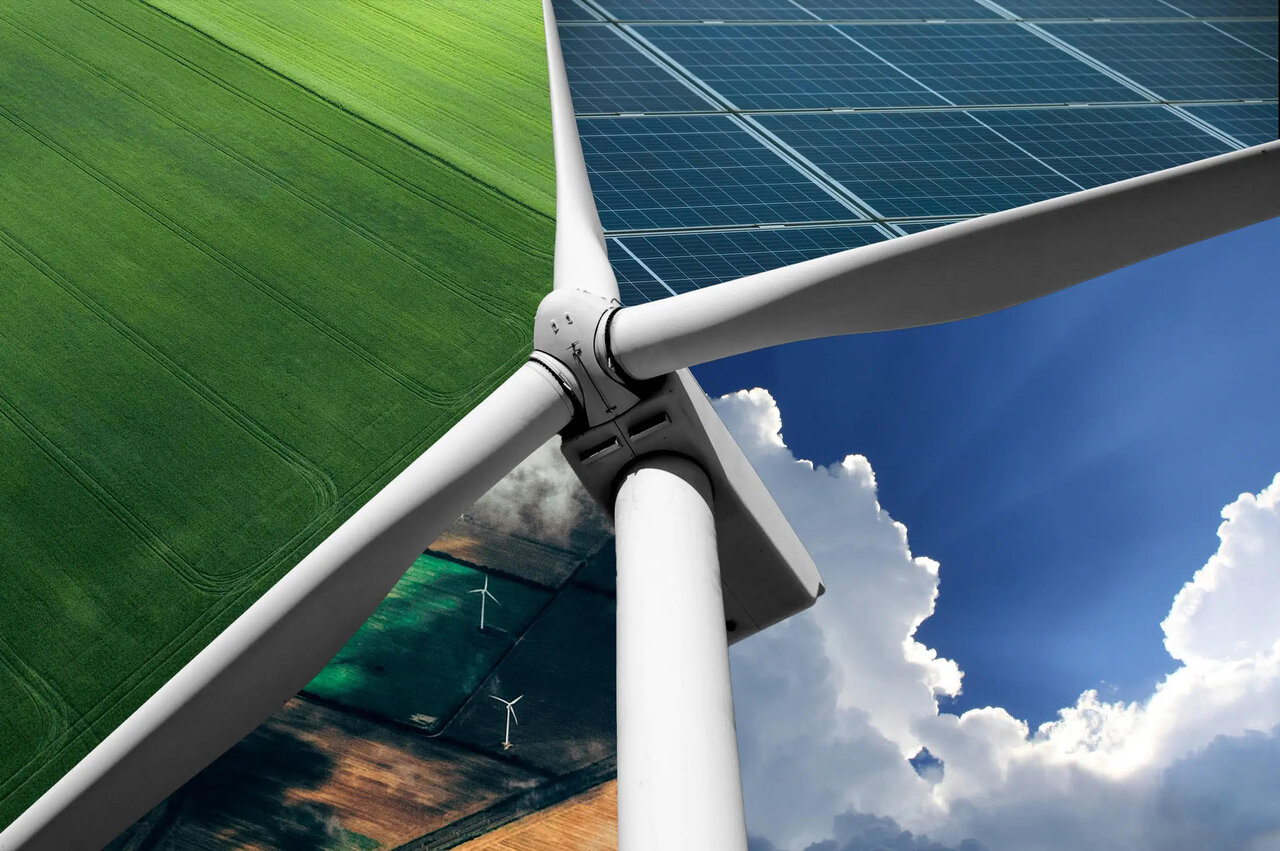
TEHRAN- The Deputy of Technical and Engineering of Iran’s Renewable Energy and Energy Efficiency Organization (SATBA) wrote in a note: The development of renewable power plants can lead to favorable results only when carried out based on precise technical standards, clear environmental requirements, and continuous monitoring.
Alireza Parandeh Motlagh wrote: Environment Week is an opportunity to rethink the methods of energy production, consumption, and management. In today's world, energy production is no longer merely an economic or technical issue, but has a direct connection with quality of life, public health, sustainability of natural resources, and the future of coming generations. Renewable energies, as one of the cleanest methods of electricity generation, play an important role in reducing dependence on fossil fuels and reducing the environmental impacts caused by energy production. However, the development of these power plants can lead to favorable results only when carried out based on precise technical standards, clear environmental requirements, continuous monitoring, and the use of quality equipment.
For this reason, despite the great importance of increasing clean electricity generation capacity, our view of the development of renewable power plants is not merely increasing installed capacity and electricity production, because we believe that this development must be principled, safe, sustainable, and in accordance with technical and environmental criteria. A renewable power plant can properly serve sustainable development only when it is implemented from the site selection and design stage to equipment supply, construction, grid connection, operation, and maintenance based on valid standards and specific regulations. Therefore, formulating and updating standards, guidelines, and technical requirements is one of SATBA's most important missions.
Solar power plants, especially in recent years, have received serious attention due to the high solar radiation capacity in the country and the possibility of construction at various scales. However, the widespread development of these power plants requires serious attention to the quality of panels, inverters, structures, cables, protective equipment, monitoring systems, arrangement of panels, installation angle, resistance to climatic conditions, grid connection requirements, and safety considerations. If technical standards are not observed in any of these stages, the plant's efficiency decreases, the useful life of equipment is reduced, and problems may even arise for the grid or the surrounding environment. Therefore, standardization is not an administrative measure, but a strategic necessity to maintain investment quality and the sustainability of clean electricity generation.
In the field of wind power plants, attention to technical criteria is of particular importance. Selecting the appropriate location, accurately assessing wind potential, studying geological conditions, analyzing noise effects, appropriate distance from residential areas, observing wildlife and bird considerations, foundation design, selecting turbines suitable for climatic conditions, and monitoring equipment performance are among the issues that must be pursued with sensitivity.
One of the main axes of SATBA's activities, and specifically in the Technical and Engineering Deputy, is monitoring the construction process of renewable power plants. Technical monitoring does not mean unnecessary interference in the investor's or contractor's activity, but rather a tool to ensure the proper implementation of the project, protect national interests, increase the useful life of the plant, and prevent subsequent damages. Experience has shown that the more precision is applied in the design and construction stages, the lower the operation and maintenance costs in later years and the higher the efficiency at which the plant can operate. Therefore, precise and continuous monitoring of project implementation stages, from site selection and design to equipment installation and commissioning, is one of the necessities of sustainable development in this field.
Compliance with environmental requirements is an inseparable part of the development of renewable power plants. One might think that since renewable power plants are clean, there is no need for environmental assessments; but this view is not accurate. Every construction project, even if implemented with the aim of producing clean energy, must consider its effects on the land, vegetation, water resources, wildlife, natural landscape, and local communities. For example, in the construction of solar power plants, attention must be paid to the type of land, how to prepare the ground, prevention of unnecessary destruction of vegetation, and compliance with safety principles. In wind power plants, studies related to bird flight paths, noise levels, and visual effects are important. Therefore, clean energy will be truly clean only when its construction and operation processes are also carried out in compliance with environmental principles.
In addition to standardization and monitoring, the issue of equipment localization is also of great importance. The development of renewable energies in the country should not be limited merely to importing equipment and installing them. Although using the world's latest technologies is necessary, at the same time, the domestic production capacity, knowledge-based companies, local manufacturers, and related industries must be strengthened. Equipment localization, in addition to reducing foreign dependence, can create employment, reduce long-term costs, increase repair and maintenance capability, enhance technical knowledge, and form a domestic value chain in the field of renewable energies. Of course, localization must be accompanied by maintaining quality. Supporting domestic manufacturing should not mean ignoring standards; rather, the goal is for domestic producers to be able to produce competitive, high-quality products that comply with valid standards.
In this context, inter-organizational cooperation between SATBA, the National Standards Organization, research centers, universities, knowledge-based companies, and domestic manufacturers is of particular importance. Formulating national standards for key equipment, establishing reference laboratories, evaluating equipment performance, issuing quality certificates, and monitoring plant performance can help improve the level of domestic technology. If domestically produced equipment has adequate quality, investors will also use them with greater confidence, and the domestic renewable energy market will be strengthened. This will ultimately benefit the national economy, the electricity industry, and the country's environment.
Another important issue is attention to the operation and maintenance of power plants after construction. Sometimes the main focus is on building the plant, while the actual performance of the plant is determined during the operational years. Continuous monitoring of production, checking efficiency decline, periodic cleaning of solar panels, controlling electrical equipment, updating monitoring systems, analyzing performance data, and performing preventive maintenance all play a role in increasing productivity and the useful life of the plant. If a plant is built with quality equipment but does not have proper maintenance, it cannot deliver optimal performance. Therefore, operation and maintenance standards must be considered alongside construction standards.
From an environmental perspective, the development of renewable power plants is a valuable opportunity to reduce pollutant emissions and save resource consumption. Every kilowatt-hour of electricity generated from solar or wind energy can replace part of fossil fuel-based electricity generation, thereby reducing fuel consumption, greenhouse gas emissions, and air pollution. But realizing these benefits fully requires that power plants be built with high efficiency, long useful life, and minimal side effects. This is where the role of engineering, standards, monitoring, and equipment quality becomes prominent.
Now, on the path of developing renewable energies, we are trying to create a balance between implementation speed and technical quality. Because although the country needs to rapidly increase clean electricity generation capacity, this acceleration should not lead to reduced quality or ignoring technical and environmental requirements. Sustainable development means that projects are reliable, safe, economical, and environmentally compatible not only today but also in the coming years. This goal is achieved only through compliance with standards and precise monitoring.
EF/MA
Leave a Comment