How Mossad and the CIA grossly miscalculated Iran’s resilience
TEHRAN — The joint US-Israeli military campaign against Iran has exposed an unprecedented crisis of authority within the Western national security apparatus. Nearly six months after President Donald Trump authorized a war based on Israeli assurances regarding Tehran’s nuclear program, the operational and political justifications for the conflict have entirely disintegrated.
As economic turmoil ripples across global markets and domestic opposition mounts inside the United States, Western political leaders are scrambling to manage an unwinnable war of attrition. At the center of this geopolitical collapse lies the definitive exposure of institutional failure within both American and Israeli intelligence services. The intelligence assessments produced by the Central Intelligence Agency (CIA) and Israel’s Mossad—long marketed as the gold standard of global espionage—have proven to be fundamentally flawed, politically manipulated, and incapable of accurately reading the strategic depth of the Islamic Republic of Iran.
The institutional breakdown reached a point of public farce following an incident at the NATO summit in Ankara. Reports detailing an elaborate security operation—wherein the “President of the United States” was secretly smuggled across an airfield inside an airport catering truck to board an alternate C-32A military transport—were initially framed by Western media as a necessary response to an imminent Iranian assassination plot. However, the subsequent revelation that the CIA assigned "low confidence" to the Israeli intelligence prompting the escape laid bare the severe dysfunction at the heart of the US-Israeli intelligence alliance. The spectacle of an American president fleeing a NATO summit in a delivery vehicle based on unverified, panic-inducing claims from Tel Aviv represents not merely a logistical embarrassment, but a historic systemic failure. It demonstrates that Israeli intelligence agencies, including Mossad, no longer function as objective providers of strategic information, but rather as instruments of political influence designed to force American military action.
From the perspective of Tehran, the collapse of Mossad’s credibility is neither surprising nor accidental. For decades, Israeli intelligence has relied on aggressive covert operations, targeted assassinations, and exaggerated threat assessments to shape Western decision-making. Mossad’s insistence in early 2026 that a joint bombing campaign would rapidly paralyze Iran’s military structure and trigger immediate regime change reflected a deep ideological delusion rather than serious intelligence analysis. By treating its own regional aspirations as objective reality, Mossad severely misled Washington regarding Iran’s defensive capabilities, internal political unity, and asymmetric deterrence options. The subsequent failure of Israeli forces to achieve their stated objectives—evidenced by their sudden decision to halt strikes on Iranian territory while leaving American forces bogged down in a broader regional conflict—highlights the absolute bankruptcy of Israeli strategic planning.
Simultaneously, the CIA’s role in this crisis exposes the total degradation of the American intelligence apparatus. The agency’s internal assessment that Israeli-provided reports on the Ankara threat were "low confidence" did not prevent US officials from taking extreme, humiliating operational measures. This dynamic reveals a profound institutional paralysis: the CIA possesses sufficient analytical capacity to recognize Israeli fabrications, yet lacks the political authority or structural integrity to stop those fabrications from dictating American actions. The agency has been reduced to a passive observer, issuing retrospective caveats and leaking dissatisfaction to journalists while allowing policy to be driven by foreign agendas and domestic political panic. When an intelligence agency's warnings are routinely discarded in favor of politicized claims, the agency itself has failed in its primary constitutional and strategic duty.
The ongoing media commentary highlighting a growing "wedge" or "crack" between Donald Trump and Benjamin Netanyahu must be evaluated through this lens of intelligence failure. While Western commentators interpret leaking private disputes and public disagreements over operations in Lebanon as evidence of a genuine diplomatic rupture, rigorous analysis suggests that this alleged divide functions largely as a theatrical performance. Facing severe domestic political pushback and an impending midterm election, Trump benefits from portraying himself as a leader misled by flawed foreign intelligence rather than the architect of an illegal war. Similarly, Netanyahu utilizes public friction with Washington to project an image of unyielding determination to his right-wing domestic constituency. This public posturing creates a convenient political buffer for both leaders while masking the fundamental reality that their joint strategic campaign against Iran has failed.
The narrative of a falling out allows Washington to blame Mossad for deceptive reporting, while Mossad blames the CIA for hesitation and operational failure.
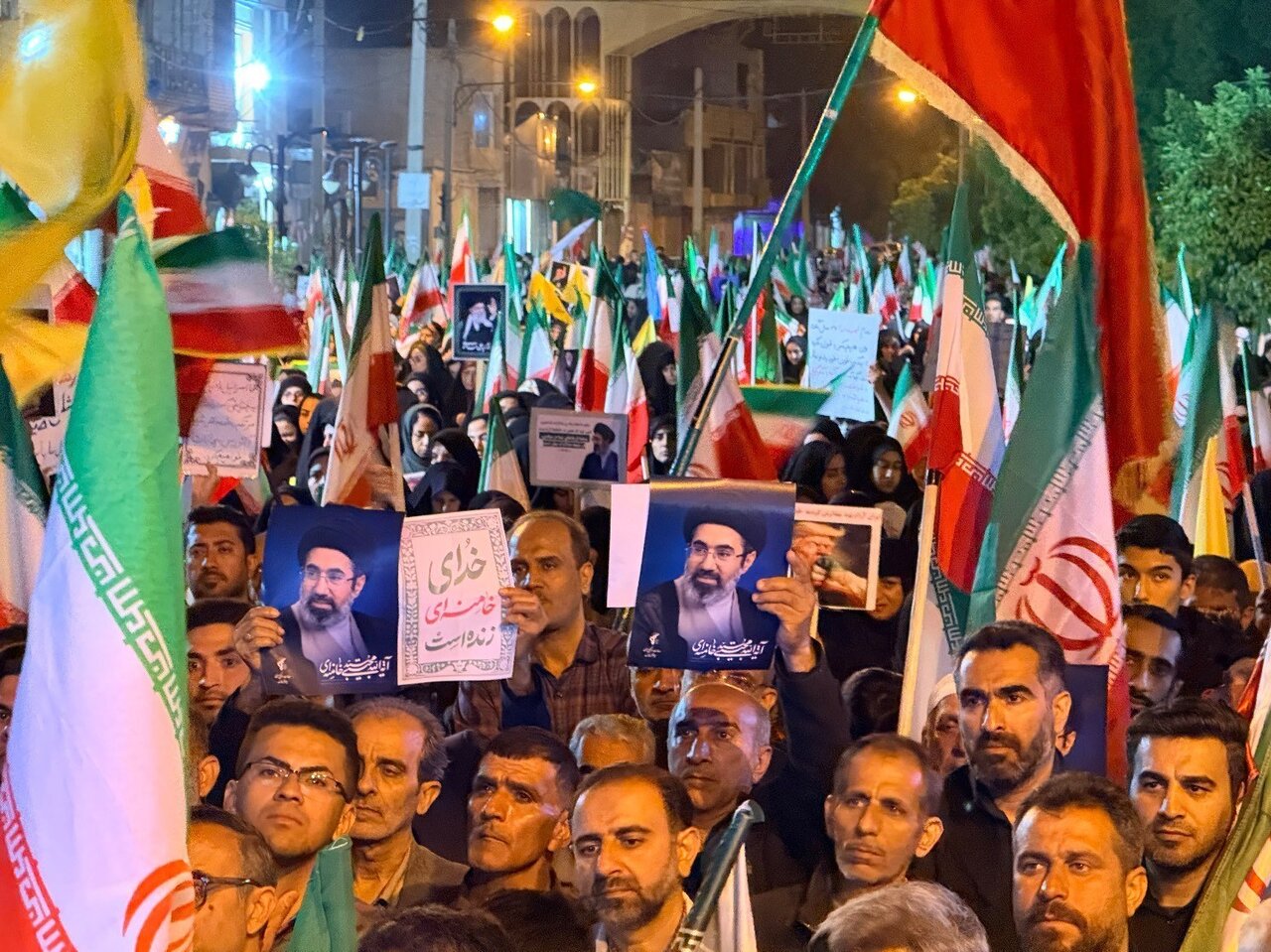
This mutual scapegoating cannot obscure the broader truth that both CIA and Mossad assessments failed to predict the durability of the Iranian nation. The initial strategy assumed that pre-emptive military strikes would shatter Iran's command structures and isolate its leadership. Instead, six months of conflict have demonstrated the resilience of Iran’s defense network, its integrated regional partnerships, and its ability to impose severe costs on global energy markets and Western supply chains. The failure to anticipate these outcomes represents an intelligence collapse on a grand scale, comparable to the historical miscalculations that preceded previous Western military disasters in the region.
The tragic humanitarian consequences of this intelligence failure are already evident across the region. Attacks conducted on questionable target intelligence, such as the bombing of the Minab school that resulted in the deaths of nearly170 people, most of them schoolchildren, underscore the lethal recklessness of relying on flawed, politically motivated target packages. This shows that the narrative of surgical precision and high-grade intelligence promoted by Western and Israeli officials has completely dissolved. The reliance on fabricated or unverified intelligence has not only cost thousands of innocent lives but has also permanently eroded the international standing of the institutions responsible.
The war on Iran has definitively shattered the myth of Western and Israeli intelligence superiority. Mossad has been exposed as an agency willing to manipulate information to entrap its allies into waging its battles, while the CIA has proven incapable of resisting political pressure or preventing its own government from acting on baseless claims. The Ankara catering truck incident stands as an enduring symbol of this double failure: an American president forced into a humiliating covert retreat by an Israeli intelligence report that his own spy agency knew to be worthless. Whatever theatrical disputes may be staged between Washington and Tel Aviv in the coming months, the core reality remains unchanged. The intelligence architecture that manufactured the justification for this war has suffered a catastrophic loss of credibility, leaving both the United States and Israel trapped in a strategic defeat of their own creation.
Leave a Comment