Historic Zionist perceptions of Lebanon
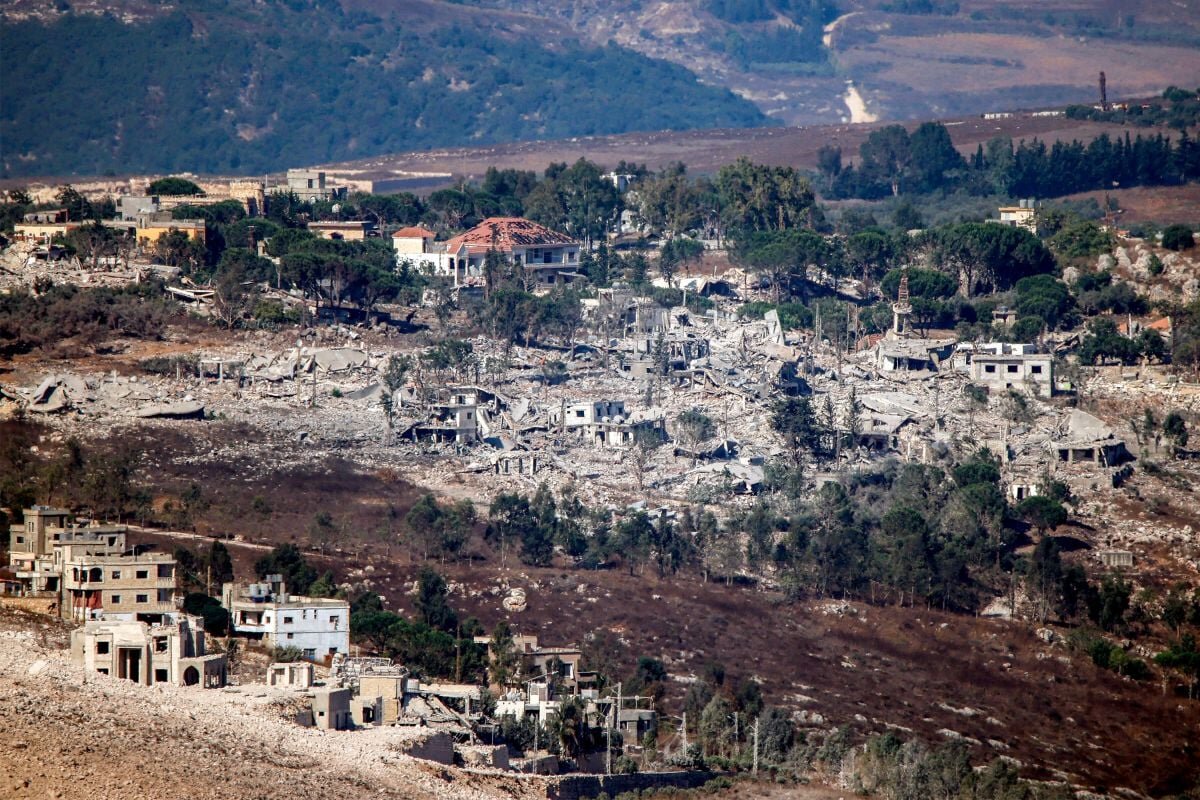
TEHRAN – In southern Lebanon, the occupying Israeli regime is erasing the region’s entire civilizational landscape by demolishing and bulldozing homes, buildings, graves and trees.
Israeli statements are increasingly speaking of no intention to withdraw, plans to establish a broad occupied zone south of the Litani river, evacuate entire areas of their inhabitants, and prevent people from returning to border villages for indefinite periods.
These policies in southern Lebanon are an extension of longstanding Zionist perceptions, based on exploiting internal divisions and seeking control over the south and the Litani.
What the regime is doing raises a historical question that goes beyond the latest aggression: To what extent do current Zionist policies represent a continuation of longstanding perceptions of Lebanon that took shape within the Zionist movement before the establishment of the Israeli regime.
From the earliest days of the Zionist project, Lebanon was not viewed just as a neighboring state to Palestine, but as a special case within the Arab Levant: a space that could be penetrated politically, a potential arena for building alliances with local forces, and a region associated in Zionism’s strategic imagination with water, borders, and minorities.
Laura Zittrain Eisenberg’s study, My Enemy’s Enemy: Lebanon in the Early Zionist Imagination, 1900–1948, shows that an important strand of early Zionist thinking regarded Lebanon as an exception within the Arab environment.
The Zionist movement believed that Lebanon’s sectarian pluralism, the distinctive position of its Maronite community, and its divisions over Arab nationalism and Syrian unity created opportunities for understandings that seemed less attainable elsewhere in the Arab world.
A broad network of contacts was established with Lebanese political and religious figures beginning in the 1920s. These contacts included political, media, and economic figures from across Lebanon’s various sects.
However, the documents specifically mention close relations and cooperation with the Jewish Agency on the part of Maronite Patriarch Antoun Arida, President Emile Edde, Bishop Ignatius Mubarak, and others.
The alliance of minorities and the bet on the Maronites
These contacts were linked to a broader idea that later became known as the “Alliance of Minorities.” The idea was not exclusively Lebanese; rather, it became one of the foundations of subsequent Israeli strategic thinking in the region, which former Zionist intelligence official Yossi Alpher called the “Periphery Doctrine.”
Within this doctrine, Israeli strategic circles believed that the region’s religious or ethnic minorities might share an interest in cooperating with the regime to confront Arab nationalist projects or the centralized states surrounding them.
In Lebanon’s case, this strategy focused primarily on certain Maronite circles. Documents presented by Erlich and Eisenberg indicate that some Lebanese currents viewed the establishment of an occupation regime in Palestine as an additional guarantee for Lebanon’s, which at the time had a Christian political majority.
During the 1940s, discussions also emerged regarding “long-term political cooperation” between the anticipated Zionist regime and certain Lebanese elites opposed to Syrian unity and Arab nationalist currents.
Studies indicate that the Litani River occupied a special place in Zionist thinking even before the establishment of the regime. Zionist leaders believed that the northern borders of Palestine did not reflect what they regarded as the “natural borders” of the regime, and that the Litani River held strategic importance in terms of water, security, and geography.
The discussions were not limited to political alliances between certain Maronite elites and the Zionist movement. They also included ideas for reshaping the demographic reality in the south: settling Maronites in Shia border areas, purchasing large tracts of land in Jabal Amel, creating direct geographical contiguity between Christian areas and Jewish Palestine, and reducing the Shia population density in the area between the Palestinian border and Mount Lebanon.
Against this backdrop, David Ben-Gurion’s diaries are particularly notable. In May 1948, he wrote that Lebanon represented the “weak point” in the Arab alliance, and that a Christian state could be established with the Litani as its southern border and form an alliance with the Zionists.
Early Zionist literature and subsequent Israeli documents reveal a significant degree of continuity in the regime’s view of Lebanon: a field open to political penetration; reliance on allied internal forces; the exceptional importance of southern Lebanon and the Litani; and efforts to create a new security and geographic reality in the border region.
However, the regime’s history of occupation in Lebanon repeatedly demonstrated the limits of its ability to turn these perceptions into a stable political reality or to maintain long-term arrangements serving these strategic aims.
Nevertheless, several projects being proposed today, whether Lebanese-Israeli normalization, the establishment of a so-called “security zone” south of the Litani, or the depopulation of large parts of the south, do not appear disconnected from the long history of perceptions and strategies that accompanied the Zionist project from before the establishment of the Israeli regime.
Yet Lebanon’s complex reality, its internal balances, and the decline of political Maronitism from the position it occupied when those projects were first proposed make the reproduction of these perceptions today far more complicated than some Zionist calculations might suggest.
Equally important, today, Hezbollah resistance stands in the way.
Leave a Comment