The war on Muharram epitomizes the Bahraini monarchy’s terminal terror
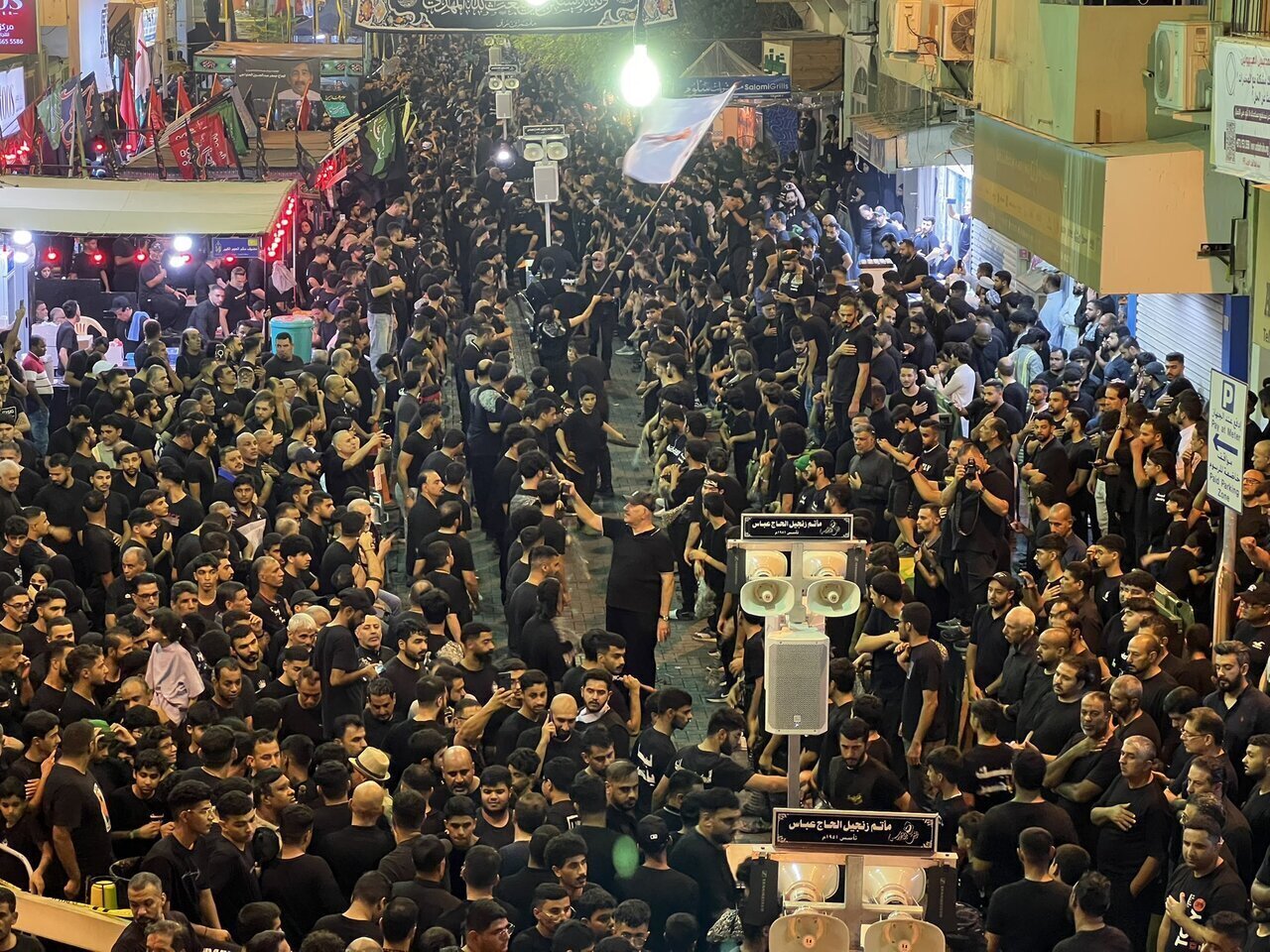
TEHRAN — The sulfurous sting of tear gas has become the Al Khalifa regime’s preferred incense for the month of Muharram. In the early hours of June 17, the village of Abu Saiba, a quiet Shia enclave on the outskirts of Manama, was turned into a battlefield.
It is a one-sided assault by the ruling monarchy against the faithful. As residents hung black banners and prepared the Husseiniyas, security forces swept in with the singular, pathetic purpose of tearing down fabric.
When the youth of the village dared to stand in the way of this desecration, the regime responded with the only tool in its arsenal: choking clouds of chemical agents fired directly into the crowds.
This is a calculated salvo for Muharram 1448. The Al Khalifa regime, an autocratic dynasty clinging to power in a nation where it represents a minority, is currently engaged in a frantic, systemic attempt to sterilize the Shia experience of Ashura.
They are terrified, and their terror is evident in the heavy-handed nature of their decrees. They understand a reality that history has taught them repeatedly: a community that finds strength in the martyrdom of Imam Hussein (AS) is a community that cannot be permanently subjugated.
The war on the soul of Karbala
Interior Minister Rashid bin Abdullah Al Khalifa has effectively declared war on the religious calendar.
In the days leading up to the start of Muharram, he summoned the custodians of every mourning hall and issued a series of suffocating diktats.
These are demands for total submission. No public images of religious leaders, no “political” slogans, and a strict time limit on ceremonies.
Most significantly, the regime has explicitly banned any mourning or public displays of grief for the popular martyred Iranian Leader of the Islamic Revolution, Ayatollah Seyyed Ali Khamenei.
By criminalizing grief, the regime has revealed the true extent of its paranoia.
They recognize that the Bahraini Shia, who see themselves as part of the broader regional Resistance Front, feel a profound spiritual and political connection to the martyred leader.
To the Al Khalifa, this connection is a treasonous breach of their absolute tyrannical authority. They are attempting to perform a lobotomy on the collective memory of a people, forcing them to choose between their faith and their loyalty to the resistance.
Institutional strangulation
The repression has moved far beyond the streets and into the ledger books.
The regime is currently executing an aggressive strategy to dismantle the financial and social foundations of Shia life.
In a move that highlights the cynical nature of their rule, they have reclassified the Islamic obligation of khums as money laundering.
This is a direct assault on the economic autonomy of the Shia community, designed to starve the seminaries, orphanages, and charitable trusts that operate independently of the regime.
To cement this control, the regime has absorbed the independent Jaafari Endowments Directorate into the state apparatus.
By placing every mosque, trust, and fund under the thumb of regime-appointed loyalists, the monarchy intends to turn these sacred spaces into conduits for state propaganda.
This is a hostile takeover of a community’s soul. They are arresting clergymen such as Sheikh Mohammed Sanqour and Sheikh Ali Al-Sadadi to leave the people vulnerable to the regime’s ideological tampering.
The death of Sayed Mohamed Al-Mosawi, whose body was returned to his family bearing the scars of state torture, serves as a grim warning to anyone who considers resistance.
The geometry of colonial control
The cruelty of the current moment is only possible because of the structural apartheid that defines Bahrain.
The Al Khalifa do not rule through the consent of the governed; they rule through a demographic engineering project.
They import foreign nationals to staff their police and military forces, ensuring that the men with the guns have no organic connection to the people they are oppressing. This is a classic colonial strategy, refreshed for the modern era.
On April 27, the regime struck again at the heart of the native Baharna population, stripping 69 individuals of their citizenship.
By rendering families, some with infants, stateless in the land of their ancestors, the palace is engaging in a slow-motion expulsion.
They use the cover of the regional war to equate religious devotion and anti-regime protests with foreign espionage, creating a legal framework where simply being a Shia is, in practice, a crime.
This entire architecture of oppression is bankrolled and shielded by Western interests. The U.S. Navy’s Fifth Fleet headquarters in Manama is the silent guarantor of the regime’s impunity.
Washington and London preach the virtues of human rights in the abstract while providing the weapons, the training, and the diplomatic cover that allow the Al Khalifa to gas their own citizens.
The regime is a forward operating base for Western geopolitical interests, and in exchange for that service, they are given a license to treat their majority population with the contempt of an occupying force.
The upcoming Tasu’a and Ashura
As Tasu’a and Ashura, June 25 and 26, loom on the horizon, the atmosphere in the villages is a tinderbox.
The deployment of armored vehicles to surround areas such as Sanabis, Sitra, and Bilad al-Qadeem is an admission of weakness disguised as a show of strength. They are surrounding these villages because they are terrified of the people inside them.
The regime hopes that by banning the flags and arresting the mourners, they can stop the clock. They are mistaken.
The history of the Bahraini uprising is a history of resilience in the face of impossible odds. Every tear gas canister fired in an alleyway serves only to validate the message of Ashura: that justice is worth the sacrifice of comfort.
The coming nights will also be a referendum on the right to exist with dignity.
The processions will happen, the chants will rise, and the regime will once again realize that while they can burn banners, they cannot burn the conviction of a people who have already decided that they want to be free.
Leave a Comment