Beyond exhibition: How Iran is securing its share of trillion-dollar halal market
TEHRAN- The global halal economy is no longer a peripheral niche. Valued well above two trillion dollars and expanding at a remarkable annual rate, it encompasses not only food and beverages but also pharmaceuticals, cosmetics, logistics, tourism, and financial services.
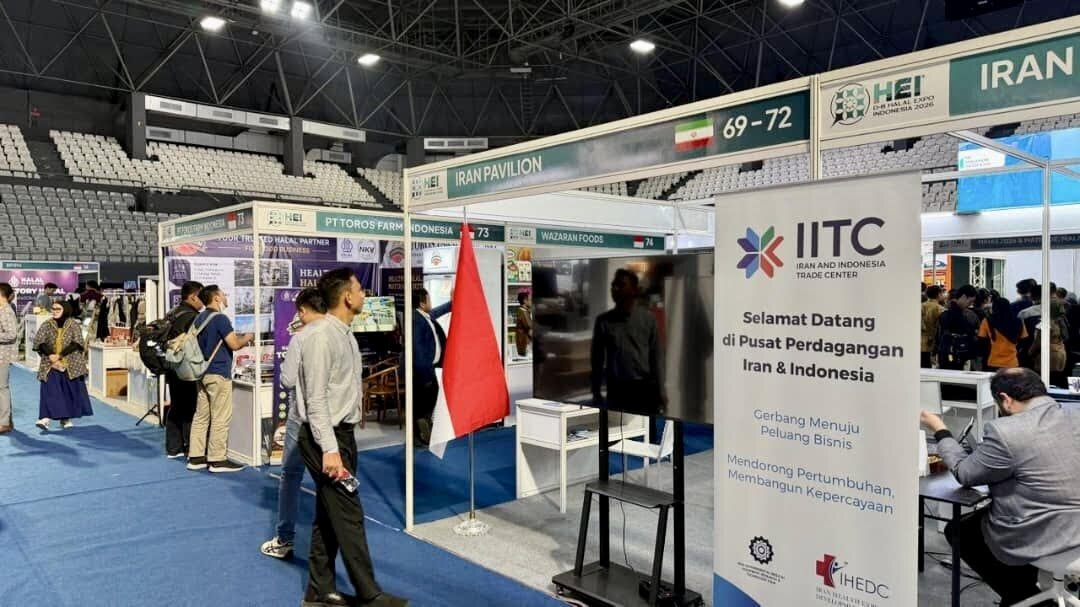
For Iran, actively penetrating this vast and lucrative domain is not merely an export ambition; it is a strategic imperative for diversifying national revenue, reducing oil dependency, and showcasing the country’s scientific and industrial prowess. The recent Iranian participation in the Indonesia International Halal Exhibition—marked by a dedicated pavilion, high-level diplomatic engagement, and targeted business networking—offers a compelling case study of how Tehran is translating its knowledge-based capabilities into tangible economic influence across Southeast Asia.
The significance of this mission lies first in its composition. Unlike traditional trade delegations focused solely on raw materials or intermediary goods, the Iranian pavilion featured nine knowledge-based companies, supported by the Non-Governmental Medical Equipment Research and Technology Fund and the Iran Trade Center in Indonesia. This alignment demonstrates a deliberate shift from commodity-centric export to technology-driven value creation. By showcasing advanced pharmaceutical products, medical devices, processed agricultural goods, and innovative industrial solutions, Iran sent a clear message: it is ready to compete in the halal market not with volume alone, but with quality, precision, and compliance with stringent international halal standards. In a region where consumers and regulators increasingly demand transparency, traceability, and scientific validation, Iran’s research-backed offerings provide a distinct competitive advantage over traditional suppliers.
Equally notable is the diplomatic weight attached to this commercial endeavor. The presence of Iran’s Ambassador to Indonesia, Boroujerdi, who toured the pavilion and engaged directly with company managers, underscored the state’s unwavering commitment to export development. However, it was the subsequent visit by Indonesia’s Minister of Finance, Purbaya Yudhi Sadewa, that elevated the event to a strategic milestone. His direct inspection of Iranian products and capacities signals that Jakarta regards Tehran as a serious and trustworthy partner in its post-pandemic economic resurgence and infrastructure expansion. Such high-level engagement is invaluable; it accelerates bureaucratic processes, fosters mutual understanding of regulatory frameworks, and paves the way for bilateral investment treaties that reduce tariffs and facilitate joint ventures. When a host nation’s finance minister invests time in a foreign pavilion, it is a clear indicator that the relationship transcends simple buyer-seller interactions and enters the realm of enduring economic alliance.
Yet, the most forward-thinking aspect of Iran’s strategy lies in its grassroots business-to-business approach. The organized meetings with the Indonesian Young Entrepreneurs Association (HIPMI) represent a conscious effort to build bridges with the very entrepreneurs who will shape Indonesia’s economic future over the next two decades. By engaging with local start-ups, small and medium-sized enterprises, and innovation hubs, Iranian companies are not merely seeking immediate orders; they are cultivating long-term partnerships in technology transfer, co-production, and after-sales services. Furthermore, the specialized B2B sessions coordinated by the Medical Equipment Fund provided a structured platform for Iranian producers to address logistical challenges, adjust product specifications to local market demands, and explore cooperative distribution channels. These practical dialogues transform diplomatic goodwill into operational reality, ensuring that Iranian products can navigate Indonesia’s archipelago logistics and diverse consumer preferences effectively.
What truly positions Iran advantageously in this race is its inherent synergy with halal market requirements. The country boasts a robust pharmaceutical infrastructure, a strong agricultural base, advanced petrochemical derivatives for packaging and processing, and a youthful, highly educated workforce capable of sustaining innovation. Additionally, Iran’s geographical location provides a strategic corridor linking Southeast Asia with Central Asia, the Caucasus, and Europe—a transit advantage that can reduce shipping times and costs for Indonesian partners eyeing wider markets. Combined with the existing cultural and religious affinities that naturally lend credibility to Iranian halal certifications, these assets create a unique ecosystem where science, geography, and commercial ethics converge.
In conclusion, the cohesive Iranian presence at the Indonesia International Halal Exhibition is a masterclass in modern economic diplomacy. By harmonizing state-level political will, knowledge-based industrial capacity, and private-sector entrepreneurship, Tehran has laid a robust foundation for a sustained and influential role in Southeast Asia’s halal market. This is not a one-off promotional effort but the opening salvo of a long-term strategy to reposition Iran as a global hub for halal technology and innovation. If nurtured with consistent policy support, transparent regulation, and continuous investment in R&D, this momentum can transform Iran from a peripheral observer into a central player in one of the world’s most dynamic economic sectors.
Leave a Comment