Iran becomes a founding member of WAICO
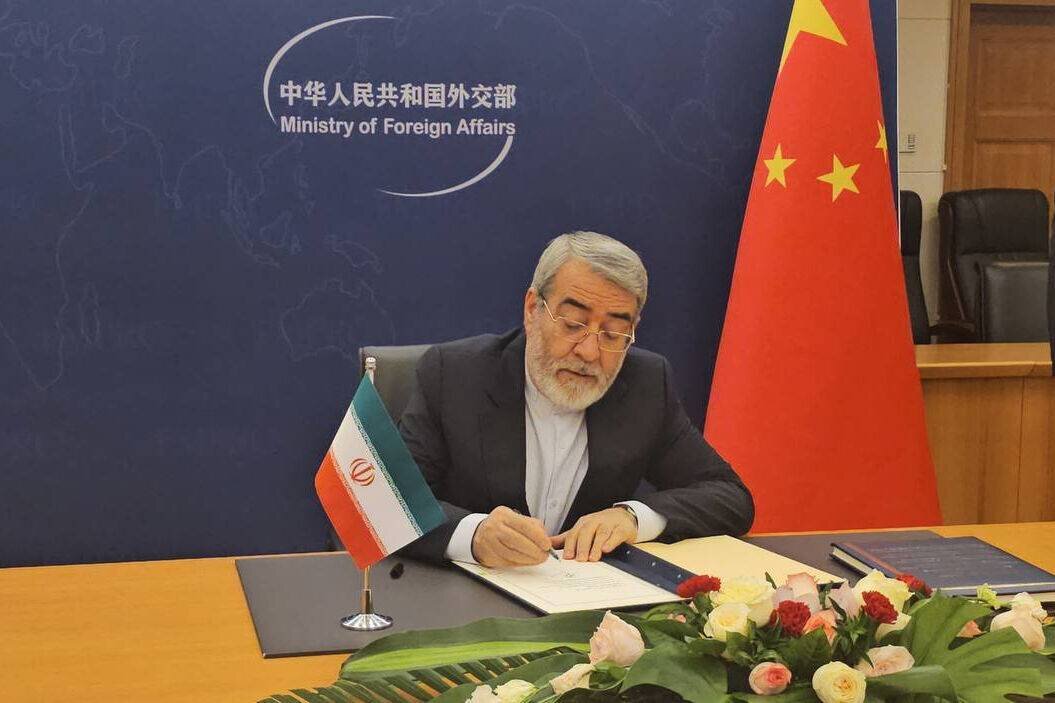
TEHRAN – Iran has joined the World Artificial Intelligence Cooperation Organization (WAICO), a China-led intergovernmental organization to promote international cooperation on AI, as one of the founding states after signing the new body’s agreement in Shanghai, China.
Iran’s ambassador to China, Abdolreza Rahmani-Fazli, signed the agreement on behalf of the country on Friday, IRNA reported.
Holding a meeting with Liu Bin, Assistant Minister of China’s Foreign Affairs, the official highlighted the importance of multilateral cooperation in shaping the future of advanced technologies.
He also voiced Iran’s readiness to actively participate in scientific, research, and practical development of AI, as well as the development of international mechanisms for equitable use of and access to AI.
Joining this international initiative, Iran, as a founding member, is implementing a constructive approach towards evolving technologies and benefiting from AI potentials for sustainable development and societal progress, Rahmani-Fazli highlighted.
The new organization, first proposed by China at the 2025 World Artificial Intelligence Conference, is planned to be headquartered in Shanghai and is meant to operate as an independent intergovernmental entity.
On July 16, a day before the annual World Artificial Intelligence Conference in Shanghai, officials from 29 countries, including Iran, Russia, Pakistan, Indonesia, Brazil, Kazakhstan, and other countries from Asia, Africa, and Latin America, signed the agreement to establish WAICO. The event was attended by United Nations Secretary-General António Guterres.
The WAICO agreement stresses open participation without conditions tied to political systems or values. It places strong, or rather pointed, emphasis on narrowing the technology-access gap between richer and poorer nations. It seeks to support developing countries in building AI capacity, shaping governance rules and technical standards.
It also aims to promote international cooperation on AI so that it remains beneficial, safe, and fair for all, in line with the principles of the U.N. Charter and with a people-centered approach.
Iran’s proposals at Global Dialogue on AI Governance
In July, the head of the Secretariat of the Headquarters for AI Technology Development and Applications delivered a lecture at the Global Dialogue on AI Governance and put forward five proposals, and announced the country’s readiness for the expansion of international cooperation.
The UN Global Dialogue on AI Governance was convened by the UN General Assembly in Geneva on July 6 and 7.
Iran is ready to have a constructive participation in shaping the future of AI governance. The country has high potential, including young scientists, researchers, and engineers in data science, to play an effective role in regional and international collaborations in the AI sector, Mehr news agency quoted Emadeddin Fatemizadeh as saying.
The dynamic ecosystem of knowledge-based companies and innovative startups highlights our determination to achieve technological progress, he added.
To help realize the objectives of this meeting, Iran proposed the following five recommendations.
The first suggestion called for the establishment of a regional AI academy to train specialized personnel and develop joint educational and research programs in universities and research institutes of the regional countries.
The second proposal focused on the development of a joint regional fund for AI innovation and development, aimed at supporting early-stage startups, facilitating the emergence of “unicorn” companies, and funding national projects.
Establishing a digital free zone to foster the development of AI-based businesses across the region was the third proposal.
The fourth recommendation highlighted the need for the development of legal frameworks and regional regulations to deter the use of AI in destructive military applications against civilians.
The development of common infrastructure and data centers dedicated to non-military applications was the last proposal offered by the country.
The official went on to say that the future gap will not be an income or industry gap but a gap in data, processing capabilities, and access to AI infrastructure. So, actions need to be taken today to narrow these disparities and place shared data centers and computing capacities at the service of science, health, education, the environment, crisis management, and public welfare, he concluded.
Leave a Comment