Iran is not Venezuela: Hormuz Strait and limits of US power
TEHRAN - The Americans are masters of grand pronouncements and miserable failures in execution.
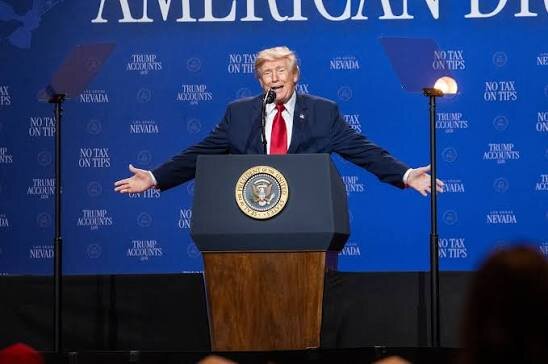
"To the victor belong the spoils," Donald Trump declared with a characteristic bravado at a rally in Las Vegas on Wednesday. He added, "We're taking a lot of oil from Venezuela—billions and billions of barrels of oil… And we're doing the same in the Islamic Republic of Iran."
In response, Iranian Foreign Ministry spokesman Esmail Baqaei said before anyone can lay claim to war spoils, they must first emerge victorious in the conflict.
Writing on X, Baqaei said one cannot help but think of Joseph Heller’s Catch-22, in which Milo Minderbinder, an opportunist profiteer, turns war into a profit-making venture.
The satirical war novel portrays an absurd world where warfare and profit become so deeply entangled that soldiers fight for personal financial interests rather than for their country. The American president appears to be lifting that same logic from fiction and placing it at the heart of American foreign policy.
Regarding Iran, he says they will do the same as they allegedly did in Venezuela. There is just one small problem: before you claim the spoils of war, you actually have to win the war not get stuck in a strait, fall short of your stated objectives, run low on weapons, and lose your credibility along the way.
So far, the "spoils of Iran" amount to little more than a paper trophy for a victory that shows no sign of materializing. Milo at least knew how to make a profit from conflict; these people are dividing the spoils in front of the cameras before they have even laid hands on them.
Treasury Secretary Bessent's recent claim that the Strait of Hormuz will be demoted from the world's most critical chokepoint to a random body of water within two years is not a statement of fact but a confession of American desperation. The plan involves underground pipelines handling 50 to 70 percent of what currently moves through the Strait, while Saudi Arabia has increased pipeline capacity toward the Red Sea and the UAE is accelerating projects toward Fujairah.
Washington is even discussing reviving the historic Kirkuk-Baniyas pipeline through Syria and Iraq.
This is not a sign of strength. It is an admission that Washington cannot simply eliminate Iran's strategic leverage by constructing alternative routes. Pipelines do not eliminate Iranian missiles, nor do they erase the geographic reality that the Strait remains one of the most efficient routes for global energy transportation.
The Americans are therefore negotiating from a position of weakness while pretending otherwise.
A major lesson we should have learned from the Global War on Terror, especially the Iraq War, is how dangerous it is to manipulate intelligence in order to justify military action. In Iraq, the US claimed that Saddam Hussein possessed weapons of mass destruction and supported Al-Qaeda. As we later learned, neither assertion was true, and Saddam was not a direct threat to America. He was, ironically, a threat to Iran.
Once America invaded Iraq, it found no WMD. Instead, the American presence became a lightning rod for Al-Qaeda fighters, drawing America into a strategic trap in which Washington increasingly believed it had to remain in Iraq to fix the consequences of its own intervention.
The war cost the lives of nearly 5,000 American troops, produced countless casualties and imposed a financial burden exceeding three trillion dollars. Yet today, similar arguments are being used to justify war with Iran: claims of dangerous weapons and warnings of Iran-backed terrorists poised to attack America.
The internal concerns within American military leadership tell a more revealing story than the public boasts. General Dan Caine, Chairman of the Joint Chiefs of Staff, has reportedly warned senior Trump administration officials about the risks of escalation and the limits of available military options. Concerns over dwindling munitions stockpiles and the dangers of a prolonged confrontation have contributed to discussions about finding an off-ramp.
That reality is increasingly difficult to conceal. As Senator Chris Murphy put it, "Donald Trump has lost this war. America is weaker, Iran is stronger, the price to reopen the strait increases by the day." Murphy also pointed to the extraordinary cost of the proposed settlement, arguing that the supposed deal currently on the table would pay Iran $100 billion a year in exchange for reopening the Strait. If accurate, that would represent a remarkable reversal of the original rhetoric: a war supposedly launched from a position of strength ending with Washington paying an enormous price to secure the very access it claimed it could guarantee through force.
The message is simple: possessing overwhelming military power is not the same as possessing unlimited political leverage.
Over 18 American service members have been killed and hundreds injured in this war. Meanwhile, Iran's retaliatory capabilities have remained significant, with reports of attacks against American bases and naval assets, including the USS Abraham Lincoln.
Netanyahu may be checking whether the keys still work. The real question is who actually holds them. Israel may believe it still controls the escalation ladder, but Iran has demonstrated enough strategic depth, missile capability, and political resolve to impose costs that cannot simply be wished away. The region's future will not be decided solely in Tel Aviv or Washington; Tehran has its own leverage and the capacity to shape what comes next. Any attempt to destroy Iran would not erase it. It would risk drawing Israel into a conflict whose consequences could fundamentally reshape the regional balance of power. Iran cannot simply be bombed into submission, and those who believe otherwise may ultimately discover that the map they sought to redraw is the one that changes them.
The American public is also turning against the war. 54 percent of American citizens oppose it, while only 36 percent support it. America's closest allies have likewise refused to send their navies to help secure the Strait, while countries including Spain and France have openly opposed the military actions.
America has found itself increasingly isolated.
There will come a day when supporters of this campaign may look back and question whether the promises of an easy victory ever matched the realities of the conflict. Trump, who is known by the title of a madman and suffers from psychological illness, repeatedly uses AI generated images portraying himself alongside celebrated American military figures, and his public rhetoric about military triumph reflects a political culture increasingly detached from the sacrifices of actual soldiers.
The Americans believe they are fighting to preserve their global dominance, but they may instead be accelerating the erosion of their own credibility. They did not learn all the lessons of the Iraq and Afghanistan war, and Iran presents a fundamentally different strategic challenge.
American strategy has been incoherent from the start. American leadership began the war under claims of a nuclear threat that, according to the argument presented by American intelligence assessments, did not justify military action. The American intelligence has failed in its influence operations in Iran. The apparent American objective of regime change has failed to materialize. Instead of producing widespread unrest, external military pressure has strengthened defensive nationalism inside Iran.
Even the economic strategy faces limits. Washington may build pipelines, but Iran still possesses geographic leverage over the Strait of Hormuz. Iranian officials have made clear that reopening the trait is contingent upon American acceptance of Iranian conditions, rather than simply the creation of alternative shipping arrangements.
This is the reality Washington cannot wish away.
America still has an opportunity to learn from its recent history and step back from another war it cannot fully control. Doubling down would risk turning another limited military operation into a prolonged and aimless conflict.
The Strait of Hormuz is not a random body of water. It is a central element of Iran's strategic geography and sovereignty. America has not discovered a way to destroy that leverage; it has only demonstrated the limits of military power when confronted with geography, deterrence, and political resistance.
The Strait of Hormuz is not a bargaining chip that Washington can simply remove from the map.
Geography cannot be bombed away. Sovereignty cannot be negotiated at gunpoint. Strategic leverage cannot be erased by promises of alternative pipelines.
Washington still has a choice: step back from a war it cannot fully control, or continue believing that military power alone can force Iran to surrender its national interests. History has already shown where that illusion can lead.
The real measure of power is not how much destruction a country can unleash, but whether it can achieve its political objectives without destroying its own credibility in the process.
Iran is not Venezuela. It will not surrender its sovereignty simply because Washington has decided that the spoils belong to the victor.
Leave a Comment