From Waste Management to Material Cycle Management: Mobarakeh Steel’s Path in the Circular Economy
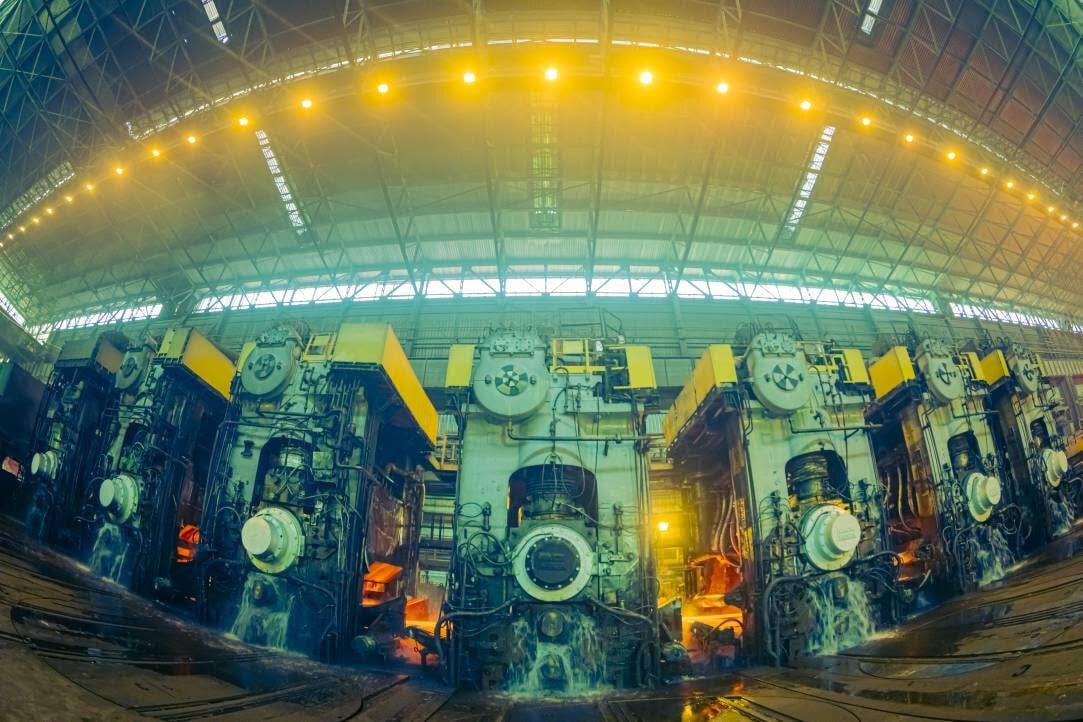
Mobarakeh Steel has moved beyond the traditional view of waste, advancing toward material cycle management—a path where scrap returns to production, slag is converted into infrastructure, and byproducts shift from an operational cost into an opportunity for creating economic and environmental value.
According to reports, in the morning before Isfahan fully awakens, the roads are already active. Vehicles drive along the city's 4th traffic ring road, traveling on asphalt whose aggregates originate from a source that few would associate with roads: steelmaking slag. A material that once marked the end of an industrial process has today become part of the city’s urban infrastructure.
This simple scene raises a critical question: if a material leaving the furnace can re-enter economic life, can it truly be labeled as "waste"? This question is not limited to Isfahan; the global steel industry faces the exact same challenge. It is an industry requiring massive volumes of raw materials and energy for production while simultaneously needing to reduce its environmental footprint.
Under these conditions, value is defined not only by the steel leaving the production line, but also by the materials remaining mid-way and at the end of the process. Here, the circular economy shifts from a mere environmental concept into a fresh operational logic for manufacturing: a material should not be considered finished as long as it retains the potential to create value. Mobarakeh Steel initiated this logic right from within the plant.
A Factory with 300 Different Endings
In a steel complex, "waste" is a simple term for complex materials. At Mobarakeh Steel, approximately 300 types of operational and non-operational waste streams have been identified, each possessing distinct characteristics, compositions, processing methods, and applications.
This sheer diversity demonstrates that a circular economy cannot begin at the stage of selling scrap; first, one must know exactly what materials exist. Consequently, developing a comprehensive Waste Atlas for Mobarakeh Steel has been prioritized—a foundational reference for identifying, classifying, and documenting technical knowledge related to these materials.
The significance of this atlas lies not only in data recording. In an industry where a significant portion of knowledge is shaped through workforce experience, documenting it prevents organizational memory loss and enables structured decision-making for future generations. However, the most important outcome is the shift in perspective toward the material itself. Once a waste stream is identified, its properties determined, its processing pathway mapped out, and its potential applications uncovered, it is no longer an unknown residual byproduct. It becomes a secondary raw material—a material for which a future can be defined.
From Material Identification to Mapping Its Path
Knowledge without data, however, is insufficient. In a massive industrial complex with such material diversity, waste flows must be fully visible and traceable—from scrap arrival to processing, consumption, sales, and inventory management.
To achieve this goal, Mobarakeh Steel is pursuing the development of a Waste Processing Management Dashboard, an integrated system designed to consolidate these material streams into a single unified platform. This project has achieved approximately 60% progress to date and is scheduled for operational deployment this year.
On the surface, this system is a management tool; internally, however, it creates a bridge between material data and strategic decisions. When data is centralized, it becomes clear which materials are being wasted most, which processes require optimization, what has processing value, and which output can find new customers within the industrial supply chain. In the next stage, this data infrastructure can pave the way for predictive analytics and the utilization of technologies such as artificial intelligence for more accurate waste identification and sorting. Therefore, a circular economy is built not merely by returning materials, but through the ability to track and see the material throughout its entire lifespan.
Scrap: A Past Without Waste
Scrap is perhaps the most widely recognized form of material recovery in the steel industry. Steel once used in vehicles, buildings, or industrial equipment does not necessarily exit the economic cycle at the end of the product’s lifespan. It can be collected, sorted, remelted, and transformed into a raw material for secondary production.
In this cycle, the past becomes the input for the future. For Mobarakeh Steel, returning scrap to the manufacturing process is part of this ongoing effort to reduce waste and utilize resources more efficiently. Yet the significance of this practice extends beyond the factory walls. The more an industry can recover materials from previous product lifecycles, the less dependent it becomes on extracting and transporting fresh raw resources—a matter that holds simultaneous economic and environmental importance in a world facing growing pressures on energy and natural resources. In this view, scrap is not iron whose life has ended; it is iron that has simply moved from one industrial life to another.
Slag: A Loop Around the City
While scrap represents material returning to the factory, slag exemplifies material returning outward into society. After forming during the steelmaking process, slag can be utilized in civil engineering applications through appropriate processing.
One of the most tangible examples is seen in Isfahan, where processed slag from Mobarakeh Steel has been incorporated into asphalt production for the city’s 4th traffic ring road. In another effort, this material has also made its way into railway infrastructure, where utilizing Mobarakeh Steel's slag in railway station development bridges the gap between the steel and transportation sectors in a concrete, physical way for the first time.
A material that was once situated at the far end of the steelmaking process can now support infrastructure enabling the large-scale movement of goods, materials, and people. From urban ring-road asphalt to railway lines, a unified logic emerges: what is considered the end of a process in one industry can mark the beginning of a process in another. Here, slag is no longer an unwanted output; it has transformed into a material doing new work elsewhere in the economy. This exact transition defines the boundary between basic waste management and true material cycle management.
One Plant, Multiple Industries
When processed slag leaves the factory and is utilized in civil construction projects, something more significant than the consumption of a byproduct occurs: two economic supply chains that were previously viewed as separate become interconnected. Steelmaking yields an output; road construction requires materials; technology, standards, and processing bridge the gap between them.
When technical specifications are met, such linkages reduce reliance on virgin raw materials and alleviate pressure on natural ecosystems. This same logic can connect diverse industries on a broader scale—from road building and civil construction to cement manufacturing and other sectors capable of utilizing steel byproducts. Here, the circular economy is no longer a localized loop within a factory; it becomes an interconnected network linking different industries together.
A High-Value Economic Cycle
No cycle sustains itself without lasting economic value. Mobarakeh Steel’s performance metrics in 2025 demonstrate that this circular mindset extends beyond environmental preservation into financial economic performance.
Executing 11 improvement projects during the year generated a total positive financial impact of 13.5 trillion IRR (13.5 Hemat). This set of measures encompassed revenue generation and cost reductions, with byproduct sales and waste commercialization serving as key drivers of value creation.
Here, the circular economy evolves from a purely environmental commitment into a strategic economic decision. Material that previously had to be managed as a cost item can now be sold. Byproducts can find viable commercial markets. Waste reduction lowers operating costs, and process optimization allows greater value to be extracted from existing resources without requiring capacity expansion. This shift represents one of the most vital transformations in the steel industry: industrial growth no longer mandates higher resource consumption—it means using what we already have in a smarter way.
Is the Future of Steel Defined Only by Iron Ore?
Global competitiveness in the steel industry in the coming years will not rely solely on raw production capacity. Access to scrap, byproduct processing capabilities, resource efficiency, data management, cost reduction, and market creation for secondary materials will constitute a core pillar of industrial strength.
In such an environment, maximum competitive advantage lies with plants capable of extending material lifespans—materials that are extracted once, consumed once, and brought back into the cycle again. Mobarakeh Steel is actively testing this circular logic at an industrial scale by simultaneously advancing waste identification, smart waste tracking, scrap recycling, and slag processing. This journey is far from over—in fact, it is not meant to have an end.
The Road Returns to the Furnace
We can now return to that initial scene: a morning in Isfahan. The 4th ring road is busy with steady traffic. Beneath the tires lies material that once emerged from the heat of an industrial furnace.
However, the journey of that material did not end there. This time, instead of returning to the furnace, it returned to the city. Meanwhile, on the other side of the cycle, scrap metal returns from the city back to the furnace. Two distinct pathways, guided by a single continuous logic: material remains in motion. Its form changes, its application shifts, but its value does not end.
Perhaps this is the true future of the steel industry: not a plant that consumes resources and discards them, but a facility that finds a secondary journey for every material wherever possible. In such a world, "waste" is no longer the name of a material—it is simply the name of a moment where we have not yet discovered the material's next purpose.
Leave a Comment