‘Iran-South Korea relations; a bridge that stands firm even in toughest days’
Interview with Pooya Firoozi, First Vice Chairman of Iran-South Korea Chamber of Commerce
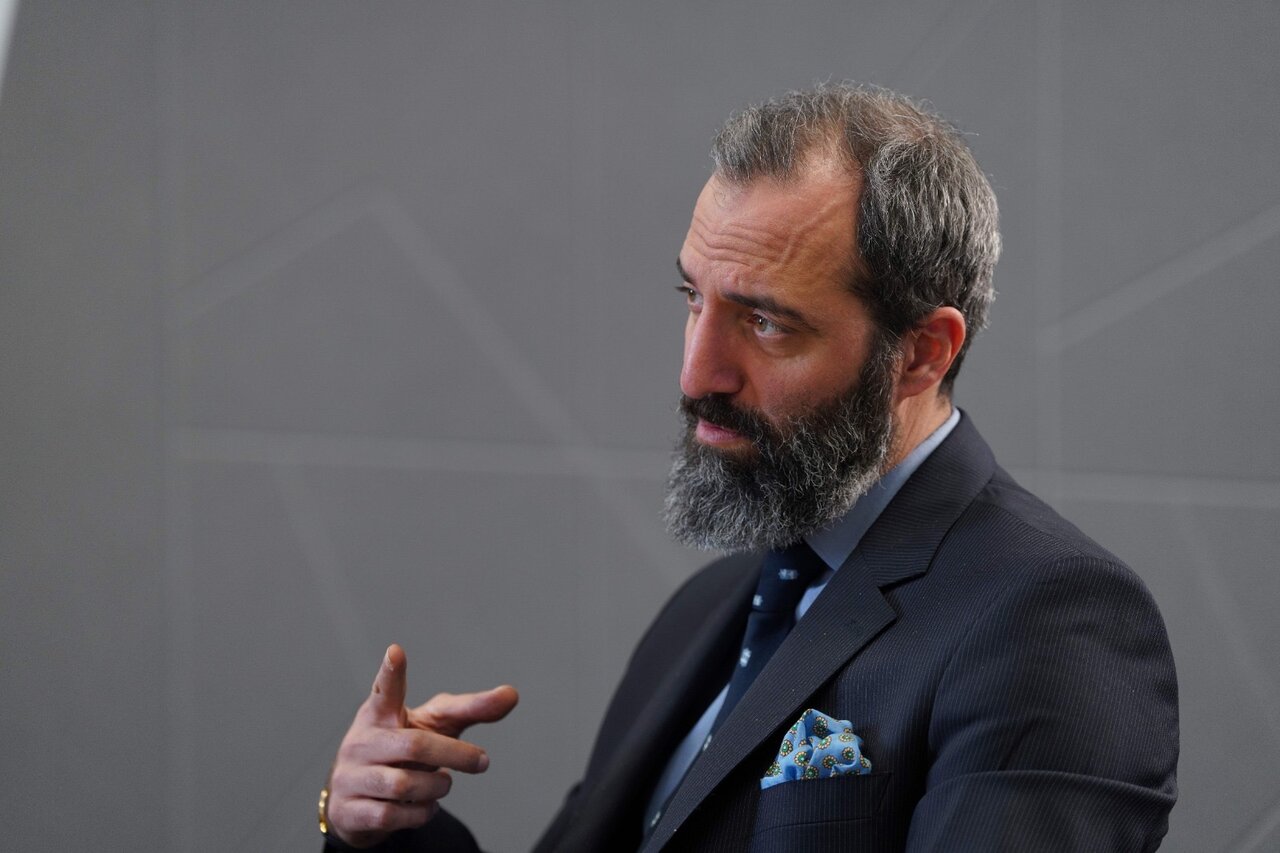
TEHRAN- Iran and South Korea have maintained economic and diplomatic ties for decades, navigating sanctions, geopolitical shifts, and regional turbulence. In an interview with Tehran Times, Pooya Firoozi, First Vice Chairman of the Iran-South Korea Chamber of Commerce, discusses how the joint chamber is working to preserve this vital bridge during the current circumstances—not by waiting for conditions to improve, but by actively preparing Iran for the future opportunities. From transferring South Korea's development know-how and publishing specialized reports to identifying new industrial capacities and fostering provincial partnerships, Firoozi outlines a forward-looking strategy that goes beyond humanitarian projects and aims to transform a fragile connection into a lasting corridor for trade, technology, investment, and human collaboration.
In this interview, while referring to the decades-long history of economic relations between the two countries, Firoozi emphasized that the joint chamber has not merely sufficed with efforts to maintain economic ties in the current difficult circumstances. Rather, by transferring South Korea's development experience, preparing specialized reports, identifying new operational capacities that can be implemented, and maintaining communication with government bodies, chambers of commerce, trade associations, and economic actors of both countries, it is preparing itself for a new phase in Iran-South Korea relations.
He believes that relations between the two countries should not be analyzed superficially or intermittently, and the joint chamber strives to preserve the "communication bridge" between the economic sectors of Iran and South Korea even in the most challenging conditions.
• Despite international sanctions, South Korea has continued its engagement with Iran through humanitarian and development projects, including establishing a vocational training center in Kurdistan, the "Kahak" rural wastewater project in Sistan-Baluchestan, and a school equipped with solar panels in Tehran. How can these projects be used to reopen broader trade routes?
These projects should not be regarded merely as humanitarian actions; rather, they are part of the capital of accumulated trust and history of cooperation between the two nations. In a situation where economic relations have been affected by sanctions and international restrictions, these very collaborations have helped maintain the connection between Iran and South Korea in human, educational, technical, environmental, and clean energy fields.
The Iran-South Korea Joint Chamber is also prepared to transform these experiences, which you mentioned, from the level of limited projects into broader economic cooperation at the appropriate time.
For instance, the vocational training center in Kurdistan can pave the way for broader cooperation in industrial skills training, technical knowledge transfer, and human resource development. The "Kahak" rural wastewater project can be serve as a basis for broader development projects involving cooperation between Iranian and Korean companies in the fields of water, wastewater, and the environment. Moreover, the experience of equipping a school in Tehran with solar panels can serve as a model for nationwide and larger renewable energy projects, especially in public sectors such as schools and universities across the country.
I believe there is readiness to define a cooperative economic development project for each of these experiences and, at the right time, connect Iranian and Korean companies to expand them.
Therefore, these projects should be viewed as small seeds of cooperation that can, under favorable conditions, grow into major economic projects, technology transfer, and joint ventures
• The Korean ambassador has emphasized that "changing external conditions is not within our control, but even within this framework, many things can be done." Beyond humanitarian projects, what is the joint chamber doing to maintain economic dialogue and prepare Iran?
Our approach in the current difficult and difficult circumstances is not merely to maintain trade relations; rather, we have tried, through research and analytical work, to utilize South Korea's valuable experiences during its own crisis periods to define a set of lessons for Iran.
South Korea itself is a country that faced many challenges after the war, resource scarcity, infrastructure problems, and serious economic challenges, yet it managed to become one of the world's major industrial and technological powers within a few decades. Therefore, South Korea's experiential lessons, especially in the current situation, are not merely historical anecdotes; they can provide a collection of practical lessons for Iran's future.
Accordingly, the Iran-South Korea Joint Chamber has in recent months sought to examine Korea's experience in various fields—including reconstruction and infrastructure development, industrialization, export development, financing, SME development, energy, technology, artificial intelligence, human resource training, crisis management, and regional development—and present it for application in Iran.
We continuously prepare and publish specialized and practical reports on South Korea's experience. These reports are not mere translations of news or introductions to Korea's economy; rather, they attempt to analyze Korea's experience and demonstrate which parts of that experience can be adapted and utilized in Iran's current conditions.
This collection of reports is a significant and distinctive effort in this regard, and fortunately, it has been very well received by government bodies, chambers of commerce, economic associations, universities, and Iranian experts.
In fact, in a situation where the extensive development of trade is limited and the transfer of capital, technology, and commodity exchange has become impossible, we have tried to partially compensate for the gap in relations by transferring "experience and knowledge."
This approach is very important to us because a joint chamber should not only be active when trade is booming. On the contrary, in difficult times, the chamber's duty is to preserve knowledge, connections, and experience and prepare the country's economic and business environment for the next phase.
On the other hand, the chamber's communication with Iranian and Korean companies, government bodies, chambers of commerce, and specialized associations remains intact. Thus, simultaneously with transferring Korea's experience, we are also identifying the capacities of both sides and preparing the grounds for future cooperation.
I and other members of the chamber's board of directors believe this is one of the most important duties of a joint chamber in the current situation: not waiting for conditions to change, but preparing Iran for the next phase and the return of economic stability starting from today.
• Emerging industries such as semiconductors, artificial intelligence, biotechnology, and renewable energy have been identified as new areas for cooperation. Is Iran's private sector ready to enter these fields?
Iran's private sector possesses considerable scientific, technical, and human capacity in many of these areas, and the joint chamber, due to its close connection with companies and specialized associations, has a good understanding of these capacities.
Of course, we must be realistic. South Korea is at a global level in fields like semiconductors, and Iran cannot yet enter cooperation from an equal footing in all areas. However, this very difference can create a basis for complementary cooperation.
In fields such as artificial intelligence, software, medical equipment, solar energy, biotechnology, robotics, water technology, and the environment, there are very good grounds for cooperation.
The joint chamber is prepared to identify Iranian companies with capacity and connect them with Korean companies appropriate to their field of activity.
We believe future cooperation should not be based merely on purchasing goods from Korea; it should move towards technology transfer, joint R&D, joint production, human resource training, and even joint exports to regional markets.
• The chairman of the Isfahan Chamber has noted that Korean companies typically prefer cooperation with Iranian government bodies. What is the chamber doing to increase trust in Iran's private sector?
This is understandable, because on one hand, a large portion of our economy is defined within the framework of the government and state-owned enterprise transactions, and on the other hand, Korean economic actors, like any economic actors entering a new market, seek stability, credibility, and risk reduction.
One of the most important capacities of the joint chamber lies precisely at this point.
Over years of activity, the joint chamber has established connections with government bodies, chambers of commerce, specialized associations, large and small companies, and economic actors of both Iran and Korea. Therefore, it can play the role of a professional intermediary between the two private sectors.
We can identify a suitable Iranian partner for a Korean company, especially in the SME sector, review its track record and capabilities, and facilitate initial negotiations.
Conversely, for Iranian companies, we provide an understanding of Korea's business environment, negotiation culture, regulations, and the expectations of Korean companies.
In fact, one of the special advantages of the joint chamber is that it knows both Iran's economic community and Korea's economic community.
This capacity is the result of years of specialized activity in the field of South Korea, and for this reason, the Iran-South Korea Joint Chamber possesses strong expertise and an extensive professional network—a capacity that may not exist to this degree among many other trade partners.
Our goal is to show Korean economic actors that Iran's private sector can not only be their trading partner but can also be a reliable partner in joint production, investment, technology transfer, and regional market development.
• In the meeting of chamber members with the Korean ambassador, emphasis was placed on expanding cultural cooperation and strengthening ties among economic actors. Do you have specific plans for the coming year?
We believe culture and economy are not separate from each other. Cultural understanding is the prerequisite for commercial understanding and for building trust among economic actors.
Relying on its long history of activity in the field of South Korea, the joint chamber has acquired special capacities in trade connections and human capital, including relationships with universities, researchers, translators, cultural activists, economic experts, companies, and institutions on both sides.
Therefore, our plan is not merely to hold a few cultural events. The main goal is to strengthen a sustainable network between Iran and South Korea.
Within this framework, we can develop specialized seminars on Korea's economy and culture, B2B meetings, academic programs, training courses, introducing Iran's industrial and trade opportunities to the Korean side, and the targeted participation of Iranian companies in specialized Korean exhibitions.
We also believe that the capacity of the younger generation and knowledge-based companies of both countries should be utilized more, so that Iran-Korea relations are not based solely on the relationships of past generations, and a new generation of economic and scientific actors from both countries enters this network.
• The Korean ambassador has visited several Iranian provinces and praised their industrial and tourism capacities. How does the chamber facilitate provincial connections?
This area is actually one of the country's very important capacities that can also create a roadmap for the chamber's strategy.
Iran is not just Tehran, and South Korea is not just Seoul. Iran's various provinces have diverse capacities in industry, agriculture, mining, energy, tourism, and technology.
The joint chamber, given its connections with provincial chambers and private sector associations, is prepared to connect the capacities identified by them in each province with the appropriate Korean counterpart.
We can use a province-to-province and company-to-company model.
For example, if a province has high capacity in solar energy, we should introduce it to a Korean company active in solar energy; if a province has advantages in medical equipment, food industries, steel, tourism, or technology, we should find the Korean counterpart active in that field.
This model is far more effective than holding general and non-targeted meetings.
The provincial visits of the esteemed South Korean ambassador are also a very good opportunity for this. When the ambassador visits the industrial and tourism capacities of Iran's various provinces, the chamber, alongside specialized associations and provincial chambers, can take this understanding one step further and transform it into direct connections between companies and specific projects.
• Looking five years ahead, what is your vision for Iran-South Korea economic relations, and what indicators would show the success of the chamber's efforts?
I am optimistic about the future of Iran-South Korea economic relations because these relations have a history of more than several decades, and the two economies have complementary capacities in many areas.
However, I believe we should not merely seek a return to past relations. We must design a new version of Iran-Korea economic relations with a proper and efficient roadmap.
In the future, cooperation can be expanded in the form of capital, technology, and knowledge transfer in areas such as modern technologies and AI, renewable energy, medical and health equipment, environment and water management, joint production, R&D, human resource training, investment, and joint entry into regional markets.
The success of this path should be measured with real indicators: increased trade, increased Iranian exports to Korea, renewed participation by Korean companies, joint investment and production, technology transfer, and most importantly, an increase in operational contracts between companies of the two countries.
I am confident that all our colleagues at the joint chamber are prepared for this phase, because they possess the past experience, the understanding of today's market, and the necessary communication network.
• And your final words?
If I want to say it in one sentence, we should not wait for conditions to change; we should be prepared for the day conditions do change.
In conclusion, I find it necessary to appreciate the efforts of all our Iranian friends in South Korea and especially the esteemed ambassador of this country to Iran, Mr. Kim Junpyo, and his colleagues. In the current very difficult circumstances, he has strived with a constructive and realistic approach to maintain communications between the two countries and especially between economic actors. His travels to Iran's various provinces and his attention to the country's industrial, economic, and tourism capacities also reflect this positive and constructive outlook.
This perspective is very valuable to us in Iran and shows that the relations between the two countries are of long-term importance, transcending temporary political and economic conditions.
Economic actors have always believed that although economic relations are influenced by political relations, they should not be sacrificed to temporary circumstances and political developments.
Iran and South Korea have had valuable experiences of cooperation over the past several decades, and in many areas, the economic capacities of the two countries complement each other.
It is natural that we face problems and limitations today, but these problems should not be seen as the end of relations; rather, they should be regarded as a difficult period in the path of a long and historical relationship.
The joint chamber considers it its duty to preserve this bridge during this difficult period and to prepare the ground for a new leap in trade, investment, technological, and economic cooperation between the two countries for the day when political and economic conditions become more favorable.
We are optimistic about the future of Iran-South Korea relations, despite all the existing problems and hardships, and we see it as bright.
Because these relations do not belong only to today; they are the result of decades of understanding, trust, and cooperation. Capital that has been built over decades does not easily disappear and can serve as the foundation for much broader and deeper relations in the future.
We want to preserve the Iran-Korea bridge in the toughest days so that in better days, we can turn it into a broad economic, technological, investment, and human pathway between the two countries.
Leave a Comment