The security and economic gamble facing Iraq
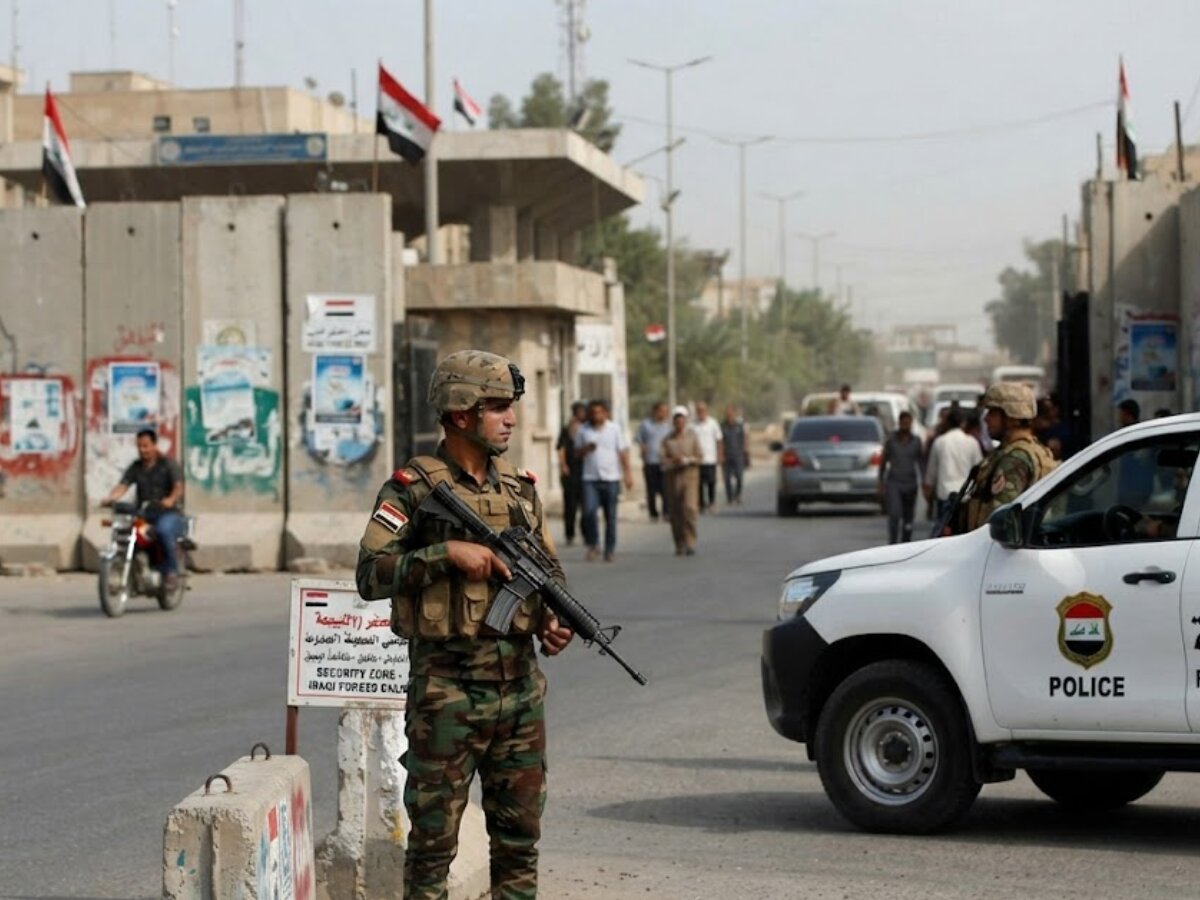
TEHRAN – This withdrawal of U.S. forces is not like its predecessor in 2011, and comparisons drawn from earlier stages of the American-Iraqi relationship are of no use here.
The Iraqi government finds itself caught between conflicting directions, with no single decision capable of satisfying all sides. The United States is awaiting a clear position from Baghdad toward the resistance factions and their weapons amid its military withdrawal on September 30.
It is a common mistake to treat the “weapons issue” and the “armed factions” as though they were a homogeneous bloc that would respond to any political understanding with one voice. Reality is far more complicated.
Some factions that have accumulated a genuine electoral and political presence, and hold parliamentary seats and executive positions, see full integration into the official system as a less costly option than confrontation with it. This is particularly in light of international sanctions pressure that makes an “official settlement” an acceptable exit without stripping them of their actual influence.
By contrast, other factions lack comparable electoral weight and do not regard official institutions as an alternative to armed struggle. Their military doctrine is rooted in the principle of “open resistance,” which does not readily lend itself to institutional integration.
In the absence of genuine guarantees, not just statements, ensuring the continuation of their role and the security of their cadres, maintaining their weapons becomes, from their own perspective, the safer option rather than an act of greater defiance.
In practical terms, this means that any solution to the weapons issue at this stage will not amount to a comprehensive settlement. Instead, it will be a partial realignment that leaves some parties outside the official framework.
This makes the slogan “the state must have a monopoly on weapons” meaningless unless it is backed by genuine guarantees and realistic incentives rather than fleeting promises.
The economic front
There is little point in talking about complete security sovereignty if economic vulnerability is allowed to undermine it in the background. A country cannot claim full control over its security choices while remaining exposed to economic shocks beyond its control.
When the Federal Reserve raises interest rates, the effects can travel through global markets, affecting borrowing costs, capital flows, the dollar, and ultimately the wider Iraqi economy. Iraqis may have no say in such decisions, but they can still feel their consequences.
As Iraq pushes to reclaim control over its security decisions, it is simultaneously confronting a structural crisis rooted in its near-total dependence on oil revenues. Oil remains the main channel through which the United States retains significant influence over Iraq’s financial flows.
Under such conditions, the dinar is unlikely to displace the dollar in Iraq’s domestic commercial market. This problem is compounded by an oversized administrative apparatus and corruption that, over two decades, has drained resources. Those resources could have been invested in building a modern defense and intelligence system capable of reducing the state’s reliance on external support in the first place.
Then there is the battle for trust, a battle the state has struggled to win after failing to provide jobs and services for its young people. The result is a social vacuum no less dangerous than a security vacuum along the borders, and perhaps even more exploitable, because a social vacuum requires no infiltration through a border crossing. It already exists inside every Iraqi city.
Arab states concerned about Iraq, which claim to be its friends and supporters of its stability, bear a responsibility no less significant than Baghdad’s own. Experts argue that they must seriously reconsider their economic relationship with Iraq, as must the United States, and move away from exploiting its urgent need for investment and development assistance.
Iraq’s stability, as previous regional experience has repeatedly demonstrated, is not simply an internal matter. It is a fundamental pillar of stability across the wider region, from the Persian Gulf to the Levant.
Any party that sees Iraq’s economic crisis as a chance for “cheap” investment, rather than as a shared responsibility to support its development, risks keeping the same vacuum in place, one that can be exploited for both political and security purposes.
Conditional, not blind, support
The ongoing negotiations over regulating weapons deserve support, but that support should come with clear conditions rather than a blank check.
The one condition that cannot be compromised is that the process must give the state real control over security decisions. It cannot be a cosmetic settlement that leaves the existing reality unchanged while placing a new legal cover over it, satisfying everyone without truly binding anyone.
This reservation does not come from any preconceived suspicion of the intentions of domestic parties. It reflects a simple recognition that an issue this sensitive can be exploited by external powers seeking to prolong the crisis for reasons unrelated to the interests of the Iraqi state. This is especially true of those powers that have played a role in complicating Iraq’s relations with its neighbors.
Iraq does not need anyone today to convince it that it is capable of defending itself. It proved that through its own blood when it confronted terrorism with the sole support of neighboring Iran during its darkest years.
What is being tested now is not capability but will; not slogans but the details. Who will actually control the borders when the first incident occurs? Who will resolve the weapons issue through genuine guarantees rather than media statements? Who will prevent the economic crisis from becoming fuel for further disorder? And who will recognize attempts to disrupt Iraq’s relations with its neighbors before they turn into a full-blown diplomatic crisis?
All these questions, and the dozens more being asked by the silent majority, require practical answers. Yet the heat and growing intensity of events around Iraq suggest that the country’s senior leadership has yet to show a clear strategy for navigating and defending against what lies ahead.
Nor do they appear to be taking sufficient account of regional developments or taking the necessary measures in response.
The withdrawal of U.S.-led international coalition forces from Iraq, now unfolding on television screens, is not the end of the story. Anyone who sees it that way, experts argue, has misunderstood the situation. The truth is that this is only the opening chapter.
Iraq now faces two choices, while many hope a third will emerge: either it writes this story of sovereignty with its own hand, or it allows someone else to write it on its behalf. And when someone else holds the pen, the price will be paid in Iraqi blood, not from the accounts of those who planned it.
Leave a Comment