Araghchi holds a series of talks in NY on regional security, Hormuz and Iran-EU ties
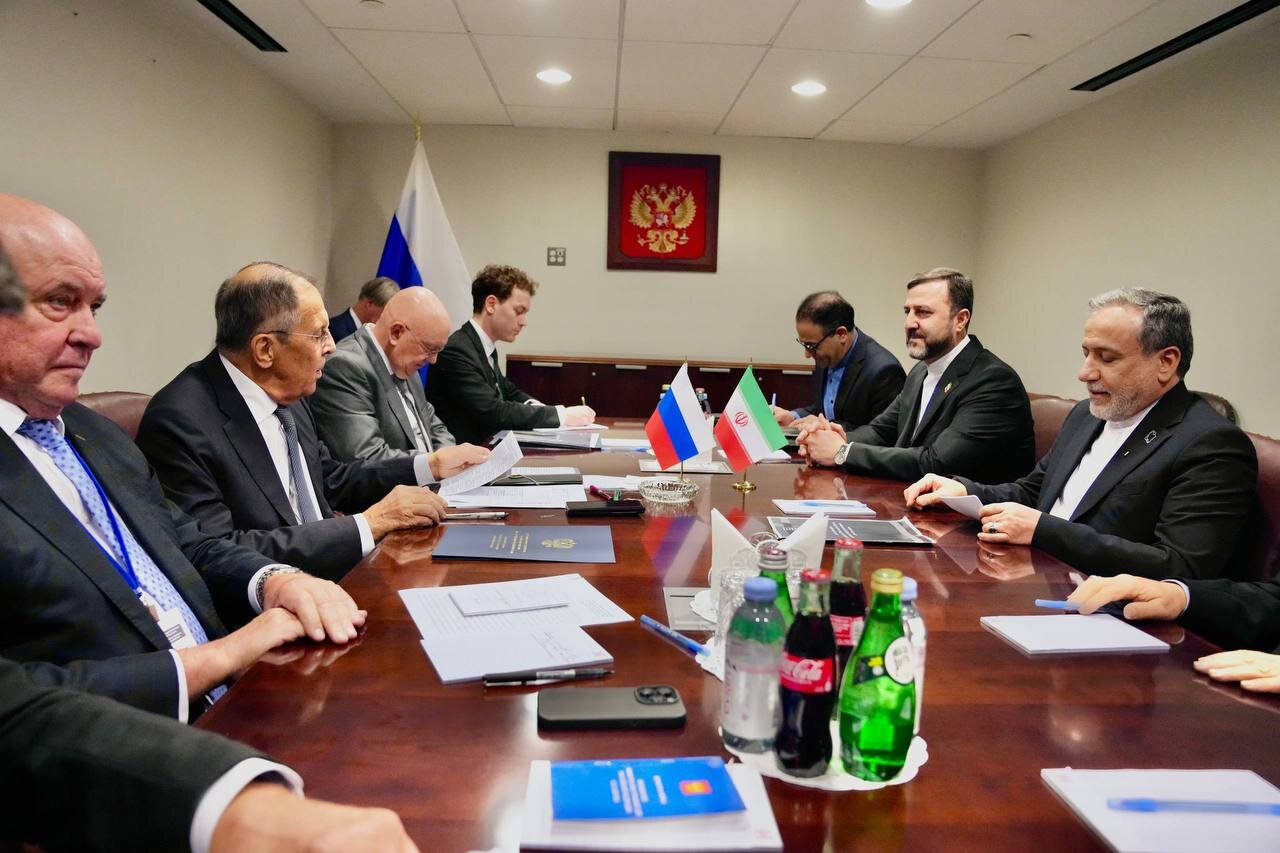
TEHRAN– Iranian Foreign Minister Abbas Araghchi held a series of meetings with foreign counterparts on the sidelines of the 81st session of the United Nations General Assembly in New York, engaging Russian, British, Portuguese, Bruneian, Kyrgyz, Polish, Spanish, Egyptian, Jordanian, Cypriot, Pakistani and Austrian officials on regional security, the Strait of Hormuz, the war in West Asia, Palestine, Iran-Europe relations and bilateral cooperation.
Hormuz and Regional Security
The security situation in the Strait of Hormuz and the future of maritime navigation emerged as a recurring issue in Araghchi’s meetings with European and regional officials.
In talks with Russian Foreign Minister Sergei Lavrov, Araghchi briefed his counterpart on Iran-Oman discussions concerning arrangements for a safe maritime route through the Strait of Hormuz. He also outlined diplomatic efforts by mediators to establish conditions for a return to negotiations.
In separate talks with Portuguese Foreign Minister Paulo Rangel and Austrian Foreign Minister Beate Meinl-Reisinger, Araghchi attributed the disruption of maritime traffic and insecurity in the Strait to US and Israeli military actions. He said, from Iran’s perspective, restoring maritime security would require an end to 'destabilizing US measures and economic pressure.'
Araghchi also raised regional security with Jordanian Foreign Minister Ayman Safadi, criticizing the use of the territory of regional states in military operations. He said Iran was prepared to work with neighboring countries on security arrangements based on regional cooperation rather than external military involvement.
The Iranian foreign minister’s discussions with Kyrgyz Foreign Minister Jeenbek Kulubaev and Polish Foreign Minister Radoslaw Sikorski also touched on the wider regional crisis. With Sikorski, Araghchi warned against linking the Ukraine conflict to developments in West Asia, urging European governments to address security challenges on their own continent while taking positions on regional developments based on international law.
Iran-Europe relations
Relations with European governments formed another major thread of Araghchi’s meetings.
During talks with British Foreign Secretary Edward Miliband, Araghchi criticized Britain’s political and military support for Israel and called on London and other European governments to reconsider policies contributing to instability in West Asia.
The two sides also discussed Iran’s nuclear program. Araghchi reiterated Tehran’s stated preference for resolving outstanding issues through diplomacy and criticized Britain, France and Germany over their positions concerning the so-called snapback mechanism and the US-Israeli military campaign against Iran’s nuclear facilities.
Similar concerns were raised in Araghchi’s meetings with the foreign ministers of Spain and Cyprus. He called on European governments to base their policies toward Iran and the region on international law and avoid 'alignment with parties responsible for aggression.'
Palestine and wider regional conflict
The Palestinian issue was central to Araghchi’s discussions with Brunei’s Foreign Minister Abdul Mateen ibni Hassanal Bolkiah, Egyptian Foreign Minister Badr Abdelatty and Jordanian Foreign Minister Ayman Safadi.
Araghchi called for greater coordination among Islamic countries and a more active role for the Organization of Islamic Cooperation in addressing the situation in Gaza, the West Bank and Al-Quds. He also emphasized the need to support Palestinian self-determination and efforts toward establishing an independent Palestinian state.
With Abdelatty, Araghchi discussed strengthening bilateral coordination alongside regional developments, while his meeting with Safadi focused on regional security and cooperation between Iran and Jordan.
Russia, Pakistan and regional diplomacy
Araghchi and Lavrov also reviewed political, economic, trade, transportation and energy cooperation between Iran and Russia, as well as coordination within international organizations. Lavrov reiterated Moscow’s opposition to 'US and Israeli military aggression against Iran' and emphasized adherence to international law and the UN Charter.
In New York, Araghchi also held talks with Pakistani Foreign Minister Mohammad Ishaq Dar on bilateral relations and regional developments. The meeting came as Pakistan was pursuing a mediating role between Iran and the United States.
Leave a Comment