Tehran Museum of Contemporary Art to hold “Art & War” event series
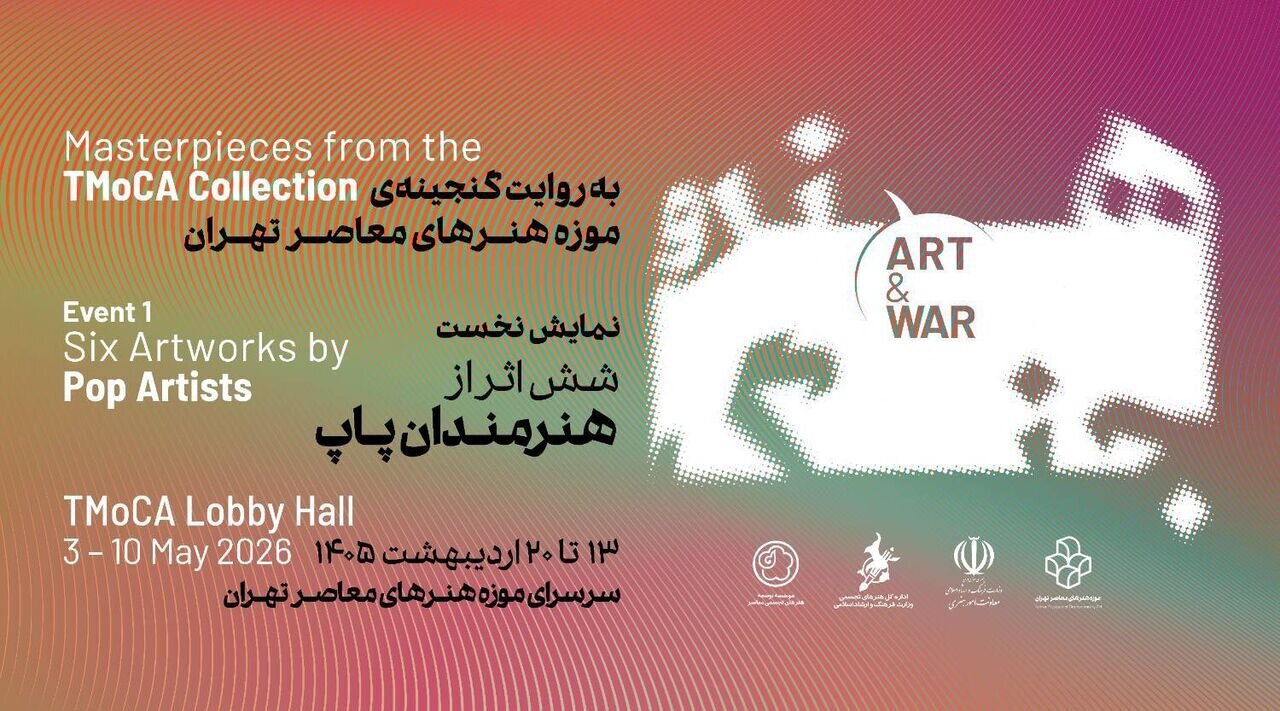
TEHRAN – The Tehran Museum of Contemporary Art (TMoCA) will launch a special exhibition titled “Art & War”.
The “Art & War” event series, starting on Sunday, will examine how contemporary wars and crises affect art and artists around the world, IRNA reported.
In the first part of the series, six landmark works by famous artists of the Pop Art movement, such as Robert Indiana, James Rosenquist, and Roy Lichtenstein, will be on display. These works portray artists’ responses to wars and global crises through the lens of art, inviting visitors to enter a world of reflection, resistance, and rethinking today’s global crises.
Emerging in the decades following the Second World War, Pop Art turned its attention to the imagery of everyday life amid a rapidly expanding world of mass media and consumer culture. The name itself - “Pop,” shorthand for popular - reflected the movement’s ability to hold a mirror to everyday life, challenging the established traditions of art. By collapsing the boundary between elite culture and the visual language of advertising, entertainment, and consumer goods, these artists created a more democratic form of art that could resonate far beyond the gallery walls.
The “Art & War” exhibition, featuring works from the treasured collection of the TMoCA, offers a unique opportunity to revisit and analyze how contemporary wars influence the formation of different art movements.
The exhibition has been planned as an artistic reaction to the 40-day American-Zionist assault on Iran (from February 28 to April 8), which martyred about 3,500 people, including the Leader of the Islamic Revolution Ayatollah Seyyed Ali Khamenei, several officials and military commanders, as well as numerous civilians, including women and children.
During the 40-day war (also known as the Ramadan War), besides some military targets, the US and Israel launched organized attacks against civilian infrastructure, including residential homes, hospitals, refineries, power plants, schools, universities, art and cultural spaces, bookstores, museums, and ancient sites in several cities, causing total or partial damage and injuring innocent people.
Since the beginning of the war, artists in various cities across the country began producing related artworks.
The TMoCA plans to gradually make more works available to audiences, so that with each visit, they can gain deeper insight into the impact of art when confronting historical and contemporary crises.
Established in 1977, the museum has more than 4,000 items that include 19th and 20th-century world-class Iranian, European, and American paintings, prints, drawings, and sculptures. Being the biggest collection of Western art in the eastern world, it includes works from almost all artistic periods and movements.
The museum was designed by Iranian architect Kamran Diba, who employed elements from traditional Persian architecture. The building itself can be regarded as an example of contemporary art, in the style of an underground Guggenheim Museum.
Most of the museum area is located underground with a circular walkway that spirals downwards with galleries branching outwards. Western sculptures by artists such as Ernst, Giacometti, Magritte, and Moore can be found in the museum's gardens.
“Art & War” exhibition will be open to visitors through May 7, from 10 a.m. to 5 p.m., at the Tehran Museum of Contemporary Art, located next to Laleh Park on N. Kargar Street.
SS/
Leave a Comment