Iranian platform uses AI to support Persian language learning for foreign students
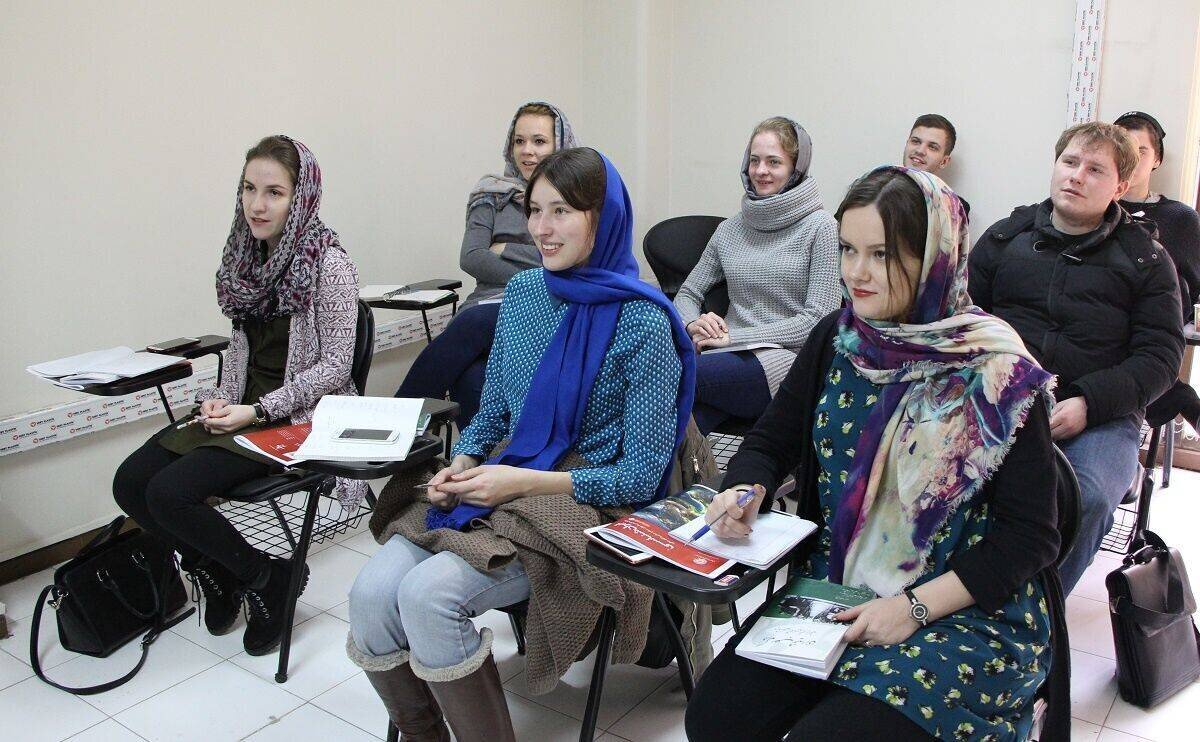
TEHRAN- The growing presence of international students at Iranian universities has brought renewed attention to a practical question: how can Persian language education be made more accessible to learners who may begin their studies with little or no knowledge of the language?
An Iranian educational technology initiative, ParsiGo, has sought to address part of this challenge by developing a digital learning system that combines online Persian language instruction with assessment, student monitoring and educational support.
The system has been developed by Daneshgostar, a knowledge-based company working in educational technologies, in cooperation with the International Language Center of Iran’s Amirkabir University of Technology. It is intended for non-Iranian students and other learners of Persian, including those who are still in their home countries before coming to Iran.
Unlike language applications that primarily provide users with lessons or exercises, ParsiGo is designed around a more structured learning process. Students are placed on a defined educational path according to their level and can move through lessons that include instructional videos, short tests and assignments.
The system also allows students to submit written or audio assignments and receive feedback. At the administrative level, educators and academic staff can follow students' progress and identify areas where additional support may be needed.
One of the elements incorporated into the system is artificial intelligence. According to the information provided by its developers, AI can be used to analyze test responses and assignments, identify recurring language errors and help generate educational reports.
The technology is not presented as a replacement for teachers. Instead, the developers envisage AI as an additional tool for educational staff, particularly in tasks involving the analysis of student performance and the initial stages of feedback. Human support remains part of the proposed model, with educational supervisors responsible for following students' activity and intervening when learners fall behind.
That combination may be particularly relevant to online language learning, where students can easily lose regular contact with an instructor. The ParsiGo model includes monitoring of lesson attendance, assignments and overall activity, allowing support staff to follow up with students who become less active or encounter academic or technical difficulties.
The initiative is also aimed at institutions rather than individual learners alone. Alongside the student application, ParsiGo has a web-based administrative section through which universities and educational organizations can register students, activate courses and review educational reports.
This feature could allow an overseas university interested in Persian language instruction to provide courses to its students without establishing a separate digital learning system. The proposed model also allows courses to be adapted to the requirements of individual institutions or countries.
The potential users identified by the developers include international students preparing to study in Iran, foreign students already enrolled at Iranian universities, learners interested in Persian language and culture, and universities with Iranian studies, Persian language or regional studies programs. Language institutes and cultural and academic organizations are also listed among the potential users.
The project also envisages cooperation with foreign universities, educational agencies and organizations involved in the recruitment of international students. Depending on the arrangement, partner institutions could introduce students to the courses, monitor their progress and receive reports on their performance.
For Iranian universities seeking to attract more international students, access to Persian language instruction before a student's arrival could have a practical advantage. It would give students an opportunity to become familiar with the language in advance, while universities could have a clearer picture of their progress during the learning process.
At the same time, the broader significance of such systems lies beyond the technology itself. The expansion of digital Persian language education could provide Iranian universities and cultural institutions with another channel for reaching learners in countries where access to Persian language teachers is limited.
Whether digital platforms can eventually provide the same depth of interaction as traditional language classrooms remains dependent on how they are implemented and how effectively technology is combined with qualified instructors. For Persian, however, online systems could offer a way to extend learning opportunities to a wider international audience and make language preparation part of the academic journey before foreign students even set foot on an Iranian campus.
Persian, also known as Farsi, is an ancient language spoken primarily in Iran, Afghanistan (as Dari), and Tajikistan (as Tajik), boasting a rich literary heritage that dates back over a millennium. Its script, derived from Arabic, can initially pose challenges for learners unfamiliar with the right-to-left writing system. Persian vocabulary is influenced by both Arabic and various Turkic languages, adding layers of complexity. While the phonetic structure of Persian is relatively straightforward and lacks gendered nouns, the nuances of its grammar, such as verb conjugations and the use of subordinate clauses, require dedicated study and practice, often making it a rewarding yet challenging pursuit for foreign learners.
The difficulty level of learning Persian can vary significantly based on a learner's background and native language. For speakers of languages that share similarities with Persian, such as Turkish or certain Indo-European languages, the transition may be smoother due to overlapping linguistic features.
However, learners from languages with markedly different structures, like Mandarin or Vietnamese, may find the concepts of Persian syntax and grammar more daunting. Additionally, the rich cultural context embedded in Persian literature and expressions can require learners to engage deeply with cultural references to achieve proficiency. Nonetheless, many learners find studying Persian to be an enriching experience, allowing them to gain insight into a diverse and historically significant culture.
SAB/
Leave a Comment