Comprehensive housing plan being drafted at Ministry of Transport, Urban Development
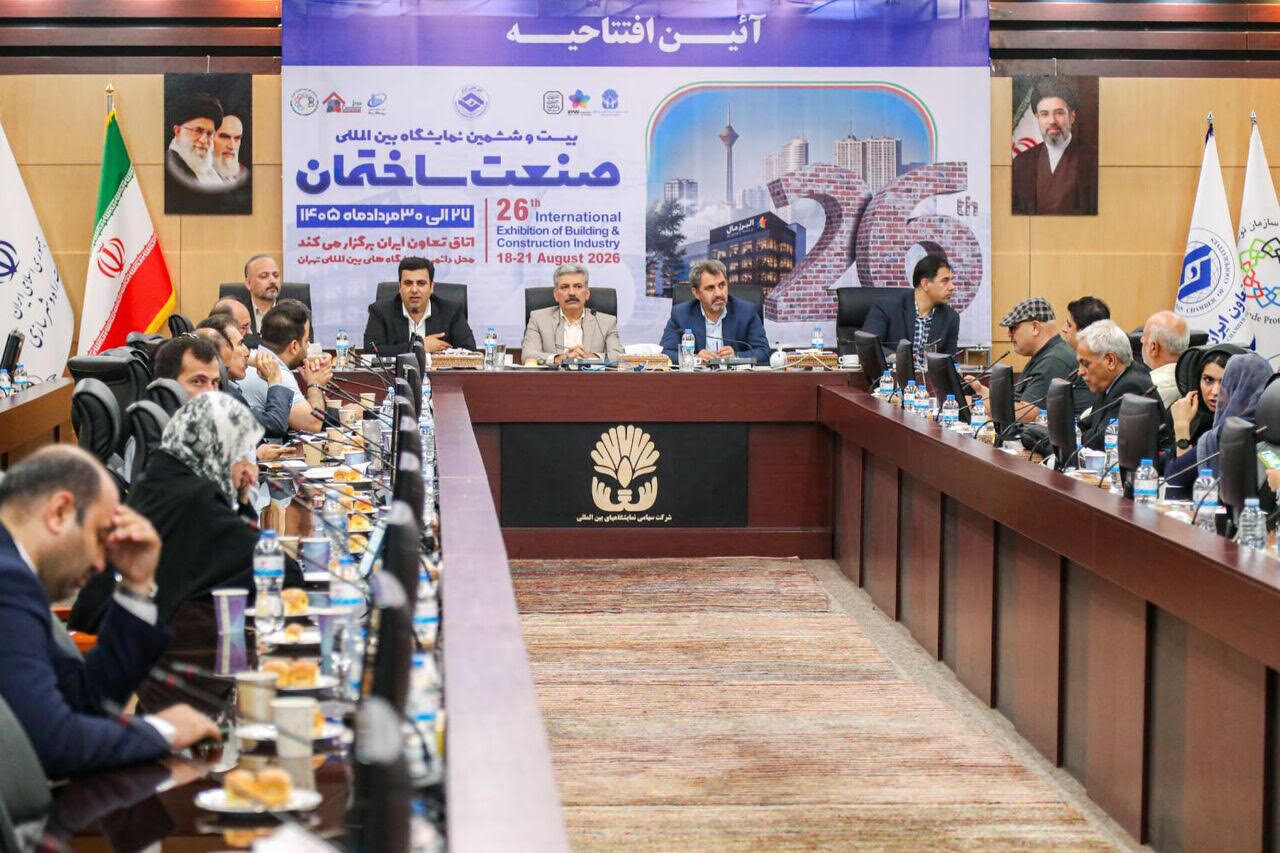
TEHRAN- The financial and economic advisor to the Minister of Transport and Urban Development announced that a comprehensive housing plan is being drafted within the ministry, designed in two phases to serve as a roadmap that accounts for the sector's complexities—an initiative that had been neglected for years.
According to IRNA, Behrouz Maleki, speaking at the Future of the Construction Industry conference held on the sidelines of the Construction Industry Exhibition, highlighted the inherent complexities of housing. He noted that housing is a time-consuming, capital-intensive, and location-bound commodity—meaning that housing needs in one province cannot be met in another province or even another city.
Maleki stated that housing is a good with heterogeneous demand and depends on infrastructure and services, so not every residential building immediately becomes "housing." He also emphasized that identity is a unique issue in housing, and the commodity is long-lasting, with mistakes leaving lasting effects for years.
Maleki stressed that housing policy does not operate in a vacuum and inevitably intersects with all aspects of human life. He rejected the notion that the government's responsibility equals providing housing for everyone, adding that providing land is not the solution either—abundant land does not equal abundant housing, and land is not necessarily habitable. For land to be habitable, proper land use, accessibility, infrastructure, and services must be in place, and even soil quality matters. Sometimes land preparation costs rival construction costs, requiring careful discussion of land issues.
Referring to the experience of new towns, Maleki noted that significant investment has been made over the years, but actual settlement remains below 1.5 million people. He pointed to vast empty lands and vacant residential units as resource waste. Not only are many plots empty, but 30–40% of housing units in new towns remain unoccupied.
On construction patterns, he challenged the argument against building smaller homes for dignity reasons, stating that those making such claims have not experienced homelessness. With shrinking household sizes and rising one- or two-person households, old construction models no longer apply. He observed that a large volume of construction is dedicated to units over 150 square meters, which many households cannot afford—oversizing effectively prices housing out of reach.
Regarding the annual target of building one million units, Maleki asked where, for whom, and with what purchasing power these units should be built, and whether demographic changes have been factored in. He cited international experiences—Japan in the 1990s and China in recent years—as examples of mass construction ignoring real demand leading to large vacancy rates.
On informal settlements, he argued that as long as they are not officially recognized, their problems cannot be properly resolved. He also addressed tax and pricing policies, noting that using taxation to suppress prices or rate-setting to control markets is not new, and their effectiveness should be carefully reassessed.
Maleki identified other areas needing review, including rural housing, deteriorated urban fabrics, referral systems, national building regulations, and related policies. He concluded that housing complexities stem from two sources: inherent and unavoidable complexities arising from the sector's nature, and complexities resulting from incorrect assumptions and misguided policies—and that policymakers are now on a path requiring inevitable correction.
MA
Leave a Comment