Kiarostami films to go on screen at South Korean festival
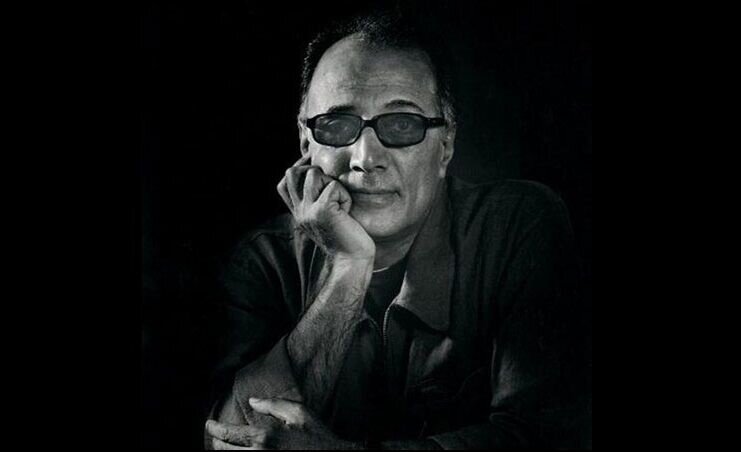
TEHRAN- Six films by acclaimed Iranian filmmaker Abbas Kiarostami are scheduled to be screened at the 11th Ulsan Ulju Mountain Film Festival in South Korea, which focuses on works exploring mountains, nature, adventure, the environment and human experiences.
The program features “The Bread and Alley” (1970), “Orderly or Disorderly” (1981), and “The Chorus” (1982), alongside “Take Me Home” (2016), “No” (2010), and “Ten” (2002), offering audiences a journey through several decades of the director’s distinctive cinematic language.
The films span Kiarostami’s early experiments at Iran’s Institute for the Intellectual Development of Children and Young Adults (IIDCYA) to one of his final cinematic works.
Festival organizers have designed the selection as a cinematic journey from “The Bread and Alley” to “Take Me Home,” connecting the two works through recurring motifs of the alley, movement and the road that run throughout Kiarostami’s cinema.
The festival’s “Human” section, where the Kiarostami program is presented, is centered on the theme of challenge. Festival programmer Jinna Lee describes the second strand of the section as turning to the Iranian master who “laid the groundwork” for such cinematic challenges.
According to Lee, Kiarostami spent his career crossing boundaries between different media and dissolving the distinction between fiction and documentary. His approach to filmmaking, she notes, can be traced from his early work at the IIDCYA to his later experiments with digital filmmaking and nonprofessional performers.
“The Bread and Alley,” Kiarostami’s early short about a boy confronted by a stray dog on his way home, is described by Lee as the film the director himself called “the mother of all my films.” She highlights its combination of a child and an animal – two of cinema’s most challenging subjects – and its simple story of an apparent enemy becoming a friend over a piece of bread.
“Orderly or Disorderly” takes a more experimental approach, presenting the same actions first in an organized manner and then in an anarchic one. Lee points to the film’s movement from a school staircase to a Tehran intersection, describing it as a bold formal experiment beneath the surface of what initially appears to be an educational film.
“The Chorus” focuses on an elderly man who switches his hearing aid on and off to escape the noise of the streets of Rasht. At home, he waits for his granddaughter but fails to hear her arrival. Lee describes the film as an elegant cinematic experiment centered on sound itself, contrasting silence and noise, old age and youth, solitude and solidarity.
“No” presents another exploration of childhood and selfhood, using close-ups and off-screen sound to capture a child’s firm declaration of independence. Lee places the film within Kiarostami’s continuing experimentation with the relationship between everyday life, performance and the cinematic frame.
“Ten,” Kiarostami’s 2002 feature, marks another major stage in this evolution. The film, centered on a female protagonist, was made entirely from footage shot without the director’s physical presence, embracing the freedom of digital video and allowing its nonprofessional performers to act without the constraints of a conventional film set. Lee describes it as a work that pushed innovation in both medium and form and marked a new stage in Kiarostami’s cinema.
The selection concludes with “Take Me Home,” a 2016 black-and-white short filmed in southern Italy. The film moves through stairways and alleys, returning to the motif that had accompanied Kiarostami since “The Bread and Alley.” For Lee, it represents a journey that began with the alley of his debut and returns to it once more as the filmmaker’s “beautiful farewell.”
Taken together, the six films trace a recurring Kiarostami fascination with children, ordinary lives, movement, roads and alleys, while demonstrating his willingness to challenge conventional cinematic forms.
Lee describes the selection as a letter from a “philosopher of the road,” whose compassionate gaze toward children remained central to his work and who consistently left audiences to determine the ultimate meaning of his films.
The 11th Ulsan Ulju Mountain Film Festival will be held in South Korea from September 18 to 22.
SAB/
Leave a Comment