Museum director commemorates Arfa’i as pioneer of Elamite, Old Babylonian studies
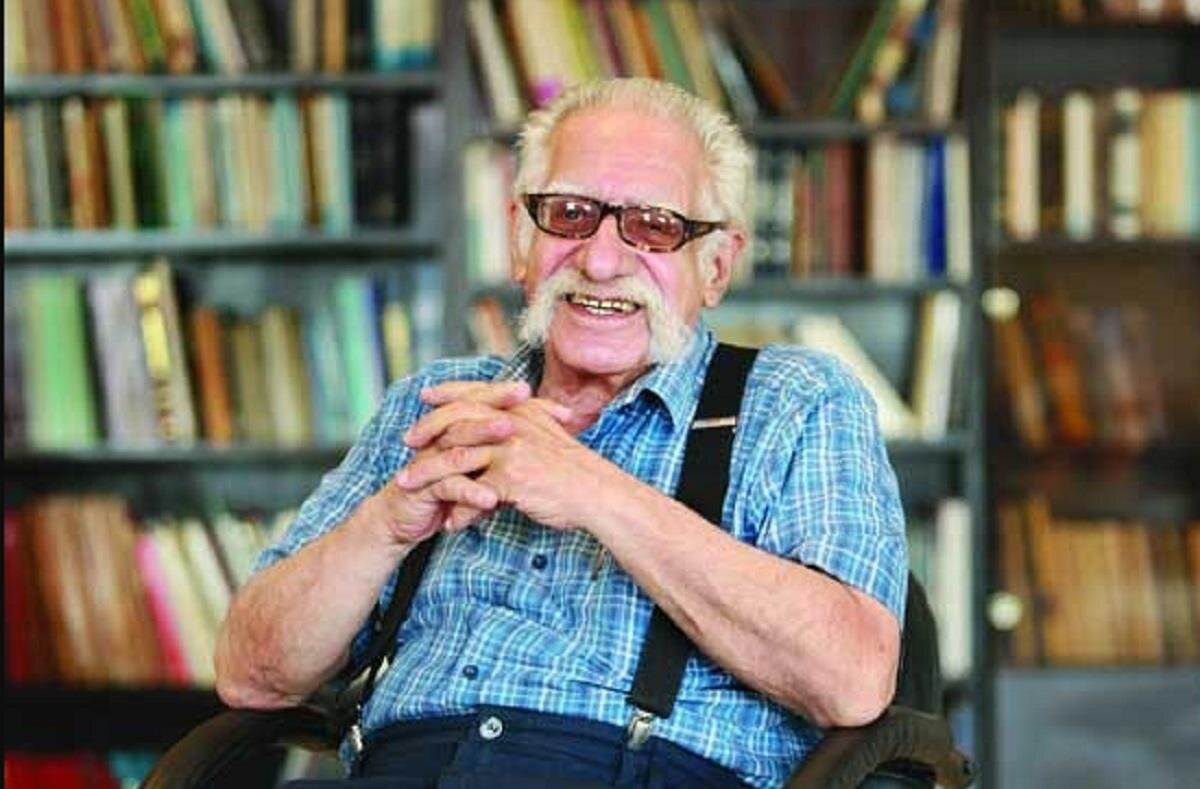
TEHRAN – The head of the museum at Persepolis on Thursday marked the memory of professor Abdolmajid Arfa’i, an Elamite scholar and researcher of ancient Elamite and Akkadian languages, who died on Wednesday at the age of 86 after a period of illness.
Mojtaba Doroudi underlined that Arfa’i was a pioneer and the first Iranian scholar to achieve mastery in Elamite and Old Babylonian, languages used in many Achaemenid tablets and inscriptions. “Arfa’i achieved expertise in the two ancient languages at a time when no other Iranian had successfully read them.”
“Achaemenid inscriptions are written in three languages: Babylonian, Elamite and Old Persian,” Doroudi told the official IRNA news agency. He said that while Fursat al-Dowleh Shirazi pioneered the reading and translation of Old Persian, no Iranian scholar before Arfa’i had managed to decipher Babylonian and Elamite texts.
Doroudi said Arfa’i’s most significant work was the translation of the Cyrus Cylinder, a clay artifact from the Achaemenid period that has been described as an early charter of human rights. In addition to the Cyrus Cylinder, Arfa’i translated numerous Achaemenid inscriptions and the Persepolis Fortification Tablets.
He added that one of Arfa’i’s notable achievements was matching ancient place names recorded in the Persepolis Fortification Tablets with their present-day locations, a step Doroudi described as a major development in the field.
“The Persepolis Fortification Tablets are filled with place names that have changed over time, covering regions from Pars to Khuzestan,” Doroudi said.
Doroudi said only a limited number of linguists worldwide have expertise in Elamite and Old Babylonian.
He added that although instruction in Elamite and Old Babylonian is currently absent from many Iranian universities, Arfa’i worked extensively to fill the gap.
“Teaching Elamite and Babylonian is essential for archaeology in Iran,” Doroudi said, adding that Arfa’i regularly organized training courses in the two ancient languages for graduates and researchers interested in linguistics.
Doroudi, himself a graduate in ancient languages, said Arfa’i studied under Richard Hallock, an internationally known linguist, and was among the pioneers of linguistics in Iran. He said Arfa’i’s decades of academic work contributed significantly to the study of Iran’s history and archaeology.
Born in 1939 in Bandar Abbas in southern Iran, Arfa’i was regarded as one of the country’s foremost experts on Elamite and Akkadian languages and one of the last surviving specialists worldwide capable of reading Elamite cuneiform. His name was closely associated with the translation and study of ancient inscriptions, particularly Achaemenid-era documents.
Arfa’i devoted decades to the reading and translation of ancient texts and inscriptions. He was widely known for his Persian translation of the Cyrus Cylinder from its original Neo-Babylonian language. The artifact, dating to the Achaemenid period, is considered one of the most significant historical documents of ancient Iran.
He translated over 600 clay tablets from the reign of Darius the Great that had been read by Richard Treadwell Hallock, a professor at the University of Chicago and a prominent Elamologist and Assyriologist who died in 1980. The translations were included in the first volume of a series on Persepolis tablets. Arfa’i was the founder of the Inscriptions Hall at the National Museum of Iran, where he helped organize and catalogue more than 5,000 works, according to museum director Jebrael Nokandeh. He also authored several books on Iranian history, including “The Decree of Cyrus the Great,” which examines the Cyrus Cylinder and its historical context.
A graduate of the Oriental Institute at the University of Chicago, Arfa’i earned his Ph.D. in 1974. His doctoral dissertation on the geography of Fars was based on clay inscriptions discovered at Persepolis. Before leaving for the United States, he studied Persian literature at Dar ul-Fonun, the advanced school established during the Qajar era.
Among his most important publications are the book The Command of Cyrus the Great (Center for the Great Islamic Encyclopedia, 2010) and the four-volume collection Persepolis Fortification Tablets (Center for the Great Islamic Encyclopedia, 2008). The second volume of Persepolis Fortification Tablets was recognized as the best work in the field of ancient languages at the 27th edition of Iran's Annual Book of the Year Award in 2009.
AM
Leave a Comment