Economic might of Hormuz: Redefining an Iran-centric West Asia’s economic order
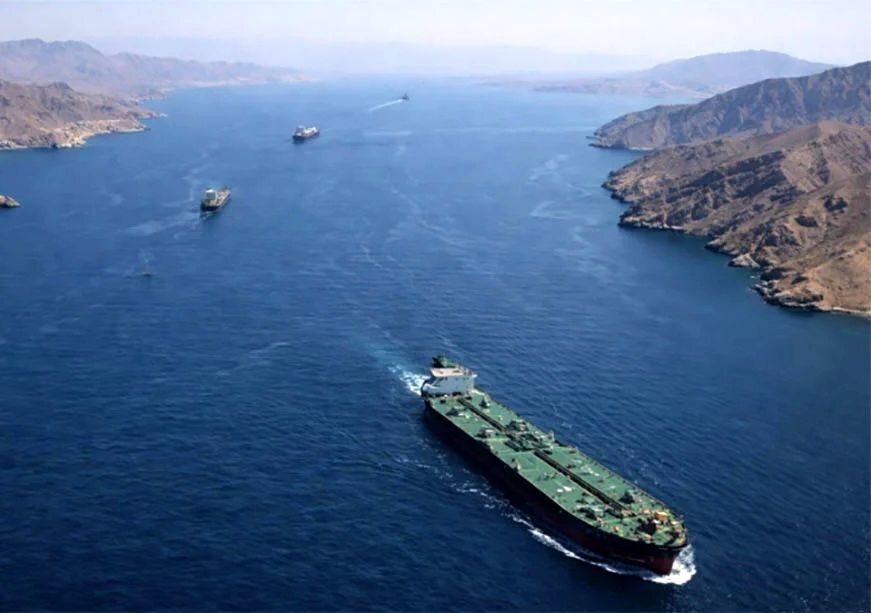
TEHRAN- In the collective memory and civilizational consciousness of the Iranian people, the Strait of Hormuz stands as the central pillar of both economic sovereignty and national identity. Years before any physical confrontation, the Martyred Leader of the Islamic Revolution, Grand Ayatollah Khamenei (RIP), asserted Iran’s absolute authority over this strategic waterway, rejecting any foreign claim or intervention (Grand Ayatollah Khamenei, 2016). Indeed, since the Achaemenid Empire—when strategic ports and maritime corridors along the Persian Gulf shores first linked disparate civilizations—this artery has remained the lifeblood of Iranian prosperity and regional influence.
From the perspective of the modern global economy, the Strait of Hormuz functions as a critical node in a sophisticated web of energy, commodity, and capital flows. Addressing the people of Bandar Abbas in 1998, Grand Ayatollah Khamenei (RIP) described it as “this great global waterway upon which the eyes of all the world’s powers are fixed,” underscoring the necessity of a formidable Iranian presence in the region (Grand Ayatollah Khamenei, 1998).
Economic analysts have recently highlighted the significant revenue potential of the waterway, suggesting that Iran could generate between $70 billion and $100 billion annually through transit tolls. Tehran’s proposed framework for monitoring and taxing passing vessels comprises four key pillars: maritime security, environmental pollution levies, pilotage fees, and the establishment of a regional development and progress fund (Tabnak, 2026). Experts at the International Institute for Strategic Studies (IISS) emphasize that Iran’s unique geography—stretching across nearly 1,000 miles of coastline and peppered with strategic islands at the mouth of the Strait—grants the nation an unrivalled capacity for effective control (CNN in Aaj News English, 2026).
Because any disruption at such a vital juncture triggers a global domino effect, the stability of the Strait directly dictates international energy prices, manufacturing costs, food security, and inflationary trends. Recent escalations involving the American and Israeli regimes against Iran have underscored the Strait’s singular economic gravity to the international community. In a matter of weeks, even the threat of disruption sent shockwaves through financial markets and destabilized global supply chains. The following analysis examines the multifaceted dimensions of the Strait's role in the global economy, supported by the latest fiscal data.
Effects of strategic choke point on global supply chain
The Strait of Hormuz stands as the world’s most critical strategic waterway. On a daily basis, it facilitates the passage of a quarter of the world’s crude oil, one-fifth of the global liquefied natural gas (LNG) trade, 45% of Sulphur exports, and a third of the maritime trade in chemical fertilizers. Beyond these, it carries a vast array of gaseous and metallic raw materials essential to industries ranging from healthcare to digital technology. Consequently, any disruption to this artery poses a direct threat to energy supply chains, primary industries, and the food security of millions across the globe.
According to the latest reports from the US Energy Information Administration (EIA) and figures released by OPEC, an average of 20 million barrels of crude oil and petroleum products passed through the Strait daily in 2025. This volume represents approximately a quarter of all global maritime oil trade and one-fifth of total global trade in oil and LNG (US EIA, 2026a; UNESCAP, 2026).
Following the military aggression initiated by the US and Israeli regimes against Iran in February 2026, and the subsequent instability in the region, this vital artery was completely severed. A March 2026 report from the International Energy Agency (IEA) indicates that following these events, exports of crude and refined products from Persian Gulf nations plummeted to less than 10% of pre-conflict levels (IEA, 2026a). This unprecedented decline marks the single largest supply disruption in the history of the global oil industry.
Of the 20 million barrels per day (bpd) that previously transited the Strait, the contributions of the Persian Gulf states were significant. Saudi Arabia, the world’s leading oil exporter, shipped roughly 7 million bpd of crude and products via this route. The UAE contributed 3.5 million bpd, Kuwait 2 million bpd, Iraq 3.5 million bpd, and Qatar approximately 2 million bpd, including gas condensates (OPEC, 2025). In contrast, while Iran exported roughly 1.5 million bpd of crude and condensates through the waterway prior to the conflict, that figure has now risen to 2.5 million bpd (Adams, 2026).
The crisis extends far beyond crude oil, hitting the global LNG market with unprecedented force. Qatar, which accounts for roughly 20% of the world’s LNG supply, exported over 81 million tons in 2025—all of which transited through the Strait of Hormuz (Anadolu Ajansi, 2026). Following the attacks in March 2026, Qatar’s massive LNG facilities at Ras Laffan sustained damage, taking two production lines with an annual capacity of 12.8 million tons offline for an estimated three to five years (Hellenic Shipping News, 2026). Combined with the UAE, which exports about 5 million tons annually, more than 86 million tons of global LNG supply has effectively vanished.
In the refined products sector, the IEA reports that prior to the crisis, Persian Gulf nations exported 3.3 million bpd of products, including diesel, petrol, fuel oil, and petrochemical feedstock. Furthermore, 1.5 million bpd of liquefied petroleum gas (LPG) utilized this route (IEA, 2026b). Since the onset of insecurity, over 300,000 bpd of regional refining capacity has been knocked out, and refined product exports have collapsed to less than 10% of their former levels.
The impact of the insecurity in the Strait of Hormuz has rippled beyond energy markets, engulfing primary industries and industrial supply chains. Reports indicate that Persian Gulf countries produce approximately 650,000 tons of aluminum annually—10% of the global supply of this strategic metal. Qatalum (Qatar) and Alba (Bahrain), among the world’s largest producers, have seen their exports via the Strait cease entirely. This has severely disrupted supply chains for the automotive, aerospace, and packaging industries across China, India, and Europe.
The supply of Sulphur, a cornerstone raw material for the chemical and fertilizer industries, has entered a state of profound crisis. Persian Gulf nations account for approximately 45% of global Sulphur exports. This substance is indispensable for the production of sulphuric acid, which in turn plays a vital role in the extraction of strategic metals such as copper and nickel. Currently, the disruption has severed the lifeline for 75% of the Sulphur required by Indonesia’s nickel industry and a substantial portion of the copper sector in the Democratic Republic of Congo (IEA, 2026b).
The situation in the chemical fertilizer sector is even more precarious. Persian Gulf states facilitate roughly one-third of the world’s maritime trade in fertilizers. Reports suggest that 21 vessels, carrying approximately one million tons of various fertilizers, are currently stranded in regional ports. Since the onset of the crisis, urea prices have surged by more than 45%, reaching approximately $700 per ton—the highest level recorded since 2022. Crucially, Iran alone commands a 20% share of global urea exports.
Qatar is the world’s second-largest supplier of helium after the United States, representing over a third of global production. This gas is essential for cooling superconducting magnets in MRI and CT scanners, and plays a critical role in lithography and the cooling of equipment used in silicon wafer fabrication. South Korea—home to tech giants Samsung and SK Hynix—relies on Qatar for approximately 65% of its helium imports.
With the closure of the Strait of Hormuz, global helium supply has contracted by 5.2 million cubic meters per month, sending prices soaring by over 100% (Central News Agency, 2026). Experts warn that a prolonged crisis could plunge the semiconductor industry into a shortage comparable to the disruptions seen during the Covid-19 pandemic (AiMeD, 2026).
The impact on the medical sector is equally severe. Disposable equipment such as syringes, catheters, nitrile gloves, and sterile packaging are manufactured from polypropylene, polyethylene, and PVC—all of which derive their primary feedstock from Persian Gulf petrochemicals. The supply chains for ethylene oxide (used for sterilisation), glycerine (a pharmaceutical carrier), and propofol (a common anaesthetic) have all been compromised (Bloomberg Intelligence, 2026). The Association of Indian Medical Device Industry has warned that raw material costs have jumped by 50%, noting that a shortage of syringes and catheters in public hospitals is now imminent (Premier, 2026).
Furthermore, the transport of critical metals like gallium and indium—essential for advanced microchips and display panels—has been hit by disruptions across Southeast Asia (Reuters, 2026). Other specialist chemicals, including bromine, propylene, methanol, and butadiene—the building blocks for photoresist resins and computer components—are also facing acute supply deficits (OC3D, 2026).
The container shipping sector has not been spared. BIMCO, the world’s largest shipping association, reports that approximately 130 container ships, representing 1.5% of the global fleet's capacity, are currently trapped within the Persian Gulf. Estimates suggest that 3% of the world’s total container trade volume has ground to a halt. Given that many vessels operating in the Persian Gulf also serve ports in Pakistan and India, nearly 10% of the global shipping fleet is affected in some capacity.
In summary, macro-level estimates indicate that the insecurity in the Strait of Hormuz is affecting approximately 4.5% of the total flow of international trade. This staggering figure is comprised of a 20% impact on global oil and LNG trade, combined with a 2.4% disruption to the global trade in non-oil commodities (Sada News Agency, 2026).
Global economic aftershocks as the Strait closes
The instability in the Strait of Hormuz, triggered by military aggression from the US and Israeli regimes, has unleashed a wave of economic shocks across the globe, with equity markets emerging as the primary casualties. In its March 2026 report, The Wall Street Journal noted that US stock markets are bracing for their worst quarterly performance in four years. The tech-heavy Nasdaq Composite entered 'correction territory' on 26 March 2026—sliding more than 10% from its recent peak. A day later, the Dow Jones Industrial Average, often viewed as the barometer for the 'real economy', followed suit, recording its own historic slump (WSJ, 2026a).
Granular data reveals that the S&P 500 has retreated by approximately 7.4% from its pre-conflict high as of 28 March 2026 (WSJ, 2026b). Analysts warn that this decline is merely the beginning; should the conflict persist and oil prices touch the $200-a-barrel mark, a far more catastrophic collapse is anticipated.
The contagion has been equally severe across Europe. A report by Bernama on 13 March 2026 highlighted a broad-based retreat in European markets, driven by soaring energy costs and escalating tensions in West Asia. In London, the FTSE 100 fell by 0.47%, while Germany’s DAX and France’s CAC 40 dropped by 0.21% and 0.71% respectively (Bernama, 2026). Banking, aviation, and tourism sectors bore the brunt of the sell-off, with only the energy sector recording positive growth—a hollow victory as high prices elsewhere began to trigger wider systemic crises.
The insecurity in the Strait has sparked a vertical ascent in energy prices. According to YCharts, Brent crude, which stood at $71.32 per barrel on 27 February 2026, surged to $118.42 by 20 March 2026 (YCharts, 2026). This 66% spike in less than a month represents one of the swiftest and most violent price shocks in modern history.
Reports from Vietnam.vn on 30 March 2026 confirmed that Brent crude ended the month at $112.78, having intra-day peaks as high as $116.89. This trajectory has placed Brent on course for its largest monthly gain on record; the 57% increase seen in March 2026 is the highest since 1988, eclipsing even the price volatility experienced during the 1990 Persian Gulf War (Vietnam.vn, 2026).
European natural gas markets have faced a similar reckoning. Investing.com reports that Dutch TTF gas futures—the European benchmark—soared by over 68% in March. Despite a slight softening towards the end of the month, prices remained at €54.68 per megawatt-hour on 31 March 2026, a staggering increase from pre-crisis levels (Investing.com, 2026). This surge has placed unprecedented strain on European household energy bills and sounded the alarm for a renewed inflationary spiral across the Eurozone.
The Baltic Dry Index (BDI), the definitive global benchmark for the cost of transporting dry bulk commodities such as iron ore, coal, and grain, provides a grim diagnostic of the crisis’s impact on global supply chains. According to Hellenic Shipping News, the index retreated to 1,995 points on 31 March 2026, marking a 22-point drop in a single session (Hellenic Shipping News, 2026). Technical reports suggest the BDI is now on track for its first monthly decline of 2026, with a projected contraction of approximately 12.2% (Forex.cnfol, 2026).
An analysis of the index’s performance throughout March reveals a persistent bearish trend; over the last 11 trading days, the BDI recorded seven days of losses against just four days of gains. Paradoxically, this decline is occurring alongside skyrocketing fuel costs—a divergence that signals a sharp drop in global demand for essential commodities and an imminent recession in the world’s manufacturing and industrial sectors.
The crisis’s inflationary toll has been immediate and undeniable. Data from Eurostat shows that Eurozone inflation accelerated to 2.5% in March 2026, significantly overshooting the European Central Bank’s 2% target. For context, in February 2026—prior to the large-scale military offensive launched by the US and Israeli regimes against Iran—the Eurozone inflation rate stood at a stable 1.9% (Investing.com, 2026). This spike is almost exclusively attributed to the energy shock radiating from the insecurity in the Strait of Hormuz.
The surge in freight rates and subsequent inflation has pushed global supply chains to breaking point. Industries reliant on raw materials from the Persian Gulf—most notably the automotive, steel, and petrochemical sectors in China, India, and Europe—are grappling with both prohibitive costs and systemic supply disruptions. With roughly 130 container ships currently stranded within the Persian Gulf, nearly 10% of the global shipping fleet is now entangled in the crisis (BIMCO, 2026).
The IEA has issued a stark warning. Should the current deadlock persist, the combination of energy price spikes and supply chain paralysis could shave up to 3% off global economic growth. Such a contraction, the agency warns, would threaten to plunge millions of people worldwide into poverty and food insecurity (IEA, 2026b).
Conclusion: A paradigm shift in global economic sovereignty
The events of the past month, precipitated by the military aggression of the US and Israeli regimes against Iran, have served as a stark clinical demonstration of a fundamental reality. By virtue of its unparalleled geographic position at the mouth of the Strait of Hormuz, Iran has emerged as the ultimate arbiter of global economic stability. The economic data presented in this analysis offers more than just statistics; it provides a documented testament to the world's profound and precarious dependency on this singular maritime choke point.
This crisis has fundamentally validated Iran’s decisive role within the architecture of the global economy. Far from being a passive observer, Iran is now an active agent capable of steering macro-economic currents at will. The Iranian proposal to levy transit fees on passing vessels—earmarked for infrastructure reconstruction and coastal development—signals a sophisticated transition from a purely defensive posture to a proactive economic strategy designed to leverage its geographic inheritance.
On the global stage, these developments are not merely transient shocks. The international economy, which has tasted its own extreme fragility in a matter of weeks, now faces a binary strategic choice. It must either remain silent in the face of aggressors and their unilateralist policies—thereby risking further paralysis of global supply chains—or it must accept the inescapable truth that global energy security and economic stability are impossible without respect for Iran’s sovereignty and national interests. Recent experience has proven that even the world’s pre-eminent economic powers lack the resilience to absorb the staggering costs of a sustained disruption in this waterway.
The Strait of Hormuz remains the beating heart of the global economy, and that heart beats within the sovereign chest of Iran. If the world seeks to inoculate itself against further systemic crises, it has no choice but to reconcile with Iran’s central and defining role in the emerging economic order of West Asia.
Saied Reza Ameli is a Prof. of Communications and Global Studies in University of Tehran
Leave a Comment