Strategic shockwaves as Trump visits China
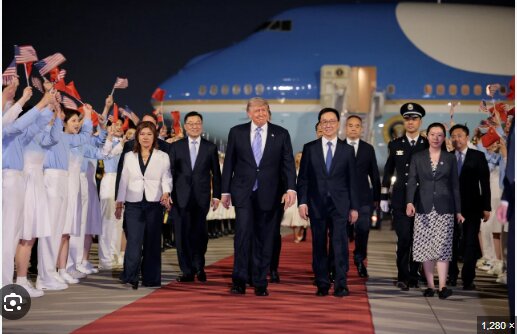
TEHRAN - The prospect of the confrontation between the United States and Iran has transformed global geopolitics from a regional security crisis into a wider test of American power, alliance cohesion, and economic leadership. Against this backdrop, the visit by Donald Trump to China carries significance far beyond bilateral diplomacy. Beijing would likely view such the visit not simply as a diplomatic engagement, but as evidence that Washington, after years of escalating military and economic confrontations around the world, now faces mounting strategic limits and failures.
From Beijing’s perspective, the U.S. war with Iran could reinforce a long-standing Chinese assessment that the United States, despite its overwhelming military spending and global force projection, remains vulnerable when confronted with sustained regional resistance, economic disruption, and alliance fatigue. Chinese strategists have historically studied how major powers become overstretched, and a costly Middle Eastern conflict would likely be interpreted in Beijing as another sign that U.S. power has practical limitations.
In Chinese political discourse, the phrase “paper tiger” — popularized during the Mao era — refers to a power that appears intimidating but struggles to translate military superiority into durable political outcomes. While the United States reportedly retains unmatched conventional capabilities, a widening and prolonged conflict with Iran could fuel narratives inside China that Washington increasingly relies on coercion. Such perceptions would matter deeply in the context of tensions over Taiwan.
For years, Beijing has closely examined U.S. military operations in the Middle East, Eastern Europe, and the Indo-Pacific to assess how Washington might respond in a possible future Taiwan contingency. The war on Iran, started on Feb. 28, has offered China several lessons.
First, China is observing how quickly U.S. military resources have become stretched across multiple theaters. The logistical burden of protecting shipping lanes, maintaining regional bases, and defending allies in the Persian Gulf could reduce America’s ability to concentrate forces in East Asia. Chinese planners may conclude that the United States cannot sustain simultaneous high-intensity crises in both the Middle East and the Pacific.
Second, Beijing is studying alliance behavior carefully. That major U.S. allies have declined to participate directly in military operations against Iran, Chinese officials could interpret this as evidence that Washington’s coalition system is weaker than often portrayed. The reluctance of European governments, as well as countries such as Japan, South Korea, and Australia, to become deeply involved in another “endless” Middle Eastern war would signal that many allies prioritize economic stability and regional interests over alignment with every American military whims.
This is especially important for Beijing because China’s strategy toward Taiwan depends heavily on assumptions about a possible intervention by a coalition of certain countries allied to Washington. Now that Washington has been unable to mobilize unified support in the Persian Gulf, Chinese analysts question whether the United States could build a stronger coalition over Taiwan.
The economic consequences of such a war would also be profound. The Trump administration’s confrontational policies toward Iran, particularly if they contributed to military escalation around the Strait of Hormuz, could trigger severe disruptions in global energy markets and send energy prices sharply higher.
Higher oil prices is sending shockwaves through the global economy, increasing inflation, further disrupting manufacturing supply chains, and slowing growth in both developed and emerging markets. European and Asian economies — many of which remain heavily dependent on imported energy — are facing particularly acute pressure. Ironically, Washington’s own allies are bearing much of the economic cost of the American-Israeli war of aggression on Iran.
For China, these disruptions reinforce another strategic lesson: economic warfare and military escalation are increasingly intertwined. Beijing has spent years diversifying energy supplies, building strategic reserves, and expanding trade networks through projects such as the Belt and Road Initiative.
The war with Iran is also raising difficult questions about American credibility among traditional partners in the Middle East. Persian Gulf Arab states have long depended on U.S. security guarantees, yet attacks on energy infrastructure exposed concerns about whether Washington is able to respond when its allies come under pressure. If the conflict escalates as oil facilities, shipping routes, and regional infrastructure remain vulnerable, doubts about American reliability deepen further.
It is assumed that the United States still maintains enormous diplomatic, military, and technological advantages. However, credibility in international politics is shaped not only by military strength, but by consistency, predictability, and the ability to produce stable outcomes. Endless escalation without clear gains can weaken confidence even among close partners.
Meanwhile, Washington’s inability to assemble a broad international coalition against Iran represents a significant diplomatic setback. European governments have generally favored negotiations and de-escalation with Tehran, fearing both economic disruption and regional instability. Likewise, Asian allies such as Japan and South Korea — highly dependent on Persian Gulf energy imports — have strong incentives to avoid entanglement in a conflict that threatens their own economies.
Australia, while traditionally aligned closely with the United States, is also facing domestic and strategic debates about the risks of participating in another distant military campaign in violation of international law.
In Beijing, these developments may be interpreted as evidence of a changing international order — one in which American leadership is increasingly contested. Chinese policymakers may conclude that the future global system will be more multipolar, less centered on U.S. dominance, and more shaped by regional powers pursuing independent interests.
Beijing is seeking to portray itself as a stable economic actor advocating restraint and global trade continuity, while depicting Washington as a disruptive force whose military confrontations generate instability, inflation, and diplomatic fragmentation.
We should wait to see what will emerge. But one thing is clear: any large-scale confrontation with Iran would extend far beyond the Middle East. It would influence perceptions of American power from the Persian Gulf to the Taiwan Strait, reshape alliance politics across Europe and Asia, and accelerate the geopolitical competition between the United States and China that increasingly defines the 21st century.
Leave a Comment