The war on Iran broke the NATO protection racket
The war exposed a legacy of American control that stretches back to the shadows of Operation Gladio
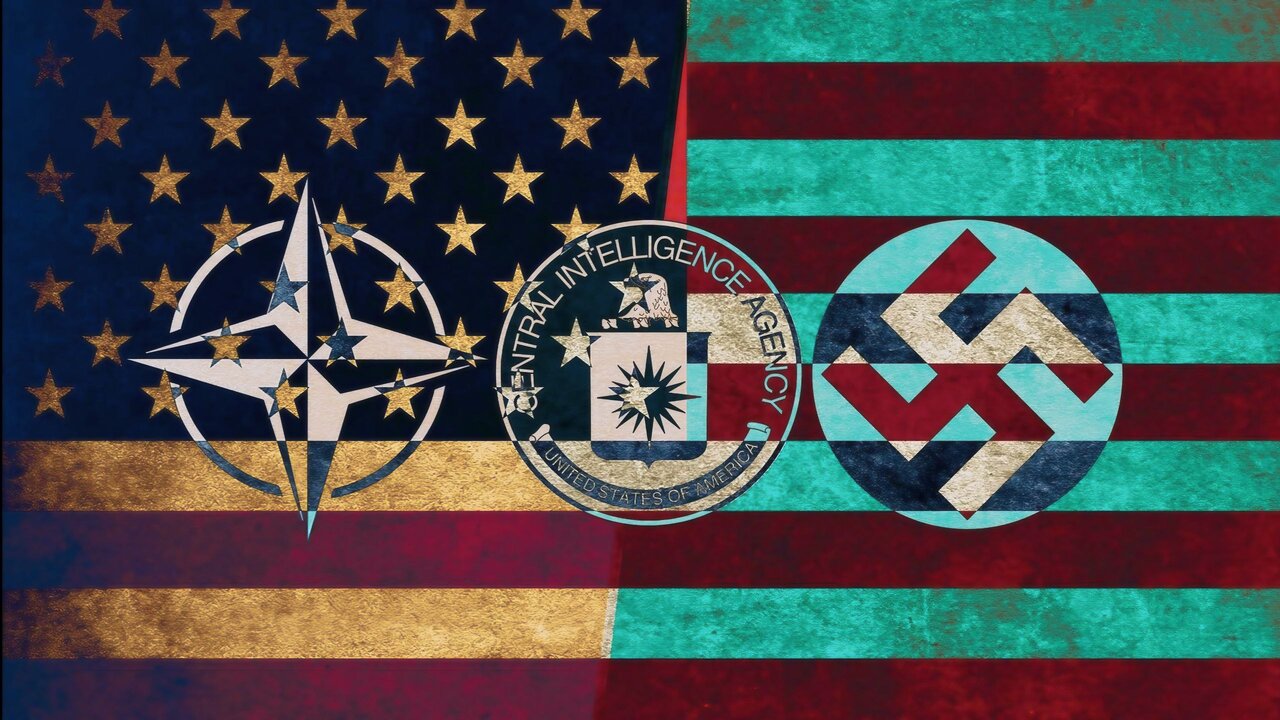
TEHRAN — The 2026 U.S.-Israeli war on Iran has incinerated the 70-old myth of Atlantic solidarity. What was sold to the world for decades as an ironclad shield has been exposed as a hollow ritual, sustained by habit and propaganda but incapable of surviving a genuine collision with reality.
The campaign against Iran forced Europe to weigh its own survival against Washington’s pursuit of full-spectrum dominance. For perhaps the first time, Europe seemed to tentatively prioritize itself, sifting through the ruins of the North Atlantic Treaty Organization for a path forward.
Where the shield cracked
The decisive test of the alliance occurred in the narrow, high-stakes waters of the Strait of Hormuz. Iran’s asymmetric maritime strategy, deploying smart mines, drone swarms, and shore-to-ship missiles against vessels linked to the aggressors, turned a vital global chokepoint into a strategic graveyard for Western naval prestige.
At the same time, Tehran underscored the vulnerability of the American offensive presence by launching precision retaliatory strikes against U.S. bases across the region, exposing the reality that the American umbrella was full of holes.
When Washington demanded a “Coalition of the Willing” to enforce a blockade and reopen the waterway, the major capitals of Europe, Paris, Berlin, and Madrid, stayed home.
They watched the relentless bombardment of U.S. regional outposts and realized that joining this fight meant inviting that same fire into their own economies.
This was the moment the blank check of Article 5 finally bounced. For years, Atlanticists had treated Article 5 as an automatic war trigger, a sacred guarantee of mutual defense. But as the crisis in the Persian Gulf deepened and American bases smoldered, the legal and political reality became impossible to ignore: the clause only requires allies to take the action they “deem necessary.”
By refusing to treat a regional American campaign of aggression as a collective NATO emergency, Europe effectively admitted that the alliance’s promise of protection is a political choice, not a sacred vow.
Donald Trump’s subsequent fury, in which he branded his allies “cowards” and declared NATO a “paper tiger,” only confirmed that Washington views the alliance as a leash that has finally snapped.
A protection racket dressed in khaki
As the strategic rift widened, the mask of partnership fell away to reveal a relationship defined by coercion and extraction.
The mandate for a 5% GDP defense spending target, pushed through at the 2025 Hague Summit, is now seen across European capitals as a mandatory subsidy for the American military-industrial complex.
While European citizens struggle with energy inflation and the de-industrialization of Germany, a consequence of events such as the U.S. sabotage of Nord Stream and the pivot to overpriced American LNG, their tax dollars are being funneled toward firms like Lockheed Martin and Raytheon.
This dynamic is also about imperial discipline. Trump’s order to withdraw 5,000 troops from Germany serves as a punitive warning to any ally that dares to prioritize its own national interest over Washington’s battle plans. This followed remarks by German Chancellor Friedrich Merz, who said the U.S. had been “humiliated” by Iran’s leadership.
From the territorial extortion regarding Greenland to the threat of 25% tariffs on European cars, Washington is behaving less like a leader and more like a debt collector for fortress America.
Operation Gladio and the end of the Atlantic illusion
The crumbling of the alliance is the natural conclusion of a history built on shadows and broken promises.
NATO has long functioned as a sophisticated tool for managing European dependency. This reality only emerged into the historical record in 1990, when Italian Prime Minister Giulio Andreotti exposed the existence of Operation Gladio, a network of clandestine “stay-behind” armies established at NATO’s inception to manipulate European domestic politics through violence and false-flag terrorism.
For decades, these NATO-linked networks conducted false-flag operations and terror attacks across multiple European countries, resulting in the deaths of countless civilians, all to ensure that the continent remained ideologically and strategically tethered to Washington.
When the Soviet empire declined after 1989, the lack of a clear enemy sparked an existential crisis for the alliance, leading directly to what some have labelled Operation Gladio B, a pivot that transitioned these dark tactics into the era of the “war on terrorism” to maintain a perpetual state of fear and control over member states and beyond.
This systemic control is mirrored in the alliance’s overt structure. NATO’s military command remains an absolute American monopoly; every Supreme Allied Commander Europe (SACEUR) in history has been a U.S. general, ensuring that European forces serve as little more than a “picket line” for American strategic interests.
Today, the scarcity of munitions and Washington’s pivot toward China have made this inequality too expensive for Europe to ignore.
With U.S. stockpiles depleted and American attention shifting to the Indo-Pacific, the “security guarantee” has been revealed as a mirage. The war on Iran has merely accelerated a divorce that was already structurally guaranteed.
Leave a Comment