The union of majesty and beauty: Reem Al-Wurimi on spiritual sovereignty of Tehran
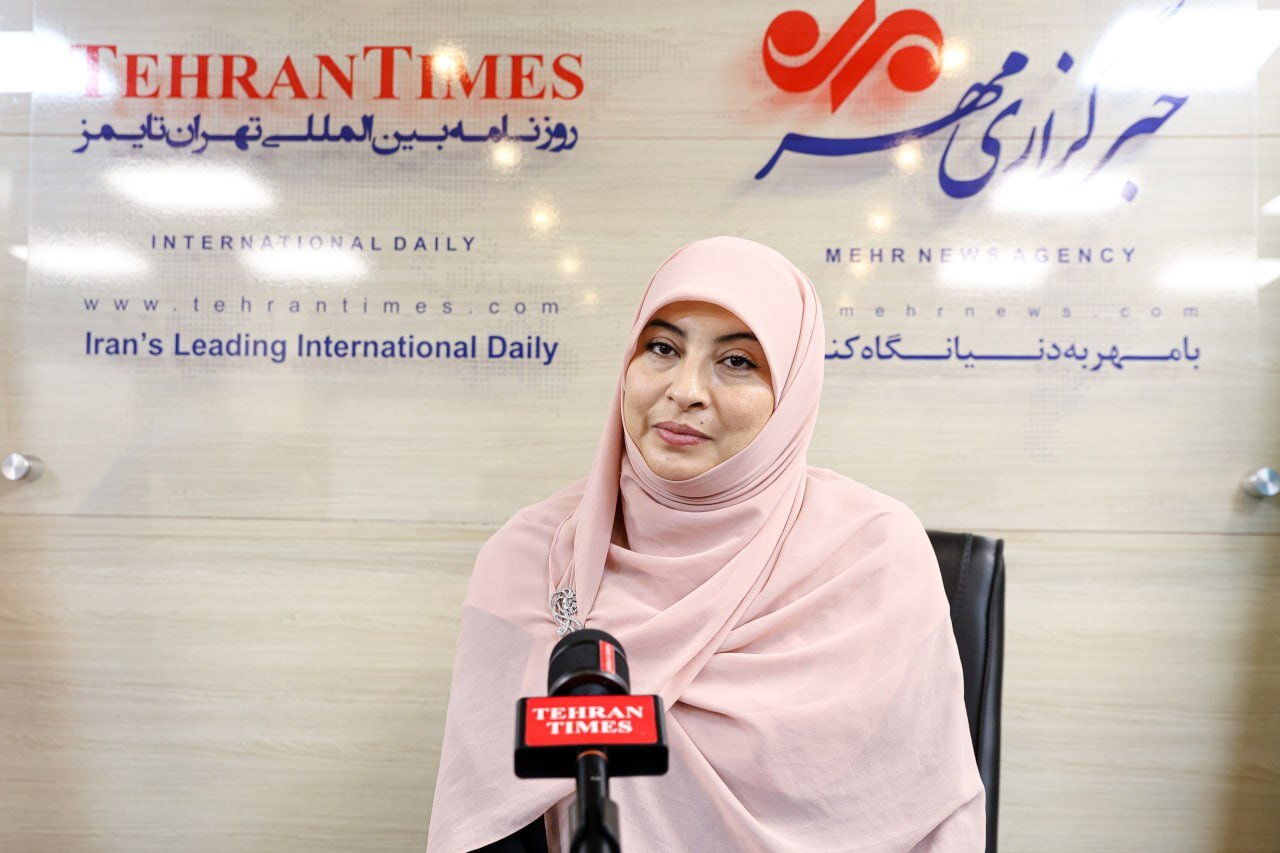
TEHRAN – In the wake of the recent US-Israeli aggression against the Islamic Republic of Iran, a voice from North Africa has emerged to articulate the spiritual and civilizational resilience of the Iranian nation. Reem Al-Wurimi, the acclaimed Tunisian poet and journalist, has captivated the Islamic world with her latest work, "Take Me to the Streets of Tehran."
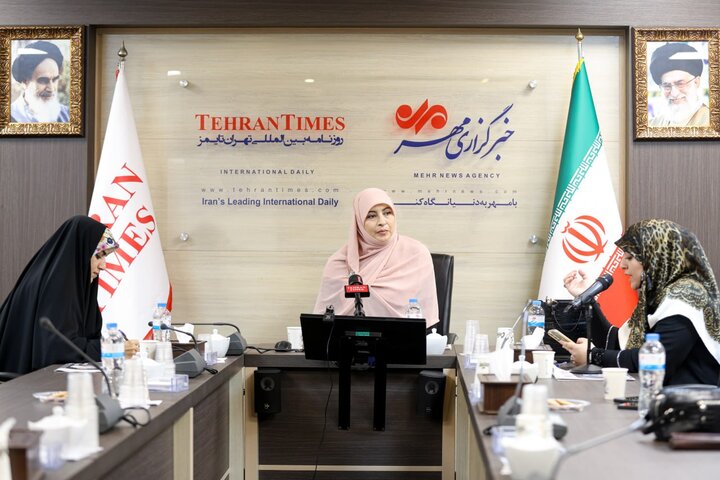
The poem, which has gone viral across regional media platforms, serves as a bold manifesto for a new era of Islamic unity. In an exclusive interview with the Tehran Times, Al-Wurimi —a seasoned intellectual- shared the profound insights that led her to pen transformative poem.
The sanctity of Tehran streets
Reflecting on the genesis of her poem, Al-Wurimi noted that her inspiration was born from the sights of Tehran during the height of the conflict. For her, the city’s streets were not merely sites of transit, but venues of divine worship.
“I saw Iranians spending their nights in the streets during the war. Instead of remaining in mosques on Qadr nights in Ramadan, they brought their devotion to the streets,” Al-Wurimi remarked.
“I realized then that these are the most honorable streets history has ever witnessed. They became sacred to me because they transformed into open-air mosques where a nation stood against global arrogance. The nights of Qadr were being lived out in the open air, proving that resistance itself is a form of prayer.”
The ‘Banner of Honor’ and the shift of identity
Al-Wurimi’s poem has sparked intense debate, particularly in Arab media, for its provocative stance on the shifting leadership of the Muslim world. In her verses, she speaks of a departure from traditional "Arabism," suggesting that the "Banner of Honor" has been passed to Persian hands.
“Interpretation often depends on the inner nature of the listener,” Al-Wurimi told the Tehran Times regarding the backlash she has faced. “In the truth of Islam, sectarian and ethnic labels must fade. When I wrote about moving past my ‘Arabism’ or my ‘Sunni’ identity, my intent was to gather around the ‘Common Word’—the testimony of La ilaha illa Allah.”
She dismissed the malicious interpretations of her work by certain regional outlets, describing them as agents of a Zionist-driven project of "de-identification" aimed at stripping Muslims of their revolutionary spirit. “The line of Truth (Haqq) is the line of humanity championed by the Islamic Republic. Those with sickness in their hearts may threaten me, but God’s light cannot be extinguished.”
A mystical allegiance
Perhaps the most discussed aspect of Al-Wurimi’s poem is her explicit pledge of allegiance to the Leader of the Islamic Republic, Ayatollah Seyyed Mojtaba Khamenei. The Tunisian poet clarified that her stance is rooted in a deep theological and mystical understanding rather than mere political alignment.
Al-Wurimi offered a unique historical perspective on the Iranian leadership: “I see Imam Khomeini as the figure who equipped the material battlefield against the global demonic regime. Following him, the martyred Leader Ayatollah Seyyed Ali Khamenei came to nurture and elevate the souls of the believers.”
“Now, I see Ayatollah Seyyed Mojtaba Khamenei as the one who holds both the ‘Outer Banner’ and the ‘Inner Banner,’” she continued.
“He represents a union of the majesty of the great Khomeini and the beauty of the great Khamenei. My allegiance is a spiritual and mystical union of souls.”
Art as the bullet, media as the chamber
As a journalist as well as a poet, Al-Wurimi emphasized the critical role of cultural production in the current conflict. She described art and media as a single, lethal weapon against falsehood. “Poetry creates the internal image, but the camera delivers it. Poetry is the bullet that must be loaded into the chamber of media to reach its target.”
She specifically praised the role of women and artists in Iran for preserving the "Culture of Resistance." According to Al-Wurimi, the primary goal of the enemy is "deculturization." By maintaining their multi-thousand-year heritage, Iranians have ensured that the foundation of resistance remains unshakable. “Every artist is a ‘culture-maker’ whose duty is to break the constructs of the enemy and rebuild a foundation based on Islamic thought.”
The reality of the post-war city
Concluding her interview, Al-Wurimi expressed her determination to dismantle the distorted images of Iran prevalent in Western and some Arab media. Having walked the streets of Tehran following the recent strikes, she spoke of a city that refused to be broken.
“I am eager to return and narrate the truth. While the media tries to show ruins, I saw a city where everything is clean, life is normal, and the civilization is thriving. You cannot erase this civilization from the minds of the people.”
She called on the Muslim Ummah to view the Iranian experience as a blueprint for the future. “What this nation has achieved should be written in gold and taught in our schools. In the Iranian person, I see the manifestation of the spiritual transcendence that the Holy Prophet and the Ahl al-Bayt (AS) desired for all humanity. We are not just observers; we are students of the Iranian nation.”
SAB/
Leave a Comment