A look at Iran’s treasure trove in Russia

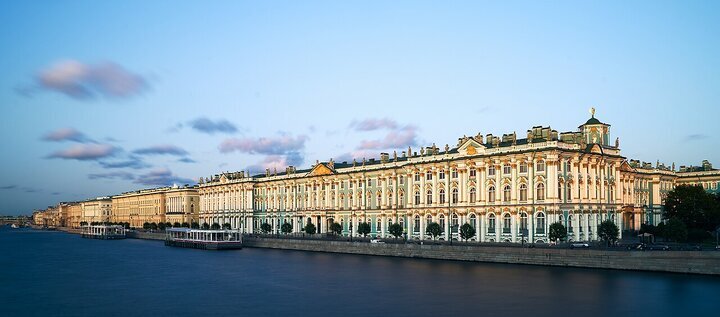
The State Hermitage Museum in Saint Petersburg, Russia, houses one of the most important and richest collections of pre-Islamic Iranian art and artifacts in the world. This unique collection ranges from Elamite pottery to Achaemenid reliefs and Parthian coins, offering visitors a vivid picture of the history and art of ancient Iran.
Iran’s historical heritage has long been a major component of leading museums around the world, from the Louvre in France to the British Museum and the Metropolitan Museum of Art in the United States. The Hermitage Museum in Russia is no exception and preserves an extensive and remarkable collection reflecting Iranian culture and history.
On the occasion of International Museum Day, celebrated annually on May 18 around the world, it is worth taking a look at some of the most important Iranian-origin artifacts housed in this Russian museum, many of which have received little public attention.
The Hermitage, one of the world’s most visited museums, contains more than 2.5 million historical and artistic objects, with Iranian works forming a significant part of the collection. But how did these objects find their way to the museum? Trade and cultural agreements during the period of the Iran–Russia wars led to the transfer of many Iranian artifacts to the Hermitage. According to ISNA, in the fourth volume of Ancient Iranian Artifacts by Mohammad Ali Alavi-Kia, dedicated to the Hermitage, it is noted that: “Following the establishment of trade and cultural agreements between Iran and Russia, and partly due to the Iran–Russia wars during the reign of Fath-Ali Shah, many artifacts left Iran. For example, manuscripts from the library of Sheikh Safi al-Din — the second largest library in Iran, located in Azarbaijan — came under Russian occupation and were confiscated from Iran.”
Among the oldest Iranian artifacts in the Hermitage collection are 55 painted Elamite pottery vessels dating back to the late fourth and third millennia BCE (approximately 5,000 to 6,000 years ago). These were donated to the museum in the early twentieth century by the French archaeological mission excavating in Iran.
The collection also includes Luristan artifacts dating from the 13th to the 8th centuries BCE, including bracelets, pins, bronze figurines, and pottery. Several Iron Age pottery vessels of the Hasanlu type and a red-glazed vessel from Amlash — donated to the Hermitage by Arthur Upham Pope — are also preserved in the museum.
Achaemenid artifacts
The Hermitage’s Achaemenid collection, dating from the sixth to the fourth centuries BCE, includes a fragment of the reliefs from Persepolis depicting the head of one of the “Immortals,” the royal guard soldiers. The artifact was presented to the museum by the Iranian government in 1935 during the International Exhibition of Persian Art.
Other notable works from this period include a gold cup with lion-shaped handles, golden jewelry, gold necklaces adorned with semi-precious stones, a plaque depicting a winged man — regarded by some as a symbol of Ahura Mazda — and animal figurines.
The Hermitage’s collection of Achaemenid seals also includes a cylinder seal from the late fifth century BCE depicting the victory of a Persian king over Egypt, as well as several agate and carnelian seals produced in a Greco-Iranian style.
A Parthian collection: finds from the ancient city of Nisa
The Parthian period at the Hermitage is primarily represented by artifacts discovered in the ancient city of Nisa, located in present-day Turkmenistan, which was home to one of the earliest palaces of the Parthian kings. Excavations there were conducted between 1947 and 1963.
The government of Turkmenistan donated four ivory rhytons dating to the second century BCE, along with several decorative clay plaques from the palace, to the Hermitage. In addition, the museum houses more than 2,600 administrative documents related to the royal Parthian wine warehouses — documents considered among the most important sources for understanding the Parthian economy and history.
In 1996, the Hermitage acquired a rare example of Parthian metalwork: a gilded silver plate decorated with the image of an ibex and bearing a long inscription in the Parthian language. The inscription indicates that the vessel belonged in the mid-third century CE to Narseh, son of Ardashir and Sasanian viceroy of the Caucasus.
The world’s largest collection of Sasanian silverware
The Hermitage possesses the world’s largest collection of Iranian and Central Asian silver vessels dating from the third to the ninth centuries CE. Most of these objects were discovered in treasure hoards and accidental finds near the Kama and Ob rivers in Russia.
The collection contains three gold vessels and 35 or 36 Sasanian silver vessels, the most famous of which depict royal hunting scenes. Some of these works likely date to the late Sasanian period and even the eighth century CE.
The museum also houses more than 1,200 Sasanian seals, including an amethyst seal belonging to Queen Ding, wife of Yazdegerd II, as well as seals bearing lengthy Middle Persian inscriptions.
An exceptional collection of Iranian coins
With more than 3,000 pieces, the Hermitage’s collection of Parthian coins is considered one of the most significant in the world. Among them are rare coins of Mithridates II and coins from subsidiary branches of the Parthian dynasty in Sistan.
The museum’s Sasanian coin collection includes more than 6,000 pieces and ranks among the richest collections worldwide. It includes rare coins of Hormizd II and Khosrow I and II, as well as imitation coins and coins minted in Central Asia.
In addition to artifacts from historical Iran, the Hermitage preserves a broad collection of Iranian-related art and culture from Central Asia, including Bactrian and Khwarazmian vessels, Sogdian works, wall paintings, clay sculptures, and Buddhist artifacts.
Sogdian art holds a special place in the museum. Murals, wooden and clay statues, and artifacts discovered at Panjakent — an important city in present-day Tajikistan — are among the highlights of the collection. Some of these paintings depict scenes from the Panchatantra, the Mahabharata, and the epic tales of Rostam.
Many of these works have been restored by Hermitage specialists, and some have been returned after restoration to museums and scientific institutions in Tajikistan.
Today, the Iranian collection of the Hermitage Museum is regarded not only as one of the most important repositories of ancient Iranian art outside Iran, but also as a major foundation for scholarly research on pre-Islamic Iranian art and metalwork.
AM
Leave a Comment