Life in Gaza after the “Yellow Line”
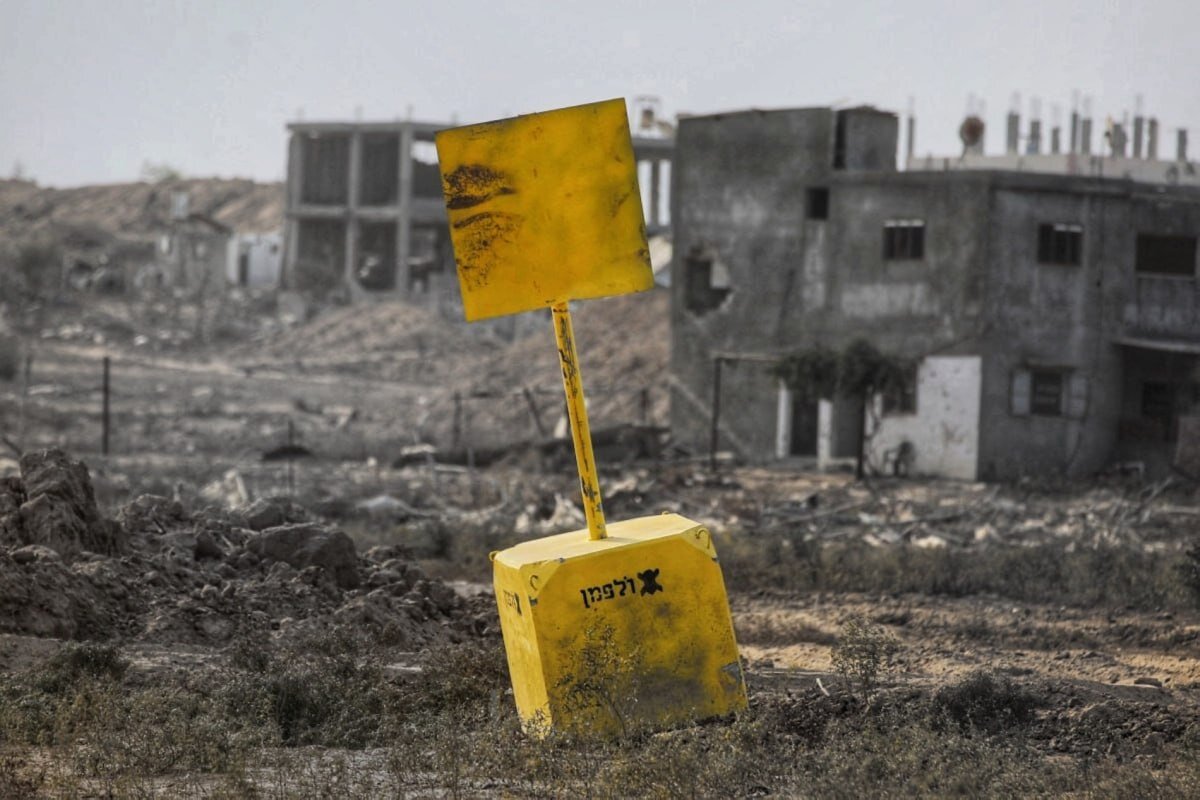
TEHRAN – Israeli Occupation Forces (IOF) continued to maintain a high level of activity, primarily in eastern Gaza City and Khan Younis, resulting in civilian casualties and damage to critical facilities.
That’s according to the OHCHR’s report for April 2026, which has documented that in one month alone, at least 111 Palestinians, including at least 18 children and seven women, were killed in attacks by the IOF, amid continuing airstrikes, artillery and naval shelling, drone attacks, and gunfire.
The so-called “Yellow Line” marking the illegal Israeli-militarized zone in the Gaza Strip was significantly extended eastward, with IOF tanks advancing. As a result of the expansion, five UNRWA installations are now in proximity of the militarized zone, including two schools-turned-shelters hosting displaced families.
The expansion of the IOF's militarized area is expected to affect humanitarian interventions and further squeeze the population, increasing the risks posed by violence in this area, OHCHR reported.
As international reporters continue to be barred from entering Gaza to hide the stories of IOF war crimes reaching the outside world, the demographic distribution of civilians in the Gaza Strip has changed radically after the Zionist regime’s expanding “Yellow Line”.
Areas that were once bustling with activity have turned into ghost towns, devoid of inhabitants, construction, and all signs of life, such as Rafah in the south of the Strip, Beit Lahiya, Beit Hanoun in the north, and the eastern zones of the Khan Younis and Gaza governorates.
Since the so-called ceasefire announcement in Gaza, Israeli Occupation Forces withdrew to what is now known as the “Yellow Line,” which divides the Strip into two zones: an eastern area under Zionist military control, and a western area home to about two million Palestinians, akin to a concentration camp.
This is part of the agreement’s first phase, with subsequent phases, if implemented, including a gradual IOF withdrawal and ending in a complete military pullout from the Strip.
When the agreement began, the Zionist occupation regime controlled about half of the Strip’s 365 square kilometers. However, with the continuous shift of the “Yellow Line”, the illegal occupation has now established its control in approximately 60% of Gaza’s area. Simply approaching the “Yellow Line” has become a death sentence imposed by the IOF.
U.S. President Donald Trump’s plan stipulates an IOF withdrawal in three phases:
First phase: Withdrawal to the “Yellow Line” immediately upon ceasefire, in exchange for Palestinian resistance forces releasing all living and deceased prisoners.
Second phase: Israel withdraws to the “Red Line,” coinciding with the deployment of an “International Stabilization Force.”
Third phase: Complete withdrawal from the Gaza Strip to a designated zone, a “buffer zone.”
When the agreement took effect, the IOF withdrew to the “Yellow Line”.
The occupation regime’s behavior indicates that its plans aim to turn the area controlled by the IOF east of the Yellow Line into a tool for isolating Palestinian resistance forces and reshaping the enclave’s future, reflecting Tel Aviv’s historical tendency to turn temporary lines into permanently illegal borders.
The "Yellow Line" has become entrenched as a military line through the construction of military infrastructure along it, some fixed and some mobile.
The Israeli newspaper Haaretz reported that the IOF has established new military positions along the line in recent months and carried out infrastructure work. It noted that satellite image analysis shows at least 32 IOF sites near the “Yellow Line” and adjacent areas, most built before the ceasefire, with the IOF later adding seven new sites along the line. At least five locations have paved roads suitable for long-term military activity, reinforcing the assessment that the Zionist regime is not managing a temporary deployment but building a sustainable positioning structure.
The investigation highlights the beginning of construction of barriers and ground obstacles along the “Yellow Line” exceeding 17 kilometers in length, about 40% of the total 45-kilometer line.
The reality imposed by Israel on post-Yellow Line Gaza means entrenching long-term IOF control, not only in the security dimension but extending to control over agricultural and industrial resources. This weakens Gaza’s economic capacity, increases reliance on foreign aid, prevents the rebuilding of life and production infrastructure, economically strangles the Strip, and pushes its population toward forced migration by creating an unbearable economic and social reality.
The areas inside Gaza’s “Yellow Line” under IOF control constitute about 60% of the arable land, which has been completely destroyed.
The Zionist regime believes that imposing the “Yellow Line” as a fait accompli is not a choice but a security necessity forced by its strategic failure on October 7, 2023.
It imagines that its permanent military control over about 60% of the Gaza Strip provides it with a geographic and temporal margin to counter future security threats in Gaza.
The so-called “Yellow Line” has become a new border structure that the regime’s fascist government seeks to solidify inside Gaza.
If the current stalemate in the ceasefire agreement continues, and the first phase is not completed to pave the way for subsequent phases, the continued existence of the “Yellow Line” will become entrenched as a new political and military reality, one that Palestinians will not accept.
No one knows how Palestinian resistance forces will develop the tools and means to confront it without giving the occupation regime justifications to return to its full-blown genocidal war on Gaza. History shows that wherever there is occupation, there is resistance. The nature of this resistance to the IOF in response to the heinous war crimes committed against Palestinians is only a matter of time.
Leave a Comment