How the antifragile fusion of Ghadir and Ashura shields the Islamic Republic
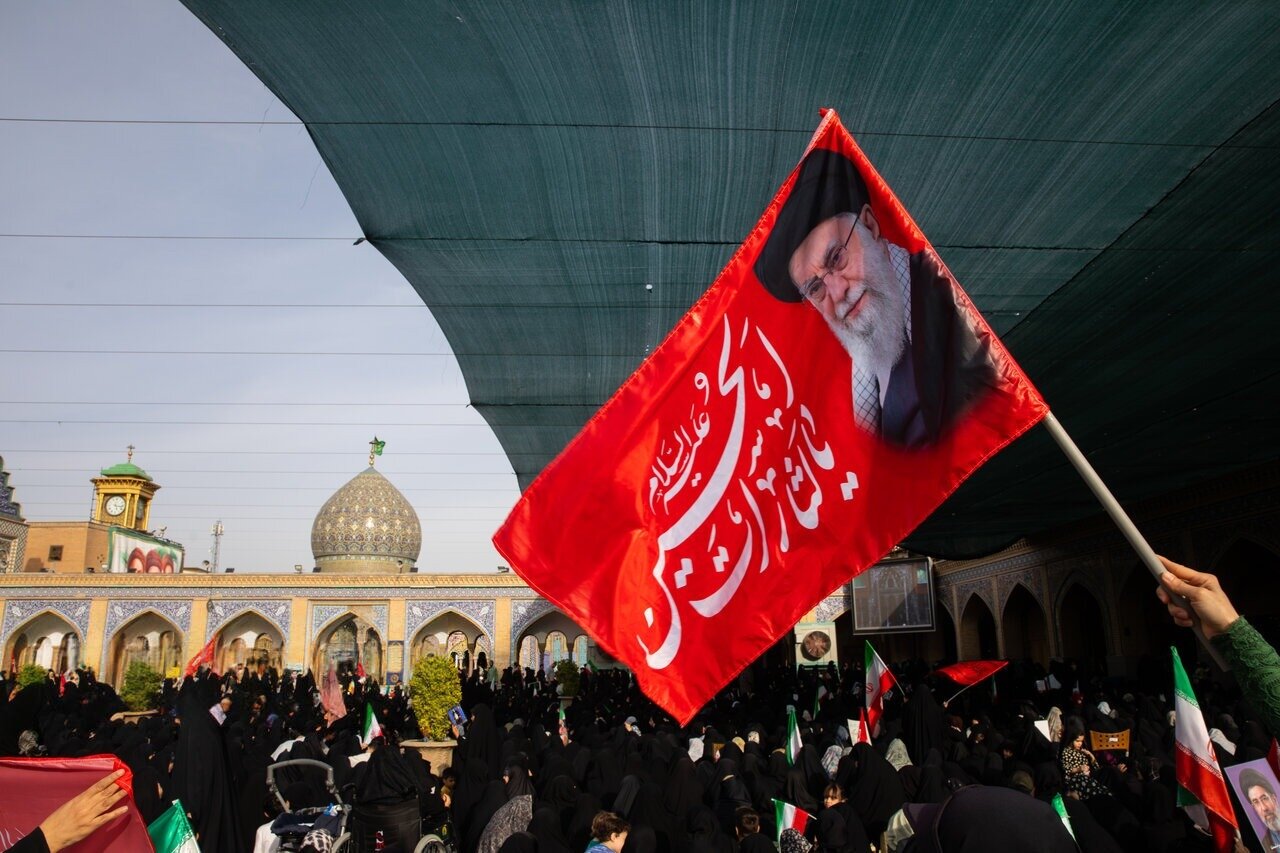
TEHRAN — Western intelligence agencies consistently miscalculate the endurance of the Islamic Republic of Iran because they rely on a fragile, linear epistemology.
Think tanks evaluate state strength through static parameters such as gross domestic product stability, treating volatility as a systemic failure. The Islamic Republic, however, operates on a doctrine of systemic antifragility.
A state built on this framework does not merely survive pressure but grows structurally optimized because of it. While a resilient system resists stress until it eventually cracks, an antifragile architecture treats war, sanctions, and assassinations as the kinetic fuel required to shed structural inefficiencies.
The 2026 campaign of aggression demonstrates this resilience. Washington and Tel Aviv have spent enormous capital applying linear pressure to a nonlinear system.
Every round of sanctions has forced a restructuring toward domestic industrial capacity. Every kinetic shock has inadvertently uncovered friction points, enabling planners to patch vulnerabilities and decentralize power nodes.
This antifragile architecture confounds an adversary that only understands linear warfare.
The metaphysical software of autonomy
This immunity stems from the Ghadir paradigm, the core software of Iranian governance.
Ghadir refers to the historic declaration at Ghadir Khumm in 632 CE, where Prophet Muhammad (S) designated Imam Ali (AS) as his successor and guardian, establishing Welayat/Wilayah (divine guardianship) as the foundational source of legitimate authority.
Bypassing the transactional and secular structures of the Westphalian order, Ghadir roots legitimacy in a vertical, non-negotiable divine mandate rather than popular vote, foreign recognition, or economic integration.
Because this authority is metaphysical and non-transactional, it remains entirely insulated from the sanctions, vetoes, or financial blackmail of global hegemons.
This model stands in absolute opposition to the nihilistic Western order, which exports a hyper-individualistic framework designed to dissolve the organic social fabric of independent nations.
It equally rejects the structural vassalism of the dependent secular Arab system. Regimes across the region operate under increasingly ineffective outsourced security architectures, commercializing religion while normalizing ties with the genocidal Israeli regime.
Instead of building genuine legitimacy, they have hollowed out their domestic institutions to serve foreign interests, creating a deep transactional brittleness. These client states have traded their sovereignty for a fragile shield, acting as mere shock absorbers for a declining American hegemony.
The Ashura engine and mosaic command geometry
Where Western military doctrine relies on decapitation strikes to induce paralysis, the Ashura doctrine renders such strategies obsolete.
Ashura commemorates the martyrdom of Imam Hussein (AS) at Karbala in 680 CE, a stand against tyranny that transformed apparent defeat into an enduring symbol of resistance, sacrifice, and moral victory.
In Iranian and Shia strategic culture, this becomes a living operational principle: martyrdom does not weaken the system but accelerates it.
Martyrdom serves as a metabolic accelerator that eliminates bureaucratic inertia and converts collective grief into powerful mobilization.
Strategically, the military apparatus has shifted into the Mosaic defense doctrine, a state-scale guerrilla geometry of autonomous provincial commands.
This command web is hydrodynamic: if the adversary closes one valve, the pressure simply shifts to activate additional fronts. This dynamic has been on full display since the beginning of the 2026 war.
This unyielding structural endurance has forced profound admiration and concessions from prominent American scholars across entirely different schools of thought.
University of Chicago political scientist Robert Pape recently concluded that Iran’s sheer resilience under intense military fire, combined with its asymmetric leverage, has effectively elevated it into an emerging fourth center of global power.
Similarly, John Mearsheimer, the preeminent voice of offensive realism, has argued that the current conflict represents a stark strategic defeat for the United States, pointing out that Tehran now holds the structural cards in the region.
Perhaps most tellingly, even hawkish figures within the U.S. foreign policy establishment have begun to recognize the failure of their own doctrine.
Neoconservative strategist Robert Kagan has admitted that a total U.S. defeat in the Iran war is likely, warning that such a loss would inflict far more lasting damage to American global primacy than the retreats from Vietnam or Afghanistan.
The realist balance sheet of survival
This antifragile posture has been forged through the fire of a realist strategy paid for in blood and material sacrifice.
Under maximum pressure campaigns targeting military oil sales, Iran has systematically optimized its resistance economy. This decoupling insulated the state from Western financial contagion, shifting Iran from a vulnerable rentier model to an indigenously sustained defensive powerhouse.
Iranian strategists view the severe economic and kinetic costs incurred as the premium paid for sovereignty.
While the Western military base relies on corrupt, bloated, corporate-driven spending that falters under prolonged attrition, Iran produces scalable asymmetric matrices designed for chaotic environments.
The hybrid war meant to shatter Tehran has only sharpened its defenses, proving that the system grows stronger with every blow delivered.
As the Western “rules-based order” fragments under its own contradictions and the regional vassal regimes face a terminal crisis of legitimacy, the Islamic Republic emerges hardened and more capable, proving that a system built on Ghadir and Ashura draws renewed strength from the very chaos meant to destroy it.
Leave a Comment