‘Revealing limits of US protection’
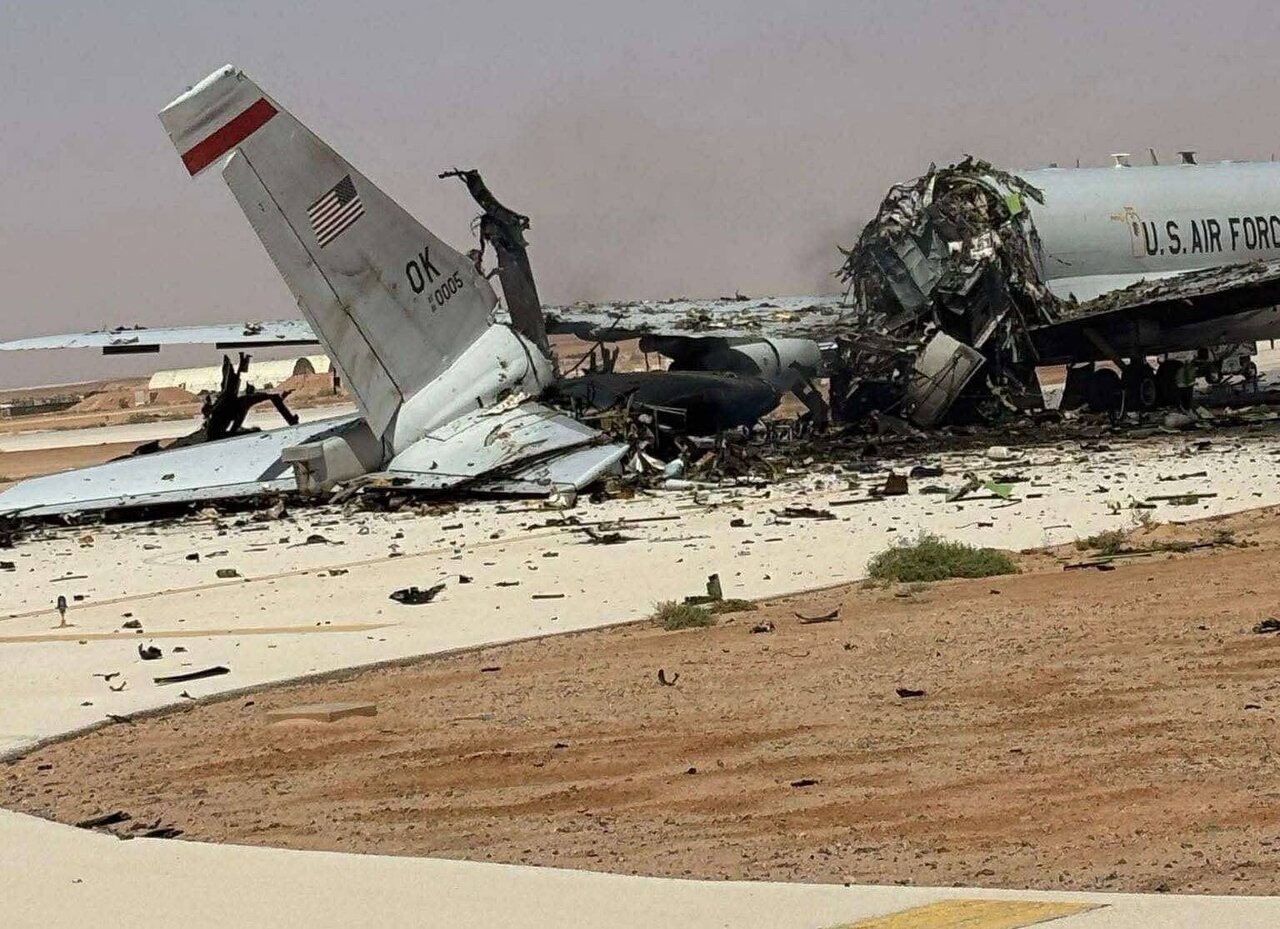
TEHRAN - In a commentary published on the Al Jazeera website on June 7, a globally recognized expert in Middle Eastern politics and regional diplomacy wrote that Iran’s response to the joint U.S.-Israeli war of aggression on the Islamic Republic revealed the “limits of U.S. protection”.
In the commentary, Mahjoob Zweiri, who teaches history and politics at Qatar University, argued Iran sees its ability to preserve its governing system amid a regime-change war as a clear victory.
Following is an excerpt of the article titled “Iran after 100 days of war: The triumph of survival”:
It has been 100 days since the United States and Israel attacked Iran in a coordinated campaign aimed at regime change. Since April, a tenuous ceasefire has been in place – one that has been regularly violated by exchanges of fire. The Strait of Hormuz remains closed while fighting in Lebanon continues.
At this point, peace remains elusive as both sides’ objectives remain
unfulfilled. Washington and Tel Aviv’s goal has been not just to eliminate the Iranian nuclear activities but also to degrade the Iranian security and military apparatus and thereby create space for internal political change.
For Tehran, the main objective has been to preserve the governing system and ensure its continuity, regardless of the cost. In this sense, it sees itself as having the upper hand.
The war has taken the lives of more than 3,400 Iranian citizens, including dozens of senior leaders in the political and military spheres.
The nuclear program, already damaged in the 12-day war in June 2025, was targeted with more strikes. Civilian infrastructure and energy facilities were also damaged and destroyed.
But the war has also brought significant losses for Iran’s adversaries. Iranian missiles and drones hit several U.S. bases in the region, revealing the limits of U.S. protection.
The United States used its military bases in certain Arab states on the southern shores of the Persian Gulf to strike targets inside Iran. In response, Iran targeted these military bases, rendering these countries vulnerable.
In fact, Iran proved that these countries’ security alignment with Washington is a liability rather than an asset.
The war on Iran led to a new regional security architecture that is defined by the Islamic Republic.
Within days of the U.S.-Israeli war, Iran started restricting maritime traffic through the Strait of Hormuz, which is the conduit for about one-fifth of the world’s seaborne oil and liquefied natural gas.
The U.S. responded with an air campaign in March to reopen the waterway, but it failed. And in April, it imposed a naval blockade on Iranian ports. Despite these efforts, the strait remains closed. Only a few vessels vetted by Iran have been allowed to pass.
Diplomatic challenges have compounded the military situation. When Washington requested assistance from NATO and its European and Asian partners to secure the strategic route, they declined. European governments characterized the conflict as outside their purview.
The closure of the Strait of Hormuz is thus interpreted in Iran not only as a point of economic leverage but also as a political and strategic setback for the U.S. and Israel, serving as evidence that the strategy of imposing costs on its adversaries is effective.
Ongoing support from Russia and China, including at the United Nations, has enabled Tehran to frame the war as part of a broader contest over the international order rather than as an isolated conflict.
On the domestic front, the Islamic Republic has managed to retain stability by demonstrating continuity. After the assassination of Leader Ali Khamenei, his son, Mojtaba, was appointed as his successor within days. This shows that the Islamic Republic has been able to maintain stability and cohesion.
Tehran sees itself as having the upper hand. The inability of its adversaries to topple the governing system is what matters in the view of its leadership; all other losses are considered recoverable as long as the Islamic Republic endures.
Iran now appears to seek to translate survival into a partial restoration of regional standing, most notably by linking any settlement of the conflict to an end to the war in Lebanon. Tehran wants to position itself as a participant in regional de-escalation.
Leave a Comment