Iran presents investment-ready projects to Azerbaijan
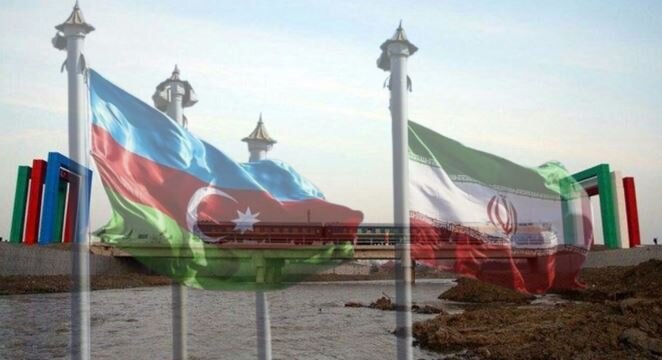
TEHRAN- Mehdi Heydari, Deputy Minister of Economic Affairs and Finance and Head of the Organization for Investment, Economic and Technical Assistance of Iran, held bilateral meeting on the sidelines of the 51st Annual Meeting of the Board of Executive Directors of the Islamic Development Bank (IsDB) in Baku with the head of Azerbaijan's Export and Investment Agency.
According to IRNA from the Ministry of Economic Affairs and Finance, Mehdi Heydari, Deputy Minister of Economic Affairs and Finance and Head of the Organization for Investment, Economic and Technical Assistance of Iran, in a meeting with Yusuf Abdullayev, the head of Azerbaijan's Export and Investment Agency, while referring to the capacities and programs on the organization's agenda to encourage and improve foreign investment, emphasized the exchange of experiences and identification of common points and projects for cooperation.
Referring to the signing of the memorandum of understanding of the Joint Investment Committee during President Pezeshkian's visit to Azerbaijan, Heydari said that it was decided to hold the first meeting of the said committee, but the desired conditions were not provided, but it is possible to hold it at the earliest opportunity.
He added that the axes agreed upon at the meeting of the Joint Commission of the two countries can be the agenda of the committee.
Referring to the economic capacities of the two sides, common opportunities for cooperation, and the capabilities of Iranian companies, he emphasized that the necessary platform for action is provided.
In this meeting, the list of projects prepared for foreign investment in Iran was presented to the Azerbaijani side, and the conditions of each sector were explained.
Yusuf Abdullayev, while referring to the duties, programs, and measures of Azerbaijan's Export and Investment Agency, declared his readiness to hold the first meeting of the Joint Committee.
He evaluated the recent measures and programs of the organization, including the design of information on investment opportunities, as positive and said that the agency will hold the Azerbaijan International Investment Summit in September 2026, which is a good opportunity for the presence of economic activists, investors, and capable Iranian companies.
The head of the Azerbaijani agency, referring to the history of Iranians' activities in Azerbaijan's economy, added: There are good opportunities to increase cooperation, and the Joint Investment Committee is a very suitable advantage for structuring cooperation.
In this meeting, some of the measures and achievements of the two sides in attracting foreign investment were also described with the aim of exchanging views and using existing experiences.
In late February, Iran and Azerbaijan signed a cooperation document outlining joint economic initiatives across 10 sectors, including transport, energy, electricity and water, the Ministry of Transport and Urban Development said.
The memorandum was signed at the 17th session of the Iran–Azerbaijan Joint Economic Committee by Iran’s Minister of Transport and Urban Development Farzaneh Sadegh and Azerbaijan’s Deputy Prime Minister Shahin Mustafayev.
The document sets out a framework for bilateral cooperation in infrastructure, energy and water projects, as well as broader economic, social and cultural fields.
In transport, the two sides agreed to expand cooperation in road transport, border management and railway development.
Key infrastructure projects include the Kalaleh–Aghband bridge, the Astara bridge, the widening of the Kalaleh–Jolfa road, the Kalaleh–Siahroud rail link and the launch of the Astara rail terminal at the shared border, with both parties emphasizing the need to accelerate implementation.
In the energy sector, the sides approved cooperation in oil blocks one and two and agreed to establish a joint working group to follow up on related memoranda of understanding.
In electricity, agreements covered plans to connect the power grids of Iran, Azerbaijan and Russia, as well as electricity exports from Azerbaijan to Iran.
Water cooperation focused on joint projects related to the Khoda Afarin and Qiz Qalesi dams and power plants, along with the Marazad–Orduabad hydropower project.
The agreement also includes understandings in areas such as tourism, agriculture, customs, industry, investment, sports and youth affairs, paving the way for deeper economic ties and expanded strategic cooperation between Tehran and Baku.
Iran targets 15m tons of transit on western INSTC corridor by 2030
Speaking at the committee meeting, Sadegh said Iran aims to increase transit volumes on the western branch of the International North–South Transit Corridor (INSTC) to 15 million tons by 2030.
She said trade between the two countries has reached around $650 million over the past two years, with exchanges following an upward trend. Drafting a trade cooperation roadmap could provide clearer prospects for expanding economic relations, she added.
Transport and transit were identified as key pillars of cooperation. Over the past year, about 120,000 Iranian trucks transited through Azerbaijani territory, while more than 50,000 Azerbaijani trucks entered Iran, reflecting substantial cross-border freight activity.
Sadegh said achieving the 15-million-ton transit target by 2030 would require more than tripling current fleet movements, underscoring the need to upgrade border infrastructure and streamline procedures.
She noted that construction of the Kalaleh–Aghband bridge is in its final stages and is expected to play a significant role in facilitating transit flows and trade once completed.
Energy cooperation and joint projects on the Aras River were also cited as strategic areas of collaboration, alongside agriculture, tourism — particularly health tourism — and broader cooperation in industry, investment and infrastructure.
The minister said expanding cooperation across transport, energy and trade could strengthen economic integration and support regional connectivity goals under the INSTC framework.
The seventeenth meeting of the Iran–Azerbaijan Joint Economic Committee opened in Baku on Monday, focusing on transport links, border infrastructure and broader economic and cultural ties.
Farzaneh Sadegh, Iran’s minister of transport and urban development, and Shahin Mustafayev, Azerbaijan’s deputy prime minister, were co-chairing the two-day meeting in the Azerbaijani capital.
Iranian minister of transport and urban development met with the president of the Republic of Azerbaijan to discuss the review of new railway infrastructures and joint oil fields, the development of transportation cooperation, the utilization of new border infrastructures, and cooperation in the energy sector.
Farzaneh Sadegh, on Monday morning (February 23) before the start of the 17th meeting of the Iran-Azerbaijan Joint Economic Committee, met with Ilham Aliyev, the president of Azerbaijan. During this meeting, she conveyed the greetings of Masoud Pezeshkian and stated that the president of Iran places special importance on relations with the Republic of Azerbaijan.
Emphasizing the historical, religious, and cultural ties between the two countries and the importance of bilateral relations, the minister discussed the most important priorities for bilateral cooperation in the economic fields, which were also emphasized by the president of Azerbaijan.
The development of cooperation in the transportation sector, particularly strengthening regional connections and transit corridors, was one of the most important topics of the discussion. Furthermore, expanding energy cooperation, utilizing new border infrastructures, and constructing new railway infrastructures between the two countries were other subjects raised during this meeting.
The two sides also exchanged views on the joint oil fields in the Caspian Sea and the method of extracting resources from these fields, as well as the development of bilateral and multilateral regional cooperation with neighboring countries in the fields of transportation and energy.
It is noteworthy that in this meeting, Ilham Aliyev, the president of the Republic of Azerbaijan, while thanking for the message from Masoud Pezeshkian, the president of Iran, expressed his satisfaction with the expansion of bilateral relations and emphasized: "The projects implemented jointly by Iran and the Republic of Azerbaijan will provide extensive opportunities for both countries as well as the region."
Officials described transport and the development of shared border infrastructure as central pillars of Tehran–Baku relations, citing progress over the past 18 months in both rail and road connectivity.
EF/MA
Leave a Comment