DOE ready to put Caspian Sea water-level decline at center of regional talks
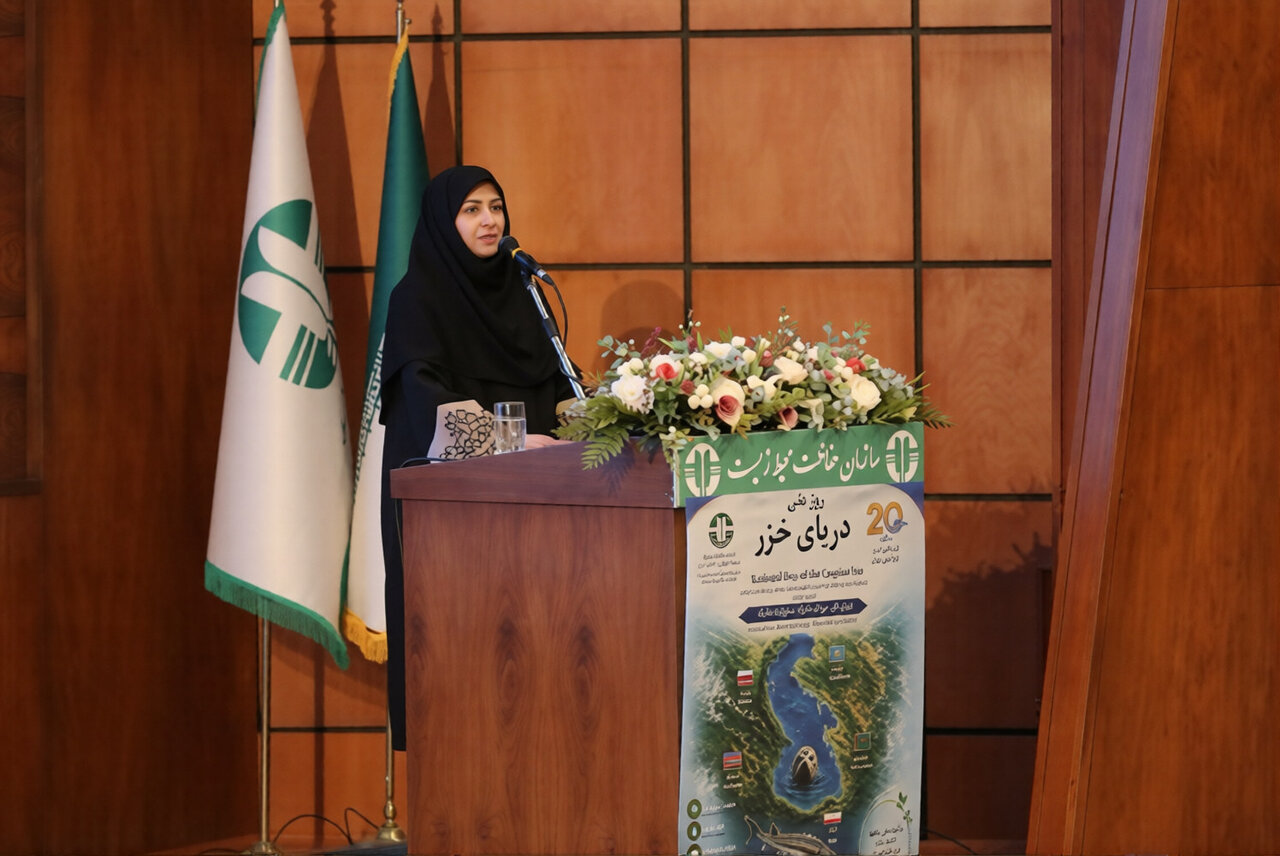
TEHRAN - The head of the Department of Environment has said Iran is prepared to place the issue of the declining water level of the Caspian Sea at the center of regional discussions ahead of the Caspian Sea Summit.
Speaking at a ceremony marking National Caspian Sea Day on Tuesday, Shina Ansari, the DOE head, said August 12 is more than just a date on the calendar.
She said the day serves as a reminder of a shared commitment: the Tehran Convention, formally known as the Framework Convention for the Protection of the Marine Environment of the Caspian Sea. The convention, named in recognition of Iran’s role as host, has been in force for 20 years, Mehr reported.
Ansari noted that despite their differences, the five Caspian littoral states have reached agreement on one fundamental truth: before the Caspian Sea separates their geographical borders, it is a shared heritage.
Emphasizing the importance of the Caspian Sea to Iran, she said the Caspian Sea is not merely a body of water for the Islamic Republic of Iran, but an integral part of the country’s national, historical, cultural and economic identity.
Ansari added that efforts have also been made during technical meetings in Geneva and within the framework of a five-nation working group to establish a permanent secretariat for the Tehran Convention in the Caspian region. She expressed hope that the initiative would come to fruition through the joint determination of the Caspian littoral states.
Alongside environmental diplomacy, scientific and field-based measures have also been pursued with determination. The Caspian Sea Atlas, the Atlas of Habitats and Rivers in the Southern Caspian Basin, a biodiversity database documenting more than 2,300 species, and a comprehensive pollutant monitoring program are strengthening the knowledge base underpinning decision-making.
Referring to conservation programs for key Caspian species, Ansari said the Caspian seal, the sea’s only native mammal, is a major focus of the Department of Environment. A national action plan for the conservation of the Caspian seal has been developed, and a dedicated secretariat has been established. Rescue and rehabilitation centers have also been set up in Babolsar, Miankaleh, Bandar-e Torkaman and Bujagh National Park.
The Action Plan of the Caspian littoral states on water-level fluctuations for 2026–2030 provides a comprehensive framework for strengthening regional cooperation, advancing scientific knowledge and developing adaptive solutions.
The seventh Conference of the Parties to the Tehran Convention is set to be held in Tehran. The gathering will take place on September 23, with senior officials from all five littoral states in attendance.
A common perspective
President Masoud Pezeshkian has said that maintaining the ecological balance of the Caspian Sea requires “a common perspective” by the regional countries.
The Convention on the Legal Status of the Caspian Sea is a common framework among the Caspian Sea littoral states, adding that these countries need to engage with one another in order to protect the environment, bodies of water and stability in economic and trade trends, he said in December 2025.
The president said if the Caspian Sea littoral states work together within a clear framework, they can protect and sustain life, the environment and economic activities. “If the regional countries cannot work together from a common perspective, climate change will inflict heavy damage in the near future,” he warned.
The Caspian Sea faces major environmental threats from severe pollution and alarming water level drops, which devastate its unique ecosystems and create socioeconomic crises for bordering nations like Kazakhstan, Iran, Russia, Azerbaijan, and Turkmenistan.
A significant water level decline is among the key challenges, driven by climate change, increased evaporation, and reduced inflow from major rivers, especially the Volga. This causes coastlines to recede and exposes critical oil infrastructure.
Extensive pollution also severely impacts the sea. Oil and gas activities, including extraction, refining, spills, and abandoned wells, contaminate water and soil with heavy metals and toxins. Furthermore, untreated domestic sewage, industrial effluent, agricultural runoff, and plastic litter primarily enter the sea via its rivers.
These environmental degradations lead to significant ecosystem and biodiversity loss. Unique species like the Caspian seal and sturgeon are threatened by habitat loss, pollution, and overfishing, which in turn impacts caviar production and food security. Broader climate change impacts, such as warming temperatures, also increase evaporation, and extreme weather events disrupt river flows, contributing to oxygen depletion (hypoxia) in deeper waters.
Leave a Comment