Iran war changing public perception shaped by Western media, says S. Korean scholar
TEHRAN – For more than three decades, Professor Yu Dal-seung has devoted his academic career to studying Iran. As head of the Department of Persian Language and Iranian Studies at Hankuk University of Foreign Studies (HUFS), he has introduced generations of South Korean students to Persian language, literature, history, and political thought. Few scholars in South Korea possess a deeper familiarity with Iranian society, and fewer still describe Iran as their "second homeland."
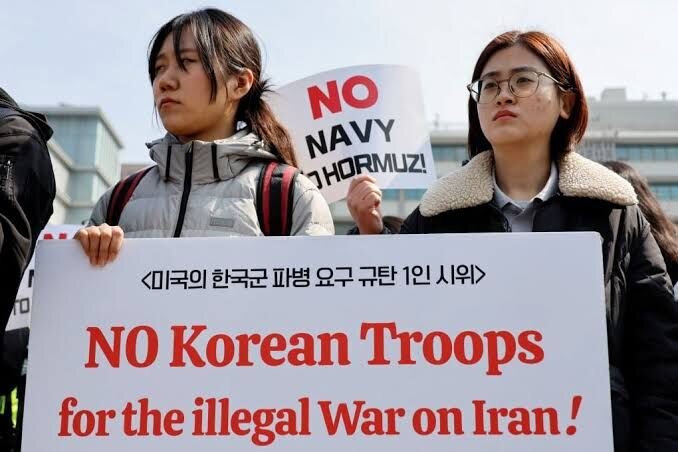
Speaking to the Tehran Times, Yu argues that recent regional developments—including the Gaza war and the subsequent U.S. and Israeli military strikes against Iran—have prompted many South Koreans to reconsider long-standing assumptions about the Islamic Republic. Yet he cautions that any shift remains fragile because South Korean media continue to rely heavily on Western sources for international news, allowing Western narratives to retain a dominant influence over public opinion.
For Yu, the challenge is not merely political. It is fundamentally one of communication, cultural exchange, and mutual understanding. While geopolitical crises may temporarily alter public attitudes, he believes only sustained educational and cultural engagement can produce lasting changes in how South Koreans perceive Iran.
A changing perception—but not yet a lasting one
Yu said he continues to stand by the position he articulated years ago: Iran should not be regarded as an adversary of South Korea, and Seoul would benefit from pursuing a more independent approach toward its relations with Tehran.
Recent military developments, he noted, have led many South Koreans to question prevailing narratives surrounding Iran.
"Many people regarded the recent war as unjust," Yu said, referring to the U.S. and Israeli attacks on Iran. According to him, this has created a noticeable—though limited—shift in public attitudes.
He emphasized, however, that such changes should not be overstated.
"The influence of Western media remains very strong," he explained. "Therefore, this change in perception has not yet become deep or permanent."
His assessment reflects the structural characteristics of South Korea's media environment. Much of the country's international news coverage is derived from Western news agencies and media organizations, meaning that dominant Western interpretations often become the primary lens through which South Koreans understand events in West Asia.
A new generation with broader sources of information
Despite the continued influence of traditional media, Yu sees signs of gradual change among younger South Koreans.
Unlike previous generations, many young people increasingly consume news through social media platforms and digital channels that expose them to a wider range of viewpoints.
This diversification of information sources has made younger audiences somewhat less dependent on traditional Western narratives and more willing to consider alternative perspectives on international affairs, including developments in Iran.
Nevertheless, Yu warned against interpreting this trend as evidence of a permanent transformation.
Public opinion, he observed, is often highly responsive to current events. The recent conflict may have encouraged greater curiosity about Iran, but such interest could fade unless accompanied by broader educational and cultural engagement.
"If access to accurate information increases and cultural exchanges continue to expand," he said, "today's temporary change could eventually become a lasting one."
The persistence of nuclear-centered narratives
Asked what image of Iran is most deeply rooted in South Korean public consciousness, Yu pointed to one issue above all others: Iran's nuclear program.
He believes decades of Western reporting have framed the issue primarily through the language of security threats, significantly influencing how ordinary South Koreans perceive the country.
Beyond the nuclear issue, Yu argues that limited knowledge about Iranian society has also contributed to widespread misconceptions.
Iran and South Korea differ considerably in their historical experiences, political systems, religious traditions, and social structures. Because relatively few South Koreans possess direct knowledge of Iran, simplistic portrayals often fill the information gap.
As a result, he said, stereotypes have become deeply embedded within public discourse, making nuanced understanding more difficult.
Universities provide a different picture
Within South Korean universities, however, Yu observes a markedly different attitude.
Students who study Persian language, Iranian history, and literature generally develop a far more sophisticated understanding of the country than members of the broader public.
Academic engagement allows them to move beyond headlines and political narratives toward a richer appreciation of Iranian civilization and society.
"Students who know Iran's language, culture, and history naturally have a different perspective," Yu said.
For him, education remains one of the most effective tools for overcoming stereotypes because it encourages sustained engagement rather than reactions driven by daily news cycles.
Economic consequences reshaped public debate
Yu also believes the economic consequences of the recent conflict affected how South Koreans viewed the crisis.
The disruption of maritime trade and rising energy prices created concerns across South Korea, a country heavily dependent on imported energy and secure international shipping routes.
These economic repercussions encouraged many citizens to look more closely at the origins of the conflict rather than accepting simplified geopolitical narratives.
"This time, many people tried to understand the real causes of the war," Yu said.
As a consequence, he argues, public support for Washington's position appeared weaker than in previous regional crises.
Although he does not suggest that South Korean public opinion has fundamentally shifted away from the United States, he believes recent events encouraged a more critical examination of developments in West Asia than had previously been common.
'Iran is like my second homeland'
Throughout the interview, Yu repeatedly returned to one theme: the transformative power of direct human experience.
"Iran is like my second homeland," he said.
Having lived in Iran and spent decades studying its language and culture, Yu says his own understanding of the country emerged not from political discourse but from personal interaction with Iranian society.
"I love Iran and its people because I lived there and became personally acquainted with them," he said. "That direct experience helped me understand Iran much better."
He believes the same process occurs among his students.
Those who immerse themselves in Persian language, literature, and history frequently discover an Iran that differs significantly from the simplified images often presented in international media.
According to Yu, cultural familiarity gradually replaces stereotypes with informed understanding.
Social media cannot replace cultural diplomacy
While recognizing the growing importance of digital platforms, Yu cautions against viewing social media as a complete solution to Iran's image problem.
He acknowledged that social media have weakened, to some extent, the dominance of traditional Western narratives by allowing countries to communicate directly with international audiences.
During the recent conflict, he noted, some online content successfully explained complex political developments in accessible language.
Yet digital communication alone is insufficient.
Long-term changes in public perception require sustained institutional cooperation through universities, educational exchanges, translation projects, and cultural initiatives.
Only by combining digital outreach with face-to-face engagement, Yu argues, can countries build durable public understanding.
Literature as a bridge between civilizations
Yu's commitment to cultural dialogue extends beyond the classroom.
He recently completed a Korean translation of Siyasatnama (The Book of Government) by the renowned Persian statesman Nizam al-Mulk, continuing his long-standing efforts to introduce Iranian intellectual traditions to Korean readers.
He believes translation plays a critical role in expanding mutual understanding because literature provides insights into a civilization that political reporting rarely captures.
Yu also called for stronger institutional cooperation.
Although South Korea has sought to establish Korean language and Korean studies programs in Iranian universities and discussed opening a Korean Cultural Center in Iran, many initiatives remain unrealized.
In his view, cooperation should be reciprocal.
Just as Korean cultural institutions in Iran would strengthen bilateral ties, he argues, Iranian cultural centers in South Korea could play an equally important role in introducing Korean audiences to Iranian history, literature, and contemporary society.
He also identified significant untapped opportunities in literary translation, academic collaboration, media cooperation, and people-to-people exchanges.
Beyond politics
Perhaps Yu's central message is that lasting perceptions are not ultimately shaped by wars or political crises.
While geopolitical events may temporarily alter public opinion, they rarely produce enduring understanding on their own.
Instead, he believes sustainable improvements in Iran–South Korea relations depend upon patient investment in education, scholarship, cultural diplomacy, and human interaction.
Looking ahead, Yu remains cautiously optimistic.
The recent conflict has encouraged some South Koreans to reconsider established assumptions about Iran, he said. Yet because Western media continue to exert considerable influence over South Korea's international news environment, these changes remain limited and potentially reversible.
For that reason, he concludes, expanding academic exchanges, cultural cooperation, literary translation, and educational partnerships represents the most promising path toward fostering a more balanced and enduring understanding between the two nations.
"In my opinion," Yu said, "this is the most important task before us."
Leave a Comment