South Korea's Steel Miracle: A Model for Iran's Reconstruction
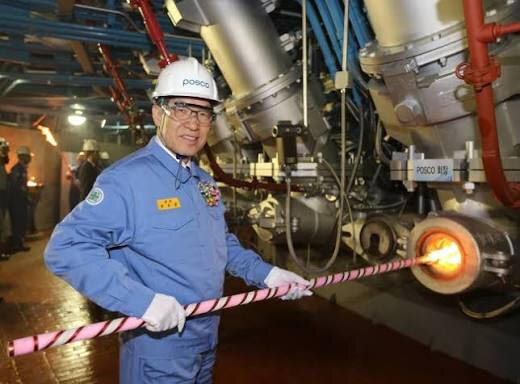
TEHRAN- The Iran-South Korea Chamber of Commerce, considering the recent developments in the region and the consequences of the attack by the United States and Israel on the country's infrastructure industries—which have led to serious damage in various areas, including the economy, employment, and trade—has undertaken, within the framework of its mission to transfer successful international experiences in the field of industrial development, reconstruction, and enhancing economic resilience, to prepare a series of analytical-practical reports on utilizing South Korea's experiences in the path of development, reconstruction, and compensating for crisis-induced damages.
In this regard, given the importance of the steel industry as one of the main pillars of industrial and economic development, and also considering South Korea's successful experience in creating, developing, and rebuilding this industry after the Korean War, the present report is dedicated to examining the path of formation, consolidation, and global leap of this country's steel industry.
This report attempts to review the historical process of the formation of South Korea's steel industry, analyze the success factors of this experience, the role of governmental and industrial institutions, the evolution of production and exports, as well as the country's modern strategies in the fields of advanced technologies, artificial intelligence, and green steel.
The goal of compiling this series of reports is to provide a thought-provoking model for policymakers, industrial managers, and economic activists in the country to benefit from successful global experiences in the path of reconstruction, modernization, and enhancing the resilience of strategic industries.
Finally, this report is not merely a historical review, but an attempt to extract practical lessons from the experience of a country that managed to create one of the most successful examples of industrial development in the world from the heart of crisis and ruin.
A Question of National Will
In the 1960s, when South Korean leaders announced their intention to build an integrated steel mill, the international community scoffed.
The World Bank rejected their loan application. Economists advised them to stick to fishing and textiles. "What business do you have making steel? Go catch fish," was the prevailing sentiment.
Today, South Korea is the world's sixth-largest steel producer, with annual crude steel output of 63.5 million tons. POSCO, its flagship steel company, has become a global industrial empire, supplying advanced steels to the automotive, shipbuilding, and construction industries worldwide. The country that lacked iron ore, coking coal, and capital transformed itself from a war-torn agrarian nation into one of the world's most successful industrial economies.
For Iran, which faces its own challenges—international sanctions, infrastructure damage from regional conflicts, and the urgent need for economic reconstruction—the Korean experience offers more than historical curiosity. It provides a practical blueprint for how a nation can turn crisis into opportunity, build industrial self-sufficiency, and create a globally competitive steel sector despite significant obstacles.
This report examines South Korea's steel industry journey and extracts actionable lessons for Iran's post-crisis reconstruction and industrial development.
Part One: From Ashes to Ambition
The Korean War (1950-1953) devastated the peninsula. Railways, bridges, power plants, and factories lay in ruins. Millions were displaced. South Korea's per capita income was comparable to the world's poorest nations, and the economy depended heavily on foreign aid.
Yet within two decades, South Korea would begin its transformation. The key was a strategic decision to pursue heavy industrialization, with steel as its cornerstone.
The Leadership Decision
President Park Chung-hee and his economic team understood a fundamental principle: steel is not just another industrial product—it is the backbone of economic development. Roads, bridges, power plants, factories, ships, and cars all depend on steel. Without a domestic steel industry, other industrial sectors could not develop independently.
Many economists argued South Korea should focus on light industries where it had a comparative advantage. But Park's team rejected this static view. They understood that comparative advantage can be created through investment, technology acquisition, and human capital development.
The key insight: Countries do not grow only by relying on existing advantages; they grow by creating new advantages.
Part Two: Overcoming Doubt and Building Capability
The World Bank Rejection
In 1969, the World Bank rejected South Korea's loan request for the Pohang steel project. International experts believed the country lacked everything necessary for steelmaking: iron ore reserves, coking coal, capital, technology, and a sufficiently large domestic market.
Some advised Korea to focus on fisheries, textiles, and light manufacturing—sectors where it supposedly had a "natural" advantage.
The Korean Response
Rather than accept these limitations, Korean leaders saw them as challenges to overcome:
· No iron ore? Secure long-term supply contracts and invest in overseas mining projects.
· No coking coal? Build international supply networks.
· Limited capital? Develop creative financing mechanisms and prioritize national investment.
· No technology? Partner with foreign experts, send engineers abroad for training, and develop indigenous capabilities.
The key was not waiting until conditions were perfect but beginning the journey and building capabilities along the way.
A Leader's Vision
Park Tae-joon, the man who would become known as the "father of Korean steel," embodied this determination. He didn't manage the project from an office; he worked alongside engineers and workers at the construction site. Stories tell of him sleeping beside the furnaces during critical startup phases.
His philosophy was simple: a factory's true value lies not in its buildings and equipment but in the knowledge and skills of its people. This focus on human capital became a defining feature of Korea's industrial development.
The lesson for Iran: Self-belief and determination can overcome resource limitations. The obstacles Iran faces—sanctions, infrastructure damage, technology restrictions—are significant, but they are not insurmountable if matched with strategic vision and commitment.
Part Three: The Steel Foundation
From First Ingot to Industrial Leap
In 1973, the first steel ingots emerged from the Pohang complex. Few realized at the time that this moment marked the beginning of one of the most remarkable industrial transformations in modern history.
Initially, production was modest—about 1 million tons in 1973—and was absorbed entirely by domestic infrastructure projects: roads, bridges, power plants, and ports.
But as production capacity grew, so did its impact on other industries:
· Automotive: Hyundai and Kia, South Korea's future automotive giants, gained access to reliable, high-quality domestic steel.
· Shipbuilding: Korean shipyards became globally competitive, supported by a secure steel supply chain.
· Construction and Machinery: Domestic steel fueled infrastructure development and manufacturing.
By 1985, production had reached 16 million tons. By 2000, it was 43 million tons. In 2024, South Korea produced 63.5 million tons of crude steel, ranking sixth globally.
The Employment Ecosystem
The steel industry's impact on employment extends far beyond direct jobs. Direct employment in major steel complexes numbers 60,000-80,000 workers. However, when including the entire value chain—mining, transportation, engineering, construction, automotive, equipment manufacturing—the number of indirect jobs reaches hundreds of thousands to over a million.
The lesson for Iran: Steel is not simply a product; it is an employment ecosystem and a foundation for industrial development. Investing in steel creates opportunities across multiple sectors.
Part Four: From National Champion to Global Player
The POSCO Evolution
POSCO's transformation from a state-owned enterprise to an international industrial powerhouse offers valuable insights.
Phase 1: National Foundation (1970s-1980s)
Building domestic production capacity and meeting domestic demand.
Phase 2: International Expansion (1990s)
Investing in overseas mines for raw material security, establishing global partnerships, and entering new markets.
Phase 3: Technology Leadership (2000s-Present)
Moving from general steels to high-value-added specialty steels for automotive, energy, and advanced industries.
Phase 4: Privatization and Agility
In 2000, POSCO transitioned from state ownership to full privatization. This gave the company greater flexibility for international investment and technology development.
Strategic Positioning
POSCO's global strategy includes:
· Raw material security: Strategic investments in Australian, Brazilian, and Indonesian mining operations.
· Market presence: Manufacturing and processing facilities in Southeast Asia, partnerships in North America.
· Technology focus: Advanced steels for modern vehicles, lightweight materials, and specialty alloys.
The lesson for Iran: Long-term success requires thinking beyond national borders. Steel companies must integrate into global value chains, secure raw material supplies, and focus on high-value products.
Part Five: The Future Frontier
Green Steel and Smart Manufacturing
South Korea recognizes that the steel industry's future lies not just in production volume but in technology and sustainability.
Artificial Intelligence
AI-powered systems monitor equipment, detect anomalies, and prevent breakdowns. This increases productivity, reduces costs, and improves quality.
Robotics
Robots handle dangerous and heavy tasks—from molten material handling to high-temperature equipment inspection—improving safety and precision.
Hydrogen-Based Steelmaking
The traditional steelmaking process relies heavily on coal and produces significant carbon emissions. South Korea is pioneering hydrogen-based steel production, which uses hydrogen to reduce iron ore instead of coal. The byproduct is water vapor rather than carbon dioxide.
POSCO aims to achieve carbon neutrality by 2050 and produce 7 million tons of hydrogen-based steel by 2030.
The lesson for Iran: Modernization must go beyond replacing equipment. Digital transformation, automation, smart energy management, and green technologies can significantly improve productivity and competitiveness.
Part Six: Lessons for Iran
1. Self-Belief and Strategic Vision
South Korea entered steelmaking when international experts considered it impossible. Iranian policymakers face similar skepticism about industrial ambitions.
The Korean example shows that resource limitations are not destiny. What matters is the quality of management, human capital, and national determination.
2. Crisis as Opportunity
After the Korean War, the 1970s oil crisis, and the 1997 Asian financial crisis, Korea did not merely rebuild what was lost. Each crisis became an opportunity for modernization and upgrading.
For Iran, infrastructure damage from regional conflicts can be viewed not as the end of the road but as a starting point for building more advanced facilities.
3. Human Capital First
Park Tae-joon's emphasis on knowledge and skills reflects a fundamental truth: equipment can be purchased, but people must be developed.
Any reconstruction plan must prioritize retaining and training engineers, technicians, and managers. They are the most valuable asset.
4. Technology as the Engine
South Korea never rested on past achievements. From the 1970s to today, it has continuously upgraded technology.
For Iran's steel industry, modernization should include:
· Digital transformation and automation
· Smart energy management
· Preventive maintenance systems
· Green technology adoption
5. Long-Term Planning
Korea's steel project did not succeed in one year or under one government. It required decades of investment, patience, and consistent follow-through.
Strategic industries require long-term horizons. Policy stability and commitment to developmental goals are essential.
6. Export-Linked Value Chains
Korea did not become wealthy from exporting steel. It became wealthy from exporting cars, ships, and machinery—products made possible by domestic steel.
The goal should be developing value chains, not just increasing production capacity.
Practical Actions for Iran
Based on Korea's experience, Iran should consider:
First: Recognize that reconstruction is not just repairing factories. It means rebuilding the entire industrial ecosystem.
Second: Address steel resilience starting with energy security and logistics infrastructure.
Third: Develop optimal logistics management to ensure steel competitiveness.
Fourth: Focus on value chain development rather than merely increasing capacity.
Fifth: Prioritize technology adoption and human capital development alongside physical reconstruction.
Comparing Iran and South Korea
Key insight: Iran has natural resource advantages that Korea lacks. If Korea could succeed without resources, Iran has even greater potential if matched with strategic management.
Conclusion: The Power of Will
South Korea's steel story is not primarily about technology, investment, or government support—though all were important. It is about something more fundamental: national will.
The same country that was advised to "go catch fish" instead of making steel became a global industrial power. The same people who were told their ambitions were impossible proved the doubters wrong.
Koreans answered their critics not with arguments but with millions of tons of steel, thousands of kilometers of infrastructure, hundreds of ocean-going ships, and one of the world's most successful industrial economies.
The lesson for Iran is clear:
Nations do not progress with what they have; they progress with what they decide to build.
Iran's steel industry has advantages South Korea never had: abundant iron ore reserves, energy resources, and a large domestic market. What Korea had was something that can be developed anywhere: determination, discipline, strategic thinking, and a long-term vision.
For Iran, in the post-crisis era, restoring steel capacity to pre-crisis levels is not the goal—it is merely a starting point. The real goal is building something better: a modern, efficient, globally competitive steel industry that serves as the foundation for broader industrial development.
South Korea showed that even the most difficult challenges can become opportunities for transformation. The question for Iran is whether it can summon the same will to build a different future.
The answer will determine not just the fate of Iran's steel industry, but the trajectory of its entire economic development for decades to come.
About This Report:
This report is based on an extensive analysis of South Korea's steel industry development, examining the historical context, key decisions, leadership, technological evolution, and strategic lessons. It is part of a series on international experiences in industrial development, reconstruction, and economic resilience.
Leave a Comment