Persian Garden: A masterpiece of water engineering, geometry and beauty
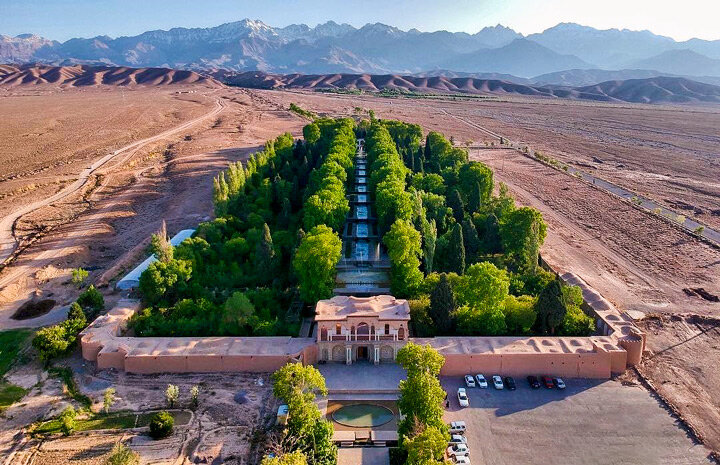
If Iranian architecture is regarded as the embodiment of wisdom in built form, the Persian Garden can be seen as the expression of Iranian thought in the relationship between humanity, nature and water.
Over more than two millennia, this tradition has influenced garden design far beyond Iran’s borders and remains one of the most remarkable achievements of Persian civilization. In 2011, the Persian Garden was inscribed on the UNESCO World Heritage List as Iran’s thirteenth World Heritage property, recognizing a cultural landscape that combines engineering, geometry, architecture, climatology and philosophy into a unified artistic and environmental system.
The roots of the Persian Garden reach back to the Achaemenid period. At Pasargadae, the palatial complex of Cyrus the Great introduced the mature form of the Chahar Bagh, or four-part garden, characterized by intersecting axes, geometric organization and controlled water flow. Many scholars regard Pasargadae as the earliest known example of the Persian Garden. The concept was later refined during the Sasanian, Safavid, Zand and Qajar periods, becoming one of the most enduring expressions of Iranian culture.
What distinguishes the Persian Garden from other garden traditions is the intellectual framework embedded in its design. Water is treated as the source of life and the organizing element of space. Precise geometry, architectural structures, carefully planted trees, shade, reflections and symmetry work together to create an environment that evokes the idea of paradise.
One of the most impressive aspects of the Persian Garden is its sophisticated water management system. Many of these gardens were established in arid and semi-arid regions, where creating a green landscape required exceptional technical knowledge. Through the use of qanats, natural gradients, stone channels, pools, fountains and carefully designed distribution networks, Iranian engineers transformed dry terrain into sustainable gardens. This achievement represents an important example of indigenous technology and long-term environmental management.
The property consists of nine historic gardens selected from different climatic regions of the country. Together they demonstrate how Iranian designers adapted to diverse natural environments, managed scarce water resources and created idealized landscapes that came to symbolize harmony between people and nature.
The nine gardens included in the UNESCO property are: Pasargadae Garden and Eram Garden in Fars province; Fin Garden and Chehel Sotoun Garden in Isfahan province; Shazdeh Garden in Kerman province; Dowlat Abad Garden and Pahlavanpour Garden in Yazd province; Akbarieh Garden in South Khorasan province; and Abbas Abad Garden in Mazandaran province. Although these gardens are located in dramatically different environments—from the Hyrcanian forests of northern Iran to the deserts of the central plateau, they share the same fundamental principles: geometric axes, water as the organizing feature, a central pavilion, enclosing walls, purposeful tree planting and a carefully balanced relationship between architecture and landscape.
Natural elements and manmade components merge in the Persian Garden to create a distinctive artistic achievement. The arrangement of flower beds, the circulation of water, the placement of trees and the integration of buildings are all designed to generate a specific microclimate and sensory experience. The gardens also maintain strong connections with Persian literature, poetry, music, calligraphy and carpet design. For centuries, Iranian artists have drawn inspiration from garden imagery, while garden designers have incorporated artistic and symbolic concepts into the landscape itself.
UNESCO has described the Persian Garden as an outstanding example of the exchange of cultural values and one of the most complete garden traditions in the history of human civilization. Its enduring influence can be traced across the Islamic world and beyond, where the concept of the quadripartite garden inspired numerous royal and urban landscapes. Yet the Persian Garden is not merely a historical model; it remains a living testimony to engineering knowledge, spatial planning, water management and the Iranian philosophical view of the relationship between humanity and the natural world.
Today, the Persian Gardens continue to play an important role in cultural tourism, heritage conservation, landscape architecture research and the international presentation of Iran’s traditional knowledge. Visitors walking through the cypress-lined avenues of Dowlat Abad, listening to the flowing water of Fin Garden or observing the terraced channels of Shazdeh Garden encounter more than beautiful scenery. They encounter a civilization that, through knowledge, engineering and artistic imagination, succeeded in giving physical form to the idea of an earthly paradise. In an age increasingly concerned with sustainability and the responsible use of natural resources, the Persian Garden offers not only a window into Iran’s past but also a timeless lesson in how human creativity can work in harmony with nature.
AM
Leave a Comment