DOE outlines measures to save, restore mangrove forests
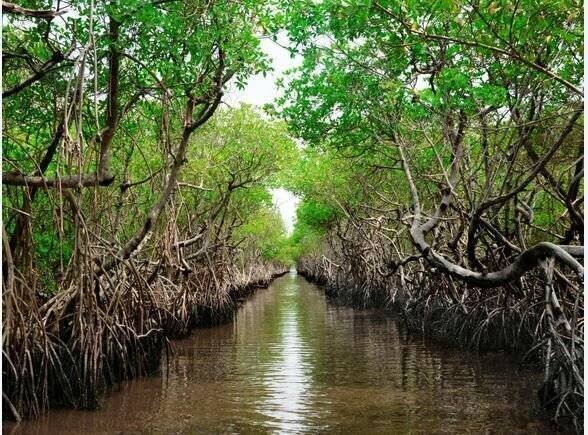
TEHRAN – Over the past years, the Department of Environment (DOE) has undertaken extensive measures to protect, monitor, restore, and develop mangrove forests.
These include the implementation of national projects to estimate carbon stocks, the restoration of mangrove forests in suitable areas, the continuous monitoring of mangrove ecosystems, and the active participation in international programs relating to climate change, ISNA reported.
The official made the remarks on the occasion of the International Day for the Conservation of the Mangrove Ecosystem, observed on July 26 annually, ISNA reported.
Highlighting the critical role of mangrove forests in preserving marine biodiversity, ensuring coastal stability, supporting local livelihoods, and combating climate change, Shahram Fadakar, an official with the DOE, said mangrove forests are among the world’s most important blue carbon ecosystems, storing 10 to 50 times more carbon than terrestrial forests. Hence, their protection, management, and restoration are key priorities of the DOE.
Elaborating on the DOE’s most significant achievements over the past year, Fadakar said a comprehensive study was conducted to assess the value of the ecosystem services of the mangrove habitats in Khorkhoran and Qeshm, covering an area of 197,996 hectares; the annual economic value of the services provided by these habitats was estimated at 185 billion rials (about 97,400 dollars).
According to the official, the DOE has conducted mangrove forest restoration and rehabilitation projects along the country’s southern coasts, so that approximately 30,000 mangrove saplings have been planted in Khor Soltani, Bushehr Province, covering an area of 20 hectares; some 3,250 saplings have been planted across an area of 500 hectares along the Bahmanshir coast in Khuzestan Province.
The restoration operations have been carried out over approximately 2,400 hectares in Hormozgan province and 100 hectares in Sistan-Baluchestan province, he added.
He also lauded the effective role of local communities and non-governmental organizations in successful restoration and preservation of mangrove forests.
Referring to the future plans of the DOE, Fadakar said a national action plan for the conservation and restoration of mangrove forests is currently being developed; as a strategic document, it will showcase the course for the country’s future activities in this sector.
To strengthen scientific and technical cooperation, the DOE has taken the required steps to sign a memorandum of understanding with the international Mangrove Centre, an initiative of the Ramsar Convention, set up in China.
Established by UNESCO in 2015, the International Day for the Conservation of the Mangrove Ecosystem raises awareness of mangroves’ importance and promotes their sustainable conservation.
Mangroves are unique ecosystems between land and sea. They support biodiversity, protect coastal communities, enhance food security, and act as natural defenses against storms and erosion. Their soils are also powerful carbon sinks.
Yet mangroves are disappearing three to five times faster than overall global forest losses, with serious ecological and socio-economic impacts. Current estimates indicate that mangrove coverage has been divided by two in the past 40 years.
Unfortunately, the first global assessment of mangroves by the International Union for Conservation of Nature (IUCN) has classified mangrove forests in the Persian Gulf as vulnerable (VU) overall.
The mangrove forests are classified as ‘vulnerable’ in Changes in Geographic Distribution, ‘least concern’ in Restricted Geographic distribution, ‘least concern’ in Abiotic components, and ‘least concern’ in Biotic components of ecosystems, ISNA reported.
The IUCN assessment results can be the basis for national and regional decision-making and intervention. The results indicate that planning, ongoing monitoring, and integrated management of these ecosystems should be prioritized. Otherwise, these ecosystems are likely to move into a more dangerous category.
Mangrove forests in Iran mostly consist of Avicennia marina, known as Hara, named after the 11th-century great Iranian scientist Avicenna, or Abu-Ali-Sina. Hara forest area covers more than 27 thousand hectares.
The forests spread from Nayband Bay in the southwestern Bushehr province to Govater Bay in the southeastern Sistan-Baluchestan province on the coast of the Sea of Oman.
MT/MG
Leave a Comment