South Korea's Post-Crisis Model Offers Lessons for Iran's Economic Resilience
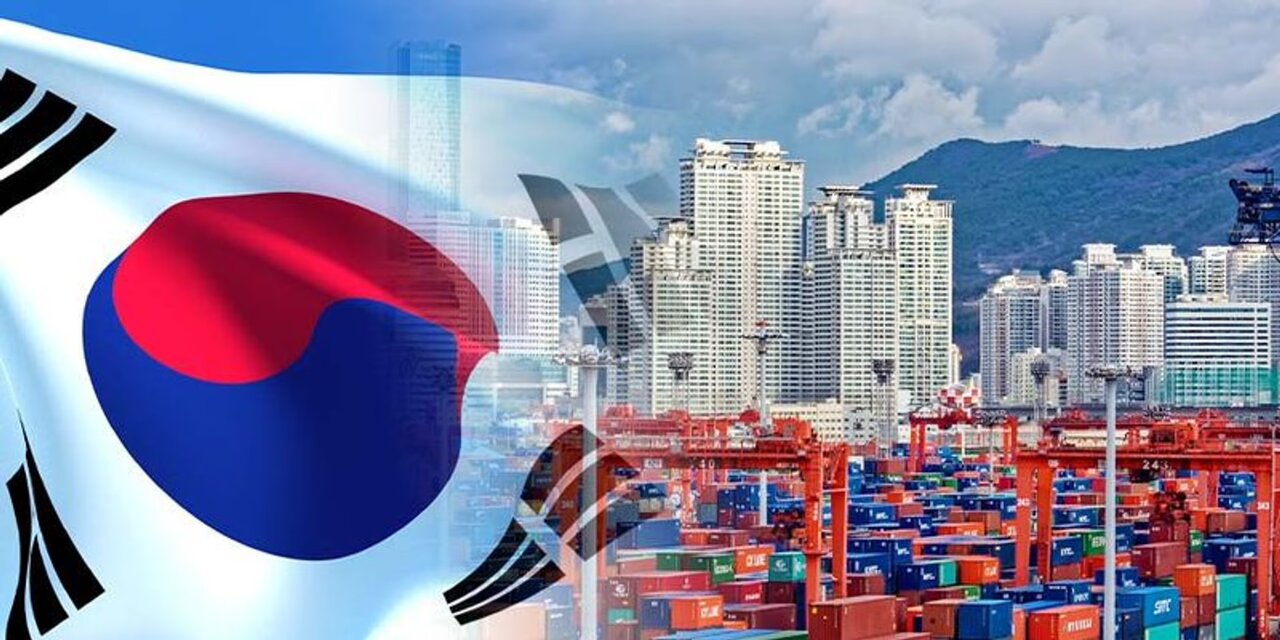
TEHRAN- Iran can learn valuable lessons from South Korea's strategic response to the West Asia crisis and apply them to its own economic development framework. South Korea's journey from crisis management to future economic architecture offers a compelling case study for nations navigating geopolitical uncertainties, supply chain vulnerabilities, and technological transitions.
As Iran seeks to strengthen its economic position amidst regional challenges, understanding South Korea's comprehensive approach to economic resilience, energy security, and technological advancement provides a blueprint for strategic adaptation.
The Strait of Hormuz Crisis and South Korea's Energy Vulnerability
South Korea, Asia's fourth-largest economy, produces virtually no oil domestically and imports over 93 percent of its total energy consumption—a ratio that has consistently remained above 90 percent since 1995. The country's dependence on Middle Eastern crude has actually increased in recent years, rising from approximately 61 percent in 2021 to 73.7 percent in 2024—a trend that accelerated significantly following the imposition of Western sanctions on Russian oil. South Korea's reliance on naphtha from the Middle East—a critical raw material for its petrochemical industry—is even higher than these already substantial figures.
The Strait of Hormuz alone serves as the transit route for approximately 25 percent of global seaborne oil trade and nearly 20 percent of global liquefied natural gas (LNG) trade. According to analysis by the U.S. Energy Information Administration (EIA), approximately 84 percent of the oil and 83 percent of the LNG passing through this vital chokepoint ultimately reaches Asian markets including China, India, Japan, and South Korea. For this reason, the recent West Asia crisis directly and severely impacted South Korea's energy markets, stock exchange, and the won-dollar exchange rate, once again exposing the structural vulnerability of this export-oriented economy.
In response to this crisis, the South Korean government proactively secured and stored a total of 273 million barrels of crude oil from West Asian producers and alternative supply routes (including Kazakhstan) before the end of the current calendar year. In the naphtha sector, the supply portfolio was rapidly diversified: the United States (24.7 percent), India (23.2 percent), Algeria (14.5 percent), the United Arab Emirates (10.2 percent), and Greece (4.5 percent) emerged as the leading new sources of South Korean naphtha imports.
From Economic Efficiency to Economic Resilience: A Paradigm Shift in Policymaking
The most significant transformation during this period has been the fundamental shift in South Korea's criteria for evaluating economic policy success. In previous decades, reducing production costs and increasing productivity served as the primary benchmarks of success. Today, the concept of "economic resilience"—ensuring the continuity of production, exports, and employment even under conditions of war, sanctions, pandemics, or global transportation disruptions—has taken center stage in policymaking, with economic security now defined as being on par with defense security.
This attitudinal shift is not merely rhetorical but has manifested in several practical decisions: the establishment of a new ministerial council for integrated management of the "three long-term crises" (inflation, exchange rates, and interest rates); the introduction of "domestic production tax credits" for strategic goods; and—as an unprecedented measure—the imposition of retail price ceilings on gasoline and diesel for the first time since the 1997 Asian financial crisis. This latter policy received cautious coverage in international media including the New York Times, as its financial burden ultimately falls on refining companies, and some analysts have evaluated it as a short-term and costly solution—a consideration that must be factored into any assessment of this policy package's sustainability.
This approach has also been institutionalized at the macroeconomic level. In the "Economic Strategy for the Second Half of 2026" (announced on July 5), the government established a "joint market monitoring meeting" to simultaneously track macroeconomics, financial-currency markets, and housing markets, along with a formal ministerial "macro-financial stability" board—comprising the Ministry of Economy and Finance, the Bank of Korea, the Financial Services Commission, and the Financial Supervisory Service—for integrated management of the "triple crisis of inflation, currency, and high interest rates." The aim was to control consumer inflation below 3 percent in the second half of the year through unprecedented discounts on agricultural and livestock products (July-August, with a 1 trillion-won budget injection), stabilization of electricity and gas rates, and increased winter energy subsidies for households. The Bank of Korea has maintained the base interest rate at 2.5 percent. The won exchange rate, which reached the 1,500 won per dollar range at the height of the crisis, has been assessed by market analysts as more of a "temporary crisis premium" driven by U.S. interest rates, capital outflows, and West Asia uncertainty rather than a new long-term equilibrium; it is projected to return to the 1,400 range within one to three years. In this context, the government has initiated the development of a roadmap for "internationalization of the won" and the creation of a strategic investment account at the Korea Investment Corporation (KIC)—the same account mentioned in the supply chain section—to transform it into a more comprehensive national wealth fund.
The Four-Stage Strategy for Supply Chain Resilience
In formulating the "Economic Strategy for the Second Half of 2026," the South Korean government introduced a formal four-stage framework for managing strategic goods that, unlike the previous uniform approach, assigns distinct policies to each product category based on its specific vulnerability profile:
Stage One - Domestic Production: Goods that can feasibly be produced domestically are to be made independent of imports through domestic production tax credits, production subsidies, and investment support.
Stage Two - Strategic Stockpile Expansion: Unlike the past when focus was exclusively on crude oil, naphtha and urea (fertilizer/automotive fuel) have now been added to the list of strategic stockpile goods. A new stockpiling model—in which the government directly stores and supplies contracted companies—has been implemented on a pilot basis since August 2026, and a dedicated strategic minerals stockpile base is currently under construction in the Saemangeum industrial zone.
Stage Three - Diversification and Foreign Investment: For goods that are neither feasible for domestic production nor cost-effective for stockpiling, the government, through national wealth funds (including the newly established strategic investment account at KIC), pursues investment in foreign mines, refining, and smelting operations, as well as securing priority supply rights.
Stage Four - Targeted Financial Support: Through the Supply Chain Stabilization Fund, the ceiling for low-interest loans for goods with over 80 percent dependence on a single country has been increased from the previous 90 percent to 100 percent (full amount).
In the critical minerals sector, the government has prioritized 10 of 33 nationally strategic minerals for first-tier management and has set a target of increasing the "re-resourcing" (recycling) rate for these minerals from the current approximately 2 percent to 20 percent by 2030.
Persian Gulf Energy Alliance: From Security Threat to Strategic Partnership
One of the most important developments following the Hormuz crisis—and one that has received less attention—is the deepening of South Korea's energy cooperation with Persian Gulf countries. Saudi Arabia has agreed to store a significant volume of its crude oil in South Korea's strategic storage facilities. This model had previously been implemented by the UAE's energy company ADNOC through a partnership with the Korea National Oil Corporation, granting Korea priority supply rights in the event of global disruption. Kuwait has also concluded a two-year agreement to store 4 million barrels of oil at South Korea's Ulsan port.
The result of this trend is that the three major Persian Gulf oil producers—Saudi Arabia, the UAE, and Kuwait—have all designated South Korea as a key strategic node for storage and supply guarantee in East Asia. This represents a clear indicator for Iranian economic actors: while regional competitors are finalizing long-term infrastructure and storage agreements with South Korea, similar capacity for redefining Iran-Korea energy and petrochemical relations—within the framework of existing regulations—remains worthy of study and pursuit.
Three National Mega-Projects: Over 2,000 Trillion Won in Investment
At the "National Report on Three Mega Leap Projects of Korea" meeting held on June 29, 2026, with the President and senior executives of Samsung and SK in attendance, the South Korean government unveiled the "3S+1F" strategy (Speed, Stronghold, Spearhead, and Full Support) for the semiconductor industry. According to this strategy, the country's memory production capacity will double within the next five years, with additional details provided in the following section.
The 3S+1F Strategy:
The 3S+1F strategy, introduced by the South Korean government in 2026 to strengthen the semiconductor industry, represents a response to intensifying competition with the United States, China, and Taiwan, as well as concerns about global supply chains. This strategy has four main pillars, each reinforcing a dimension of Korea's competitive advantage.
1. Speed:
The battle of speed involves accelerating the completion of existing production hubs, particularly Yongin and Pyeongtaek. The Korean government believes that in the semiconductor industry, time is more important than capital. Accordingly, it has focused its planning on four areas: reducing the time required for factory construction permits; accelerating the connection of electricity, ultrapure water, and gas; shortening environmental review processes; and swiftly approving research budgets. In other words, if building a fabrication plant previously took three years, the goal is to reduce that timeframe as much as possible.
2. Stronghold:
The stronghold concept involves expanding semiconductor clusters across the country (geographic and industrial dimensions). The idea is that Korea's semiconductor industry should no longer rely solely on the Seoul metropolitan area (Yongin, Pyeongtaek, Incheon), but rather create a national network of specialized hubs. The plan includes: in the Southwest—creating the second-largest chip production hub with approximately 800 trillion won in investment and four new fabrication plants; in Chungcheong—81 trillion won in investment to transform the region into an advanced packaging and HBM hub; in the Southeast and Daegyeong region—developing materials, parts, and equipment clusters and technologies such as power semiconductors.
3. Spearhead:
The technological leadership dimension focuses on ensuring Korea leads in future technologies such as next-generation memory, AI chips, Edge AI, defense semiconductors, and emerging technologies. The government has allocated over 30 trillion won for research and development and commercialization over a 15-year horizon. Areas include billion-dollar R&D investments, next-generation DRAM and NAND development, sub-2nm technologies, AI-focused HBM memory, and three-dimensional chip packaging. The goal of leading in next-generation technologies is to keep companies like Samsung and SK hynix several generations ahead of competitors.
4. Full Support:
The government sees its role not merely as a regulator but as a strategic partner to industry. This support includes increased tax incentives, low-interest loans, creation of investment funds, development of semiconductor towns, education and training of engineers, investment in electricity, water, and infrastructure, and support for small and medium-sized enterprises in the supply chain.
The Significance of the Strategy:
Several factors compelled the Korean government to formulate this policy: intense competition with China in production capacity; the implementation of the U.S. CHIPS Act and its attraction of global investment; Taiwan's dominance in advanced chip production; explosive growth in AI chip demand; and the importance of supply chain security in geopolitical competition. The overall goal of this strategy is to create an "irreparable technological gap"—the concept of "Super Gap" frequently used in South Korean political discourse. The strategy's result is not merely staying ahead of competitors but creating a distance that competitors cannot close in the short term.
It should be noted that, unlike the past when governments mostly supported industries through financial subsidies, the South Korean government under the 3S+1F framework is attempting to create a complete ecosystem in which execution speed, strategic focus, technological superiority, and government support operate simultaneously—all aimed at preserving its position as a global leader in the semiconductor industry in the age of artificial intelligence.
The announced investment purely in semiconductors over the next fifteen years approaches 1,500 trillion won. In the AI data center sector, a two-phase program with a total capacity of 18.4 gigawatts has been defined: Phase One, with government participation and SK, GS, and Naver companies, at 8.4 gigawatts capacity, and Phase Two, expanding government and SK capacity from 5 to 15 gigawatts. Including the third project—Physical AI, centered on Gumi City in North Gyeongsang Province and high-bandwidth memory (HBM) production in Cheonan and Onyang—the total value of these three mega-projects exceeds 2,000 trillion won (approximately $1.4 to $1.5 trillion).
Artificial Intelligence: The Main Infrastructure for Future Economic Competition
In this strategy, artificial intelligence is not merely a new technology but is regarded as the main infrastructure for South Korea's future economic growth. The Korean government has formulated a plan for commercializing intelligent robots by 2028, developing a domestic neural processing unit (NPU) ecosystem, and expanding physical AI applications in manufacturing, healthcare, agriculture, safety, and defense industries. To gauge the scale of this ambition, global estimates of investment in AI data centers through 2030 show approximately $5.5 trillion; South Korea, through this program, is attempting to capture a significant share of this emerging market.
AI Data Center (AIDC):
Phase One of this project aims to create 8.4 gigawatts of capacity by 2029: SK with 5 gigawatts (primarily Ulsan and central regions), GS with 2.4 gigawatts (Donghae in Gangwon Province—Asia's largest single data center, with 30 trillion won in direct investment and approximately 120 trillion won including graphics processors and memory), and Naver with 1 gigawatt (Sejong). The three companies collectively invest approximately 550 trillion won. Phase Two expands government and SK capacity from 5 to 15 gigawatts by 2035. The ultimate goal is to achieve 14.37 gigawatts of domestic capacity and capture approximately 25 percent of the projected Asia-Pacific region's total capacity (58 gigawatts by 2030)—a plan that Korean officials describe as Asia's equivalent of the U.S. "Stargate" project (OpenAI-SoftBank). The biggest challenge in implementing this plan is not capital, but securing electricity (equivalent to 4 to 5 nuclear power plants) and water (up to 1 million tons per day).
Physical AI:
The third mega-project is centered on Gumi City in North Gyeongsang Province. Samsung Electronics is investing 19 trillion won to build a "mother factory" for smartphone production, a production line for physical AI humanoid robots, and a dedicated in-house AI data center in Gumi. LG has allocated 9.4 trillion won for producing AI semiconductor platforms and next-generation models in the Yeongnam region. These investments have been accompanied by parallel projects from Samsung SDS (60-megawatt data center) and QuantumLeon Company (4.5 trillion won) in the same region. The government's goal is to transform Gumi—which was not selected in the competition for new semiconductor clusters—into a national hub for "Physical AI," a move that also forms part of the strategy for balanced regional development.
Economic Growth
At the macroeconomic level, the Ministry of Economy and Finance has revised its 2026 economic growth forecast from 2 percent to 3 percent (the highest in five years), attributing this to the semiconductor export boom and the relative easing of Middle East tensions after mid-July. South Korea's exports in 2026 are projected to grow by nearly 40 percent compared to the previous year, with monthly exports in June exceeding the $102.25 billion mark for the first time. The government has also set a target of elevating South Korea from its current position (the world's fifth-largest exporter) to one of the top four exporters globally, and increasing per capita national income from approximately $40,000 (2026 estimate) to $50,000.
Implications and Recommendations for Iranian Economic Actors
· South Korea's diversification of naphtha supply (with growing shares from the United States, India, Algeria, and the UAE) indicates that Korea's petrochemical raw material import market is being restructured; understanding this trend is important for Iranian petrochemical exporters, within the framework of existing regulations.
· The deepening of Korea's energy cooperation with Saudi Arabia, the UAE, and Kuwait through strategic storage and supply priority rights has created a clear competitive model; continuous monitoring of this trend appears essential for Iran's strategic positioning in future relations with South Korea.
· Korea's expanding investment in semiconductors, AI, and data centers increases opportunities for scientific and technological cooperation (particularly in non-sanctioned areas such as industrial robotics and automation).
· Korea's economic resilience policies—especially the four-stage framework for strategic goods management—could serve as a model for comparative study in Iran's trade policy and strategic stockpiling.
Conclusion: A Country That Transforms Crisis into Opportunity
South Korea's new economic strategy following the West Asia war demonstrates that this country does not intend merely to manage the consequences of crisis, but rather to rebuild and strengthen its future economy from within these very conditions. The redesign of supply chains based on a defined four-stage framework, the deepening of energy partnerships with Gulf producers, and the allocation of over 2,000 trillion won to three technological mega-projects all form part of a unified vision: South Korea wants to prepare its economy for a world where technology, supply chain security, and flexibility will be the three pillars of economic power.
South Korea's experience carries a clear message for regional economies, including Iran: countries that only think about managing today's conditions will remain more vulnerable to future crises; but countries that, while managing crises, also plan for the future can create great economic opportunities from those very crises.
*****
The Iran-South Korea Joint Chamber of Commerce, in its first strategic report issued in May of this year under the title "Iran's Position in South Korea's Energy Dependence and the Necessity of Revisiting These Relations Following the Developments in the Strait of Hormuz," examined the effects of the Iran-U.S. war on South Korea's economy.
On the other hand, South Korea has repeatedly demonstrated over the past six decades that even in the most difficult domestic and international crises, instead of adopting short-term and contractionary policies, it uses crisis as an opportunity to reform its economic structure, advance technology, and enhance competitiveness. The recent Middle East war and the Strait of Hormuz crisis have been the latest—and perhaps the most serious—test of this model in the contemporary period.
The Iran-South Korea Joint Chamber of Commerce, within the framework of its mission, continuously monitors, translates, and analyzes the economic policies and strategies of the South Korean government and private sector, so that Iranian economic actors can become familiar with the latest trends in this economy and opportunities for cooperation.
The present note, which is the fourth document published by the Iran-South Korea Joint Chamber of Commerce for the benefit of experts, researchers, and policymakers, reviews the set of economic policies announced by the South Korean government from June to July 2026 in response to the West Asia war and beyond, based on official documents from the Ministry of Economy and Finance, the Ministry of Trade, Industry and Energy, the Republic of Korea government portal, and reports from Reuters, Yonhap, and specialized economic media in that country, and verifies them with updated statistics.
Leave a Comment