Post-Maduro Venezuela: Washington’s lab for Latin America
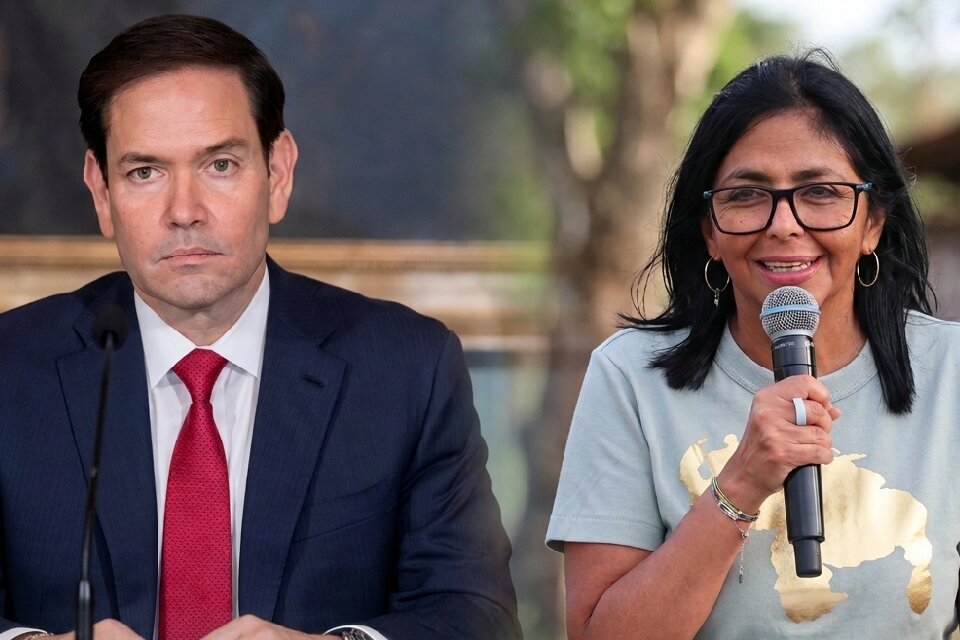
TEHRAN – The ongoing transformations in Venezuela have placed the country in a state suspended between structural collapse and managed transition; a situation that neither indicates the complete downfall of the previous structure nor points to the establishment of a national and independent sovereignty.
The departure of Nicolás Maduro did not lead to the immediate transfer of power to the opposition, but instead placed Delcy Rodríguez at the center of the new configuration. At the same time as multinational oil companies return and political prisoners are selectively released, multilayered negotiations over the reengineering of institutions are underway. What is being observed on the Caracas scene is less an endogenous transformation than an externally directed project to consolidate an order under U.S. supervision, in which the center of gravity for fundamental decision-making has shifted away from the Venezuelan capital.
This situation is the product of a prolonged and attritional process of escalating U.S. pressure instruments; a chain that began with the financial and structural sanctions of 2015 and 2017, intensified with the 2019 oil blockade, and reached its peak with the military deployment of the U.S. naval fleet in the Caribbean beginning in August 2025; a strategic deployment that directly provided the operational groundwork for the military aggression and abduction of Maduro on January 3, 2026. Thus, the fundamental question in assessing Venezuela’s future is whether the current arrangements will lead to the restoration of national sovereignty and geopolitical independence, or merely reproduce the pattern of foreign intervention in the form of a new legal and political mechanism, namely structured trusteeship.
Washington’s recognition of Delcy Rodríguez in March 2026 as the sole incumbent head of government was based on her role in preserving the state apparatus and demonstrated that the U.S. priority was not a radical and high-risk transfer of power to figures such as María Corina Machado. By preserving parts of the previous executive structure, the White House advanced a model of controlled transition designed to act as a buffer and minimize security costs. Nevertheless, Rodríguez’s repeated concessions to Washington have not only failed to limit the scope of intervention, but, according to the strategic logic of hegemonic powers, have also paved the way for deeper influence and the imposition of increasingly expansive foreign demands.
The components of this trusteeship have been clearly institutionalized in the country’s economic and security structures. The issuance of Executive Order 14373 marks a turning point in the stripping of Venezuela’s national sovereignty; a legal document that placed the country’s oil revenues under the custody of the U.S. State Department and the management of the U.S. Treasury. At the same time, the direct steering of political processes by figures such as Marco Rubio, and the announcement of the Caracas government’s diplomatic programs through the words of U.S. officials, indicate an overt relocation of the locus of sovereignty. Washington is pursuing its strategy through a three-stage roadmap consisting of “stabilization,” “economic recovery,” and “structural transition”; a process that on paper moves toward institution-building without a direct foreign presence, but in practice keeps vital levers of the political economy tied to the wills of the White House.
In the sphere of domestic politics, Washington defined its main channel of engagement around more moderate opposition figures such as Dinorah Figuera and marginalized the opposition’s more hardline factions so that the electoral reform process could proceed within a manageable framework. Nevertheless, limited and controlled measures such as general amnesty and the release of prisoners have not resolved the roots of the structural dispute and the mutual denial of legitimacy between Chavism and its opponents. Alongside these developments, Israel’s entry under the guise of relief and humanitarian missions following the recent earthquakes is part of the process of readjusting Venezuela’s geopolitical position in the Western Hemisphere; an instrument for gradually normalizing security influence and moving Venezuela from the axis of confrontation into the orbit of convergence with the Western security structure.
The outlook for Venezuela is neither the total collapse of its structures nor the attainment of deep stability grounded in national sovereignty; rather, the most likely prospect is the establishment of a prolonged period of fragile and conditional stability. Within this framework, political and economic reforms will proceed under the direct supervision of transnational mechanisms, elections will be held in a managed environment, and energy revenues will circulate under conditional licenses. This situation may contain the acute livelihood crisis, but as long as the core of strategic decision-making remains subject to foreign directives, the resulting stability will be another name for an institutionalized trusteeship in the geopolitics of the Caribbean and South America.
In short, in post-Maduro Venezuela, the formal structure of government has been preserved, but a significant portion of the instruments for exercising sovereignty has been removed from the control of the national government; a situation that can be called “government without the instruments of sovereignty.” Conditional control over oil revenues, intervention in institutional restructuring, and influence over the course of future elections show that the issue is not merely a change in political elites, but the restriction of the state’s capacity to make independent decisions in strategic domains. On a broader scale, this model could be a sign of a form of de-sovereignization in South America: preserving ostensibly independent states while transferring the real levers of power beyond national borders. Venezuela, in this regard, is the most serious testing ground for this model.
Leave a Comment