Qal-e Kord Cave may shed new light on evolution of stone-tool technology
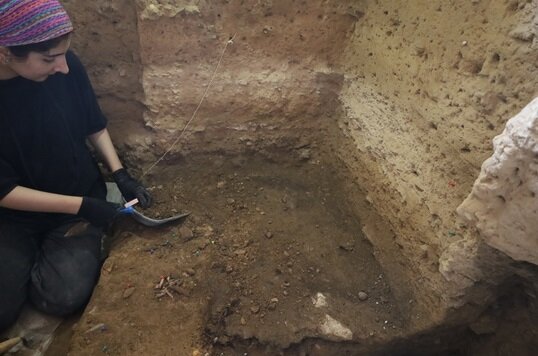
TEHRAN -The seventh season of archaeological excavations at Qal-e Kord Cave could provide new evidence for reconstructing the evolution of stone-tool technology and the history of early human occupation on the Iranian Plateau, the project’s director said.
Milad Hashemi Sarvandi, a faculty member of the Archaeology Department at Tarbiat Modares University, said the finds from different layers of the cave point to distinct technological sequences and raise the possibility that its deeper layers represent a local technological tradition dating to the late Lower Paleolithic and early Middle Paleolithic, Miras Aria reported.
“The data currently suggest that the lower layers of the cave may represent a local technological tradition in the late Lower Paleolithic and early Middle Paleolithic,” Hashemi Sarvandi said, stressing that the interpretation remains a research hypothesis requiring further excavation and analysis.
According to Hashemi Sarvandi, the stone-tool sequence at the cave can provisionally be divided into three technological sections.
The upper layers contain stone-tool assemblages that bear greater similarities to Mousterian traditions known from the Zagros Mountains, which are widely associated with Neanderthal populations. These assemblages also show greater standardization than those found in the deeper layers.
The middle section contains a higher proportion of coarser raw materials, while some tools and points are larger and show less standardization. Technologically, these assemblages appear to occupy an intermediate position between the Mousterian traditions of the upper layers and the simpler technology found below.
The deeper layers, previously identified in areas including square Q18 and Trench Three, display a different technological pattern, with production relying more heavily on simple and irregular cores and less standardized artifacts.
The archaeological team hopes that continued excavation, particularly the deepening of Trench Two, will reach these older deposits again, allowing researchers to compare them with previously recovered assemblages.
Such comparisons could clarify the development of stone-tool technology at Qal-e Kord and determine whether the earlier technological tradition eventually developed toward more standardized technologies based on the Levallois method, Hashemi said.
He emphasized that further work is needed to test the hypothesis through detailed analysis of production sequences, raw materials, artifact morphology and spatial distribution.
The significance of Qal-e Kord, he added, extends beyond its antiquity. The cave could contribute to a better understanding of early human presence, environmental adaptation, tool-making technology and behavioral change on the Iranian Plateau.
Systematic excavation and integrated analysis of the cave’s archaeological deposits could also help address gaps in knowledge about this important period of Iran’s human prehistory and place Qal-e Kord within the broader framework of Paleolithic research in Iran and West Asia.
AM
Leave a Comment