Blood waters famous lemon trees in Sudan’s Bara
Bara was known for its lemon trees. Scores were planted in this North Kordofan market town, and as winter turned to spring the streets were thick with the scent of their blossom.
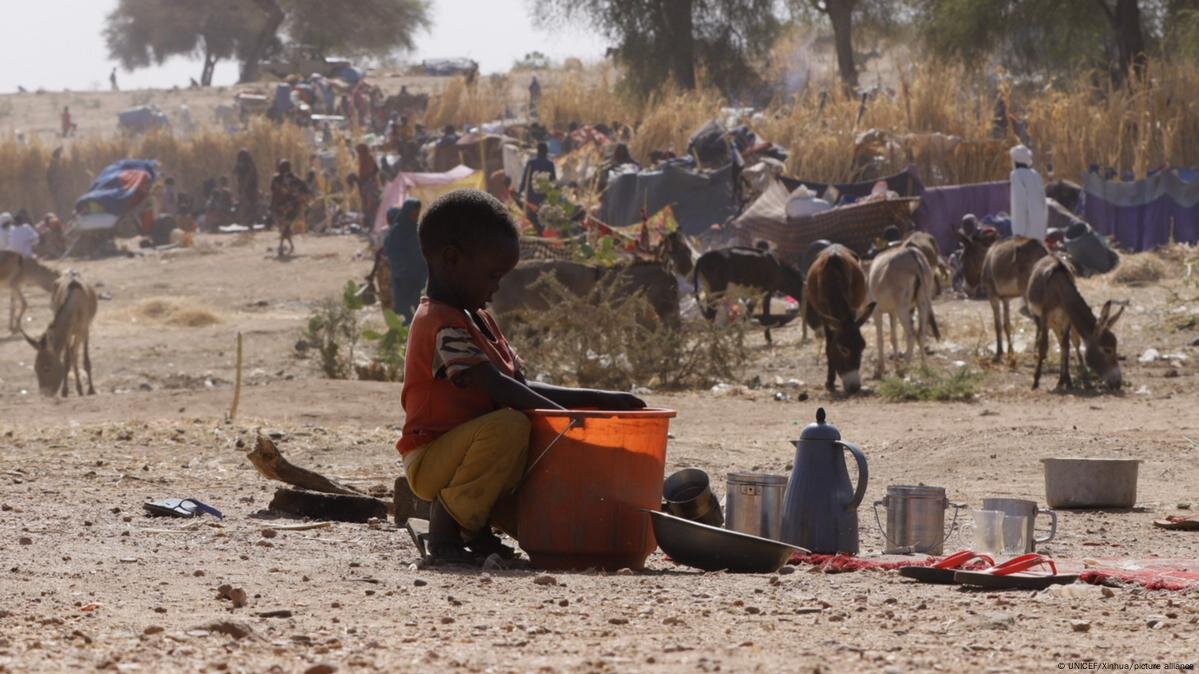
Today, after sieges, battles, and massacres of civilians, Bara is destitute. Its trees have been showered with blood instead of rain.
Before the Sudanese war broke out in April 2023, around 100,000 people lived in Bara.
Some of them can still be seen around the town, but they lie lifeless on the roads, refused burial by the Rapid Support Forces (RSF) paramilitaries who gunned them down.
Middle East Eye has spoken to several sources who visited Bara in recent days, people who gained rare access after the Sudanese Armed Forces (SAF) and its allies managed to decisively retake the town from the RSF in July.
They described how corpses lay everywhere. The luckiest of Bara’s dead were sitting in shallow graves or entombed in the relative privacy of their homes.
Rotting flesh has replaced lemon blossom as Bara’s signature scent. If left unaddressed, an engineer working in the town warns, these bodies could poison its entire water supply.
“Bara’s water sources come from underground water and wells that have a depth of no more than 20 to 30 metres, and it’s very probable that the decomposed bodies may have mixed with these sources,” the engineer told MEE.
“If this happens, we may face a big threat to the people’s lives and even the livestock.”
'Everything had been destroyed'
Control of Bara, which lies on the strategic route that links Khartoum to resource-rich Kordofan, has seesawed in recent months.
After subjecting it to several raids, the RSF captured the city in October 2025, using it as a base to pummel SAF stronghold el-Obeid, 60km away, with drone strikes.
The RSF, a UAE-backed paramilitary force accused of genocide by the United States and several rights groups, has committed atrocities across Sudan.
In Darfur, its ethnically charged massacres left tens of thousands dead in the cities of el-Geneina and el-Fasher.
Osman Abdulatif, a member of Bara’s popular resistance committee backing the SAF against the RSF, believes similar scenes took place in his town, too.
“The clashes and RSF atrocities that have taken place in Bara haven’t been reported like in other areas, but we believe that the RSF has killed hundreds of people inside Bara and the villages around it,” he told MEE in el-Obeid.
“We visited the city few days after SAF gained control of it and we found that everything had been destroyed. There were bodies in the streets and houses, and the entire population had left and been displaced to el-Obeid and other areas.”
Abdulatif said the authorities need to begin removing the bodies as soon as possible, “as well as the huge number of unexploded war materials and ordinance that threat the life of the civilians”.
“We found only two old people still living in Bara - a man and a woman - and luckily they managed to survive despite the RSF preventing them from eating for a long time,” he said.
Although access to Bara was impossible, Middle East Eye was able to visit several of the surrounding areas, which also bore scars of destruction and displacement.
Sources working in local organisations and humanitarian volunteers told MEE that hundreds of bodies need to be retrieved in nearby Gabrat al-Shiekh and Um Syala, too. Local authorities and NGOs are expected to begin that work soon.
“Now we are helping the local volunteers to begin this process, but they definitely need technical and humanitarian support from morgues, the civil defence, NGOs and other governmental and non-governmental bodies to collectively do this job,” said one source, who asked for anonymity as he is not authorised to speak to the media.
A volunteer from Um Syala, which lies adjacent to Bara, told MEE that there are at least 200 bodies still stranded in the area.
The RSF and SAF fought ferociously for control of places such as Um Syala and Gabrat al-Sheikh.
Not only do they surround Bara; whoever controls these areas also controls the Export Road, a logistical artery that brings Kordofan’s gold, gum Arabic, silica and agricultural produce to the capital and beyond.
The SAF has now managed to secure the road, and with it a supply line to el-Obeid, which has long been under siege by the RSF.
Counterattack
Godat Abdul Hadi, a senior member of the armed popular resistance in North Kordofan, believes the SAF advance has shifted the war’s balance of power in the army’s favour.
“This advance has given the SAF a more secure position and protection of el-Obied, opening the shortest route between Kordofan and the capital Khartoum. It basically means that el-Obied and Omdurman have become safer,” he said.
Mohammed Abbas, a trader in el-Obeid’s market, said life had become a lot easier since the siege was lifted and the Export Road secured.
“We have seen the market opening and the supplies flowing to el-Obied after a long time. All these have happened after the liberation of Bara and the other areas,” he told MEE.
According to military sources, drone attacks on el-Obeid and even Omdurman, Khartoum’s sister city across the Nile, have declined markedly.
“The heavy drone attacks have been decreased after the SAF seized Bara and other areas in Kordofan because these are the areas these air offensive operations are launching from,” Abdul Hadi said.
In June, the situation in el-Obeid looked bleak. Incessant RSF attacks and the threat of invasion stoked fears that the North Kordofan state capital would face the same fate as el-Fasher, where at least 60,000 people were estimated killed in October 2025.
The UK, France and other European countries, as well as senior figures at the UN, urged the RSF to cease its attacks on el-Obeid, fearing another bloodbath.
Abdulatif, of the North Kordofan popular resistance, told MEE these pleas for the RSF to not commit violations against civilians rang hollow.
“If they were being honest, they should have forced the RSF to lift the siege, rather than just telling them not to commit atrocities,” he said.
“The international community lost its credibility regarding what happened in el-Obeid and Kordofan. When they urge the RSF not to commit crimes, they are actually encouraging them indirectly to continue the siege and increasing the humanitarian suffering of the people,” he added.
“But thank god we already succeeded in lifting the siege at this stage ourselves, especially after liberation of Bara and other areas.”
The RSF has not abandoned its hopes of controlling North Kordofan, however.
In recent weeks, it has countered the SAF advance with intensive drone strikes on Gabrat al-Sheikh and beyond, including Omdurman, al-Damar and even Atbara in River Nile State north of Khartoum.
The SAF insists that all counterattacks around Bara and el-Obeid have been repulsed, and says its forces are now moving through West Kordofan towards the RSF stronghold of Darfur.
However, a source intimately familiar with the situation in North Kordofan said RSF fighters remain in the Sodari and al-Mazroob areas, which are about 100km from Bara.
“The recent SAF victories can be set back soon if they don't advance to secure other areas in North and West Kordofan,” the source, who asked for anonymity for security reasons, told MEE.
Leave a Comment