The domestic cost of Jordan’s alliance with Washington
TEHRAN — Amid the US-Israeli war against Iran and the widening attacks on American interests in Jordan, more than 200 Jordanian political, cultural, academic, tribal and retired military figures issued an open letter to the government in late July 2026. They called for the withdrawal of foreign forces from Jordanian territory, the cancellation or review of the security and military agreement with the United States, and the submission of that agreement to parliament.
The signatories also called for Jordan’s airports, ports, military bases and other strategic infrastructure to be shielded from any military or logistical use connected to the regional war, and urged the country to adopt a policy of genuine neutrality. The letter argued that the presence of foreign forces exposed Jordan to security, political and economic risks and increased the likelihood of the country being dragged into a war in which it does not consider itself a party.
The letter needs to be understood in the context of a changing reality surrounding the US military presence in Jordan. For years, the American presence had been one of the main pillars of the two countries’ security cooperation and largely remained a behind-the-scenes issue. The war, however, suddenly turned it into something much more tangible for parts of Jordanian society.
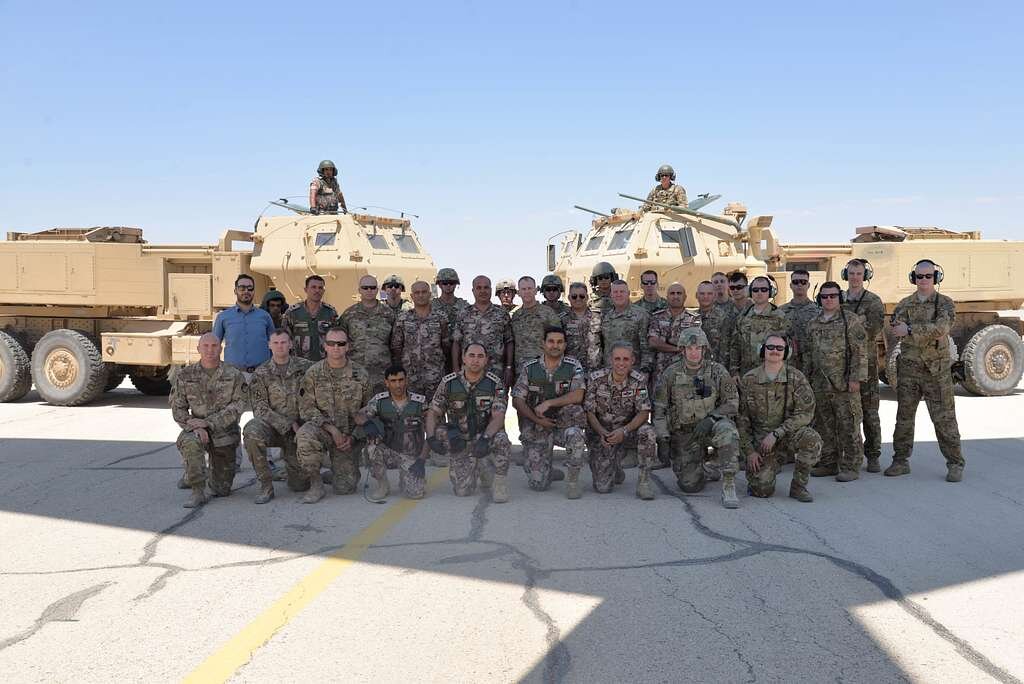
Jordan hosts around 4,000 US troops, and the two countries operate under a broad framework of defense and military cooperation. During the war, Iranian missiles and drones targeting Israeli or American positions crossed Jordanian airspace, while some strikes hit facilities used by the US military inside the country. Attacks on American forces stationed in Jordan, including the deaths of US service members, reinforced concerns that hosting American troops was effectively turning Jordan into a secondary battlefield in the war.
For the signatories, however, the issue was not simply about the military risks. They also linked the American presence to Jordan’s foreign policy, particularly its close relationship with Israel. Support for Palestine has deep roots in Jordanian society, and the war in Gaza, along with Washington’s support for Israel, has deepened anti-American sentiment among parts of the population. As a result, Iran’s attacks on US military targets presented a complicated picture. On the one hand, the attacks posed a direct security threat to Jordan. On the other, they reinforced the argument made by critics of the US presence that the alliance with Washington was imposing direct security costs on the country. This connection between the war, the Palestinian issue, the American military presence and national sovereignty turned the letter into something broader than a simple protest against foreign troops.
The composition of the signatories also gave the letter political significance. The initiative was not limited to a single party or political current. It included figures associated with the left, Pan-Arabism, Islamism, nationalism, the cultural sphere and tribal communities. Among those who signed were figures such as former minister Amjad Hazza al-Majali, former Islamic Action Front secretary-general Salem al-Falahat, writer Muwaffaq Mahadin, political activist Sufyan al-Tell, retired military officers including Ali al-Habashneh, and former Jordanian Communist Party secretary-general Saud Qbeilat. This diversity made it difficult to dismiss the letter simply as the initiative of one particular political faction. At the same time, it would be misleading to claim that the letter represented Jordanian public opinion as a whole. There is no reliable public polling on such a sensitive issue, and the political environment in Jordan makes widespread public opposition difficult to express openly.
The Jordanian government’s response was largely at odds with the demands of the signatories. Officials stressed that Jordan was not a party to the war and would not allow its territory to be used to launch attacks against other countries. Foreign Minister Ayman Safadi also emphasized that the American personnel in Jordan were there as part of long-standing defense cooperation. From Amman’s perspective, therefore, military cooperation with Washington did not mean that Jordan had entered the war, but rather that the US presence was part of the country’s broader security and defense arrangements.
Inside Jordan, however, reactions showed that this explanation did not convince everyone. Debate in parliament over the deaths of American soldiers on Jordanian soil became particularly heated. When MP Ali al-Khalayleh suggested that parliament should offer condolences to the United States over the deaths of its soldiers, he was met with strong objections from other lawmakers. One accused the US military of killing women and children. The episode was significant because it showed that opposition to US policy was not confined to activists outside the political establishment; it could also surface within Jordan’s formal political institutions.
Statements by some Jordanian officials about the nature of the American military presence also fueled controversy. Al-Khalayleh argued that US forces were not stationed in independent American bases and made particularly controversial remarks about some of the American personnel killed in the desert, suggesting they had been there with shepherds. These comments came as US Central Command was reporting the deaths of American service members in an Iranian missile and drone attack. The apparent gap between the Jordanian account and information released by the US military added to public scrutiny over the actual nature and extent of the American military presence in Jordan.
The American reaction was also significant. Following the deaths of US personnel in Jordan, Donald Trump criticized the way American forces had been protected and suggested that the incident might not have happened if US forces had been more directly responsible for the defense mission. From the perspective of Jordanian critics, the remarks could reinforce the argument that Washington itself did not consider Jordan an entirely secure environment for American troops. The Jordanian government, by contrast, could point to the attacks as evidence of why defense cooperation with the United States and stronger air-defense capabilities were necessary rather than as an argument for expelling American forces.
Iran’s response was different and arguably more political. Tehran sought to distinguish between the Jordanian people and the Jordanian government. In a message addressed to the Jordanian public, Iran emphasized that it was not hostile toward Jordan or its people and framed its dispute as being with the American military presence in the region. Iranian attacks on US-linked targets in Jordan continued in the following days. The Islamic Revolution Guard Corps also said information about the locations of American forces in Jordan had been provided by Jordanian civilians and military personnel and expressed gratitude for cooperation from the Jordanian people.
The media reaction was equally important. Despite the significance of the letter and the large number of prominent figures who signed it, major Jordanian media outlets did not publish the full text. Critics of the government saw this as evidence of the restrictions on political and media space in Jordan. Some Jordanian analysts argued that the limited space for dissent meant that the level of opposition visible in the media was likely lower than the level of dissatisfaction that exists in society. At the same time, the lack of mainstream media coverage made it harder for the letter to develop into a broader national debate. Much of its circulation therefore took place through social media and media outlets outside Jordan.
The fact that such a diverse group of political and social figures came together suggests that the domestic cost of the US alliance is rising as the war continues. The angry reactions from some lawmakers, the absence of the letter from Jordanian mainstream media, Iran’s efforts to address the Jordanian public directly, the government’s defense of its military agreement with Washington, and Trump’s criticism of the protection of US forces all show that the American military presence is no longer simply a diplomatic matter between Amman and Washington. It has become an increasingly sensitive domestic political issue.
The deeper significance of the letter is that it has exposed a growing gap between the government’s strategic calculations and the views of parts of Jordanian society. The government sees the American presence as a component of national security, while its critics argue that the same presence has made Jordan a target and dragged the country into a war in which its citizens have little say.
Leave a Comment