The letter that tore the mask off US occupation of Jordan
TEHRAN — Hundreds of Jordanian public figures have finally said what the kingdom’s rulers desperately hoped would remain unspoken. They publicly named the price of foreign military entanglement.
Their late July open letter demanding the withdrawal of all foreign forces from Jordan is a fierce indictment of a political order that traded sovereignty for dependency.
The force of this declaration stems from the breadth of the coalition behind it. Signatories include former ministers such as Amjad Hazza al-Majali, 90-year-old activist Sufyan al-Tell, lawyers, academics, tribal chiefs, and retired military officers.
Leftists, Islamists, and establishment insiders all stand together. That alignment is rare. It proves frustration over foreign troop deployments is a national consensus the regime can no longer contain.
The architecture of occupation
The letter is blunt where Amman has long been evasive. It explicitly demands the evacuation of all foreign troops and the cancellation of the 2021 defense agreement with Washington.
That pact was enforced by royal decree. It bypassed the National Assembly entirely, stripping the Jordanian people of their constitutional right to oversight.
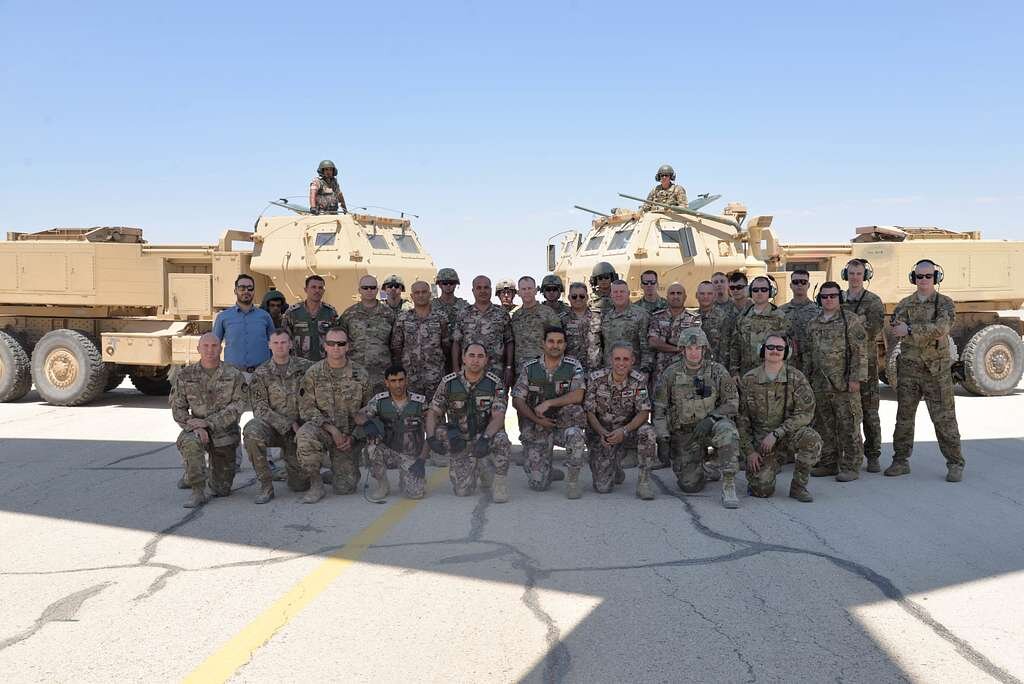
The agreement granted roughly 4,000 American troops free entry, the right to carry weapons, and unchecked movement across facilities like Muwaffaq Salti Air Base and King Faisal Air Base.
Foreign Minister Ayman Safadi routinely insists there are no American bases in the kingdom. But a state that allows a foreign power to stock, stage, and launch military operations from its territory has outsourced its strategic independence. It is an occupation hidden behind legal semantics.
The signatories demand the neutralization of all national infrastructure. They refuse to let Jordanian airports and military bases serve as logistical nodes in the aggressive U.S.-Israeli war against Iran and the broader region.
Magnets for retaliation
Events on the ground have obliterated the regime’s core argument that American forces provide security. Instead of acting as protective shields, these garrisons operate as giant target magnets.
Iran’s ongoing strategy that some have branded as “debasification” has proven that static Pentagon outposts are lethal liabilities.
In response to American aggression, the Islamic Revolution Guards Corps has launched intense, precision retaliatory strikes against U.S. infrastructure in Jordan. Iranian ballistic missiles and one-way attack drones have easily penetrated Western air defenses.
The strikes hit hard. Satellite imagery and ground assessments confirmed devastating damage at Muwaffaq Salti in Azraq.
Hangars have been obliterated, and aircraft have been destroyed. Multiple American soldiers have died, and dozens more were evacuated to military hospitals in Germany.
Debris from intercepted projectiles rained down on Jordanian residential zones. The Jordanian regime told its people these bases brought safety. The wailing air raid sirens and falling shrapnel proved otherwise.
By hosting these forces, the monarchy places ordinary Jordanians in the crossfire of a war directed from Washington and Tel Aviv. Every American outpost on Arab soil invites return fire.
Complicity and the economic collapse
The political gap between the palace and the public has never been wider. The Jordanian street remains intensely sympathetic to Palestine and hostile to Israel. Yet Abdullah II keeps his peace framework intact. Worse, he actively subordinates the military to Western priorities.
Jordanian forces routinely intercept regional projectiles aimed at Israel. They act as a forward shield for Israel while Gaza is subject to Israel’s genocidal war.
From a nationalist perspective, this betrays the Arab Army’s historic legacy at Karameh and the walls of Jerusalem. The military is being used to protect the same Israeli regime currently executing a campaign of genocide and displacement.
The economic cost of this treachery is staggering. The monarchy claims its alignment is necessary to secure 1.65 billion dollars in annual American aid. But participating in a regional war has shattered the domestic economy.
Tourism accounts for a massive portion of the national revenue. Visitor numbers in Petra and Aqaba plummeted the moment the kingdom became an active battlefield. Unemployment is soaring.
Working-class Jordanians are paying the financial price for the Hashemite regime’s foreign policy adventures.
A fractured kingdom
Terrified by the public mood, the state enacted a complete media blackout on the open letter. Local outlets refused to publish the text. Activists face prison under draconian cybercrime laws.
But the anger is spilling over. During a late July parliamentary session, a pro-government lawmaker suggested offering condolences for American soldiers killed on Jordanian soil. His colleagues shouted him down, publicly branding the American military as killers of children and the elderly.
The Hashemite regime faces a stark choice. It can continue down its current path, deepening its subservience to Washington and Tel Aviv while silencing its own people. Or it can heed the demands of its most prominent citizens, expel the occupying forces, and restore national sovereignty.
The letter proves the current balancing act is finished. Subservience is no longer a viable strategy for survival.
Leave a Comment