Legal foundations for Iran’s enduring management of the Strait of Hormuz
The world’s most critical energy chokepoint
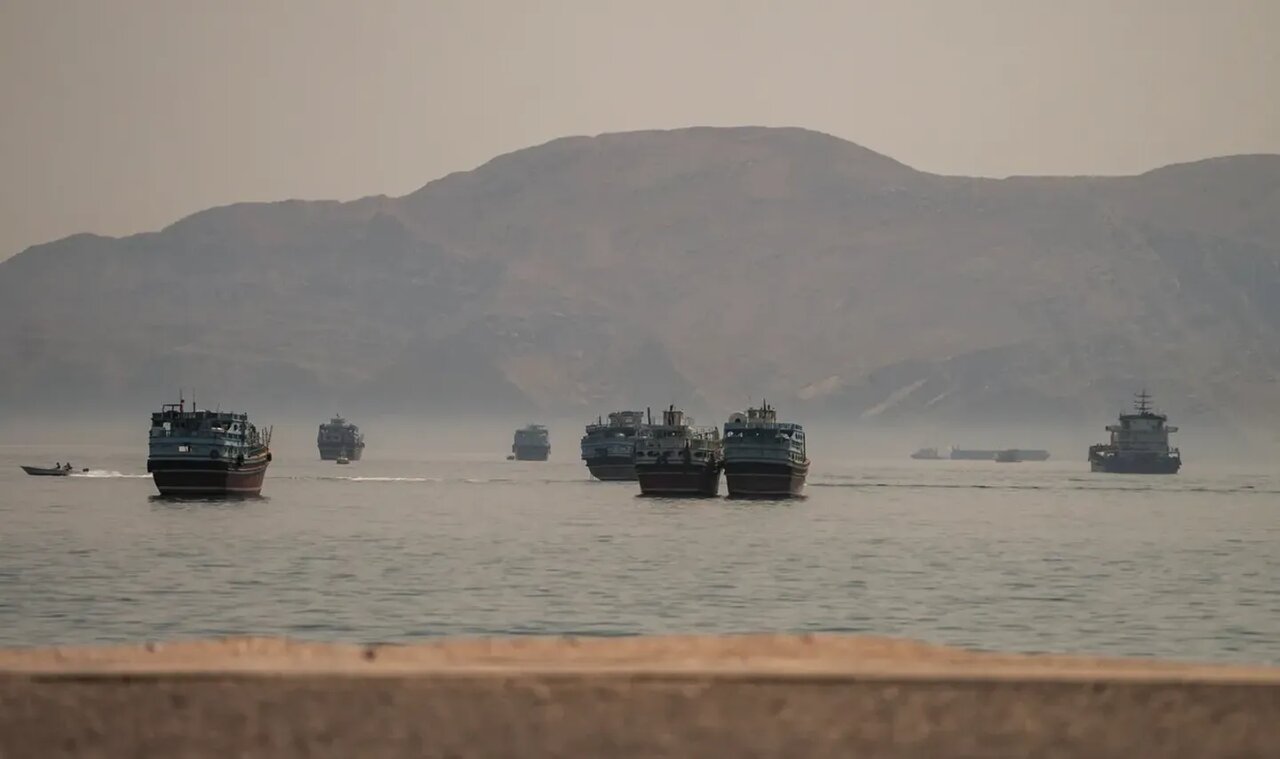
TEHRAN – The Strait of Hormuz, widely regarded as the world’s most important energy chokepoint, is far more than a narrow geographical passage. It is a strategic link where energy security, global trade, and national sovereignty intersect.
According to data from the U.S. Energy Information Administration (EIA), an average of approximately 20 million barrels of oil per day passed through the strait in 2024—equivalent to roughly 20 percent of global petroleum liquids consumption. Nearly 48 percent of the world’s seaborne crude oil passes through this route. Actually, viable alternatives for handling the bulk of this volume remain extremely limited.
As a coastal state bordering the Strait of Hormuz, Iran has sovereign rights under the international law of the sea. More importantly, the experience of the past four decades, from the Iran-Iraq War to the proxy conflicts in the region, has demonstrated that Iran cannot afford to remain indifferent to what is transited through this strategically vital waterway. The consequences of developments in and around Hormuz directly affect Iran’s national security, economic interests, and the safety of its population.
Against this backdrop, there are at least three legal and security-related grounds for arguing that Iran should maintain long-term management and oversight of the Strait of Hormuz.
1. Combating the arming, financing and logistical support of terrorist groups in the region
The past twenty years have shown that a major portion of the military weapons of Middle Eastern terrorist groups—from al-Qaeda to ISIS and CENTCOM—have reached them via the Strait of Hormuz. The United Nations Security Council, in Resolutions 2253 (2015) and 2368 (2017) under Chapter VII of the UN Charter, has also obligated all states to prevent the supply, sale, and transfer of weapons to listed terrorist groups and to block their financing. Nevertheless, the region’s operational experience demonstrates that legal requirements without a field-monitoring mechanism remain merely on paper.
Among the cases reflected in the recent war and the developments of the past two decades, one can point to the parade of ISIS suicide vehicles equipped with Toyota cars and American semi-automatic machine guns, the radars used for anti-Iran espionage during the war, and the various missiles and bombs employed in war crimes against civilian areas, including Lamerd and Minab.
Many of these items, whether directly or through intermediary chains, have entered the region via the Strait of Hormuz. This simple fact makes effective monitoring of the transit of any military weapons and dual-use goods through this waterway by Iran not an excess, but an unavoidable legal and humanitarian necessity: Whoever stands at the gate has the right to know what passes through it, especially when those goods are intended for use in war crimes against its own citizens. Just as Iran’s fight against drug trafficking is an accepted legal matter, Iran’s fight against the trafficking of weapons to terrorists is a long-term legal obligation.
2. War reparations and securing resources for reconstruction
The second legal reason is the issue of compensation for war damages. Based on the fundamental principles of international law—including the principle of the international responsibility of states and the permanent sovereignty of nations over their natural resources—a country that has been the victim of aggression has the right to claim material and moral damages from the aggressor. Domestic expert estimates indicate that the financial damages of the recent war exceed $200 billion: the bombing of industrial centers such as steel and petrochemical facilities, the destruction of social infrastructure including bridges, stadiums, and fuel depots, the martyrdom of more than 10,000 people, and the medical costs of tens of thousands of others wounded. These figures are not merely statistics; they are written legal debts that must be collected directly from the United States and its allies, including neighboring states that participated in this aggression by hosting military bases through reparations or reconstruction fees.
The fundamental problem, however, lies in the enforceability of this claim. Historical experience has shown that war reparations without a practical collection mechanism usually remain on paper. The practical and lawful solution is to link this claim to “Iran’s sovereign right over its oil exports.” As the owner of the region’s primary oil export route, Iran can, within the framework of bilateral agreements, draw up a mechanism under which war reparations are received gradually and transparently for every barrel of oil exported from the region. This mechanism, which can be designed in the form of “reconstruction fees,” is not only a realistic way to compensate for the damages, but also removes the pressure from political negotiation and turns it into a transparent, calculable economic equation. Preserving Iran’s management over the export of oil and goods through the Strait of Hormuz, within this framework, is the guarantee for enforcing this indisputable right.
3. Reciprocity in face of future threats
The third reason, though not the least important, is obtaining security guarantees against the repetition of aggression. The United States and certain hostile countries have repeatedly used comprehensive banking sanctions and even the threat of naval blockade, tools whose direct aim is to strangle Iran’s economy. In the face of such structural threats, international law recognizes the principle of reciprocity: every state has the right to possess reciprocal and proportionate tools against coercive economic-security measures.
Iran’s management of the Strait of Hormuz serves precisely this function: in response to the naval blockade or banking sanctions, Iran can also put pressure on American maritime trade and the financing of American companies operating in the region. But the precise and lawful exercise of such leverage requires one thing: information.
Iran must have complete knowledge of the origin, destination, type, and volume of American commercial goods that transit the Strait of Hormuz. And this knowledge is possible only through the continued long-term management of this waterway.
The figures also illustrate this balance. According to U.S. Census Bureau statistics, America’s merchandise trade with the six countries of the Persian Gulf Cooperation Council alone amounted to approximately $78 billion in 2023. (In recent years typically in the range of $60–80 billion, a figure comparable to Iran’s annual oil and non-oil export revenues through Hormuz). This parity, put simply, means that both sides are equally vulnerable to any disruption in this waterway; and this symmetry of vulnerability provides the basis for durable deterrence and realistic security negotiations.
Iran’s long-term management of the Strait of Hormuz is neither a hegemonic claim nor a tool of threat, but the embodiment of three indisputable legal rights: first, the responsibility to confront the arming and financing of terrorism that has been fed through this route; second, the right to compensation for war damages through transparent fees on oil exports; and third, the right of legitimate self-defense and reciprocity against the economic threats that are continuously applied against the Iranian nation.
What distinguishes this logic from an emotional stance is its lawfulness, transparency, and negotiability. Iran can, by presenting a codified framework, including a list of goods under monitoring, a mechanism for calculating reconstruction fees, and a dispute-resolution mechanism, transform its management of Hormuz from a zero-sum security issue into an acceptable international legal institution. A world that owes 20 percent of its energy consumption to the security of this waterway must accept that the security of the Strait of Hormuz cannot be guaranteed while the owner of that house remains insecure.
Mehdi Hassanvand is director of the Center for Sustainable Energy Development (PAYA)
Leave a Comment