Viet Nam, 81 years of independence: from renovation process to stepping confidently into a new era
81 years – a proud chapter in our national history
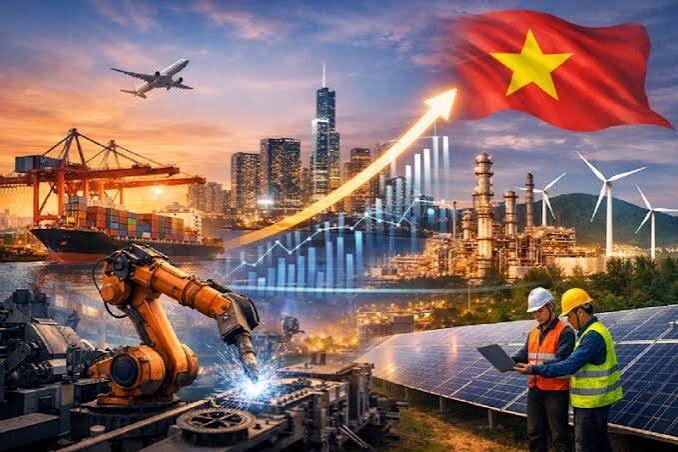
TEHRAN- On 2 September 1945, President Ho Chi Minh, the revered leader of the Vietnamese people, proclaimed to the world the birth of an independent and free Viet Nam. This historic day has since become the National Day of the Socialist Republic of Viet Nam. From that historic milestone, independence and self-reliance have remained guiding principles throughout the cause of national defense and development. Eighty-one years may not be a long period in the history of a nation, but they represent a proud journey for Viet Nam – from a country that had just regained its independence, through years of extremely difficult war, to an economy with a GDP of more than US$ 500 billion.
With an indomitable spirit and extraordinary determination, we fought to defend our national independence and achieved lasting peace and national reunification in 1975. In just four decades of the Renovation process (1986–2026), rising from the ashes of war, with an exhausted economy and under a policy of encirclement and embargo, Viet Nam, drawing on its national intellect and aspiration for renewal and prosperity, together with the support of international friends, has emerged as a dynamic country deeply integrated into the global economy.
In 2025, Viet Nam’s GDP grew by 8.02%, bringing the size of the economy to US$ 514 billion. GDP per capita exceeded US$ 5,000, while the poverty rate, according to the United Nations standard, fell to just 1.3%. Also last year, total import and export turnover reached US$ 910 billion, while Viet Nam attracted nearly US$ 38.5 billion in foreign investment. Viet Nam welcomed over 21 million international visitors, the highest number ever recorded. Viet Nam has trade relations with 230 countries and territories, and diplomatic relations with 195 countries, including 30 countries with which it has established strategic or comprehensive strategic partnerships.
Throughout the process of national development, Viet Nam has remained steadfast in pursuing the goals of national independence and socialism, while consistently pursuing the Renovation policy, continuously renewing its thinking and approaches to development and maintaining political stability. It has always placed the people at the centre, ensuring that economic development goes hand in hand with social equity and that no one is left behind.
As a country that has experienced many wars, Viet Nam cherishes every moment of peace and makes every effort to preserve it through diplomacy and dialogue. Viet Nam pursues an open foreign policy and seeks to be a friend to all countries, regardless of their political systems, while proactively and actively engaging with the international community. Throughout its development, it has consistently regarded national independence and sovereignty, the right of peoples to self-determination, and the preservation of national identity as principles that cannot be compromised.
Today, the world is undergoing rapid and unpredictable changes, creating new opportunities for development while also presenting considerable uncertainties and challenges for all countries. The achievements of more than four decades of Renovation have given Viet Nam the foundation and confidence to enter a new era of development, with a clearer understanding of the strengths that need to be harnessed and the limitations that need to be overcome, so as to propel the country into a new era of national advancement.
Viet Nam enters a new era of development
The 14th National Congress of the Communist Party of Viet Nam, held in January 2026, set the goal of making Viet Nam a developing country with modern industry and upper-middle income status by 2030, with annual GDP growth of 10% or higher.
To achieve these objectives, Viet Nam is pursuing three strategic breakthroughs. First, it is focusing on accelerating institutional reform, streamlining administrative procedures, strengthening decentralisation and continuing to streamline the state apparatus. Second, it is promoting a new growth model based on science and technology, innovation, digital transformation and a green economy. Third, it is improving the quality of human resources, accelerating investment in strategic infrastructure, while identifying tourism as a key economic sector.
Viet Nam will continue to deepen its external relations, promote international integration and diversify partnerships and engagement across different regions of the world, thereby expanding its development space and enhancing the autonomy of the economy. The Middle East is an important region, with a strategic geopolitical position, abundant energy resources and dynamic development. Recent tensions in the region have affected regional security, energy markets and international transport routes. Viet Nam hopes that the Middle East will achieve peace and long-term stability at an early date through negotiations and dialogue, on the basis of respect for national sovereignty and the principles of international law and the Charter of the United Nations.
53 years of maintaining the bridge of friendship between Viet Nam and Iran
Viet Nam and Iran established diplomatic relations on 4 August 1973, just a few months after the signing of the Paris Peace Accords. From the very beginning, the two sides based their relations on enduring principles: respect for independence and sovereignty, non-interference in each other’s internal affairs, and the assurance of each other’s legitimate interests.
Although geographically distant from one another, Viet Nam and Iran are both countries with long histories that attach great importance to independence, sovereignty and national identity, while seeking to expand their economic relations with the world. Both countries hold important geopolitical positions. Viet Nam is an active member of ASEAN, with an extensive network of economic linkages across the Asia-Pacific. Iran lies at the heart of the Middle East, at the crossroads of major global flows of energy and trade.
Over the past 53 years, Viet Nam has consistently attached importance to developing friendly, mutually beneficial cooperation with Iran, regarding Iran as one of its important partners in the Middle East.
The two countries have maintained political trust and cooperation in the economic and cultural spheres, while strengthening exchanges of delegations and people-to-people ties. A particularly significant milestone came in 2023, when the two countries marked the 50th anniversary of diplomatic relations through a series of commemorative activities and high-level exchanges. The two countries have also maintained effective cooperation at multilateral forums.
In April 2026, in his congratulatory message to General Secretary of the Communist Party of Viet Nam to Lam on his election as President of Viet Nam, Iranian President Masoud Pezeshkian noted that the bilateral relationship held great potential and should continue to be deepened and broadened in line with the interests of both countries. In July 2026, when receiving Iranian Ambassador to Viet Nam Akbar Ghasemi Ali Abadi, who presented his credentials, General Secretary and President to Lam proposed four areas for further promoting Viet Nam - Iran relations: strengthening political trust; prioritizing economic cooperation; creating breakthroughs in science and technology; and expanding cooperation in culture, education and training, and tourism. These orientations provide an important basis for the relevant agencies of the two countries to implement multifaceted cooperation programs in the years ahead.
Trade has always been a priority area of cooperation. The economic structures of Viet Nam and Iran are highly complementary. Viet Nam has strong export sectors, including products that rank among the world’s top exporters such as rice, coffee, pepper, cashew nutsand garments, as well as other competitive products including seafood, processed food, consumer goods, electronics and industrial products. Iran has considerable strengths in a number of sectors, including industry, construction, pharmaceuticals, materials, minerals, fruit and meat products.
Despite the above-mentioned difficulties, bilateral trade turnover has continued to grow year on year: US$133 million in 2022, US$ 164 million in 2024 and US$170 million in 2025. This demonstrates that there remains considerable room for cooperation between the two countries, not only in trade, but also in other fields of cooperation.
In the new era of development, Viet Nam - Iran relations should be carried forward not merely through the memories of more than half a century of friendship, but through new connections in the fields of the economy, science and technology, education, culture and people-to-people exchanges. In the period ahead, as the regional situation improves, we believe that relations between the two countries will be further strengthened across a wide range of areas, in a manner commensurate with their considerable potential.
On the occasion of the 81st anniversary of the National Day of the Socialist Republic of Viet Nnam, we would like to express our sincere appreciation to the State, Government and people of Iran for their sincere and effective support for Viet Nam’s national development over the years.
May the friendship between our two countries continue to flourish, for the cooperation and prosperity of our two peoples, and contribute to peace, stability and development in the region and around the world.
Leave a Comment