Pezeshkian fires back at Trump's fantasies; Iran fights on until the enemy kneels in regret
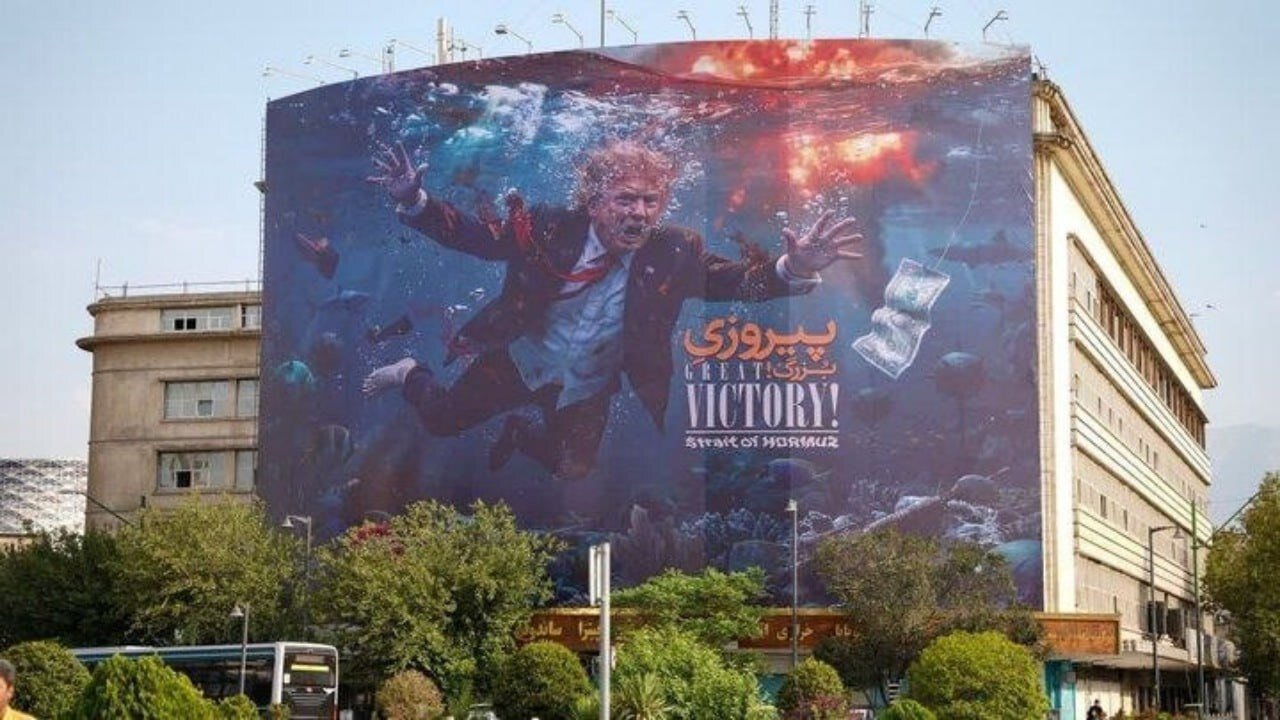
TEHRAN — President Masoud Pezeshkian has delivered a stern warning to the US, vowing that Iran will maintain its steadfast resistance until foreign aggressors feel "complete regret" for their military miscalculations.
In a statement posted on X, Pezeshkian explicitly dismissed US President Donald Trump’s recent social media claims of an impending American victory and plummeting oil prices, emphasizing that while the Islamic Republic has always opposed war and prioritized regional stability, it will not back down in the face of foreign aggression.
"Just as it has bravely stood up in defense against aggression until today, it will continue this resistance with strength until the complete regret of the aggressors," the Iranian president stated, affirming his administration's unwavering commitment to protecting the rights and sovereignty of the Iranian nation.
Pezeshkian’s remarks came as a direct rebuttal to a post by Trump on his Truth Social platform, where the US president attempted to project confidence amid a nearly seven-month war on Iran that has yielded no military victory for Washington. "Oil prices will drop precipitously, like everything else is dropping (but more!), when we WIN the war with Iran," Trump wrote, promising Americans that gasoline would fall to three dollars a gallon, and "ultimately, below two dollars a gallon." He added that this drop would happen quickly and declared that "Iran will never have a Nuclear Weapon. MAGA!"
To reinforce his narrative, Trump has also reposted an article from The Wall Street Journal which claimed last month that Iran’s top politicians—specifically referring to Pezeshkian and Parliament Speaker Mohammad Baqer Qalibaf—were advocating for an end to the war to shore up a crippled economy, allegedly pushing back publicly against the so-called hardliners taking a more defiant approach in the conflict.
However, this media framing distorts the unified Iranian stance. While Qalibaf and Pezeshkian have called for an end to unnecessary conflict, they have repeatedly stressed that Iran will make no compromise on its national sovereignty and will deliver a crushing response to any acts of aggression.
Trump’s reposting of the WSJ article reveals a broader psychological operations tactic. Having suffered a clear strategic defeat after launching an unprovoked war on Iran on February 28, and seeing his subsequent campaign of economic warfare fail to force Tehran's capitulation, the US administration is now actively seeking to sow internal division within Iran. By renewing the artificial narrative of a clash between the so-called hardliners and moderates, Trump is utilizing a PR stunt to cover up his failed military strategy, construct a fabricated sense of victory ahead of upcoming US congressional elections, and manufacture a political off-ramp from a war Washington can no longer win.
Failure of US military and economic strategy
The reality on the ground drastically contradicts Washington's optimistic projections. Since launching its military campaign and initiating "Operation Economic Outcast"—a sweeping initiative aimed at severing Iran's financial ties with the outside world and imposing a naval blockade on Iranian ports—the United States has failed to force Iran into submission. Instead, Tehran has successfully leveraged asymmetric warfare to inflict heavy damage on US forces, drain critical American munitions stockpiles, and maintain an unbroken political and military front.
Far from lowering energy costs, US aggression has triggered an unprecedented global energy crisis. In response to the US-Israeli aggression, Iran effectively restricted transit through the Strait of Hormuz, the world's most critical energy chokepoint through which roughly 20% of global petroleum consumption historically passes. Tehran's maritime chokehold has sent global crude prices soaring and sparked a severe "diesel shock" within the United States, where the spread between diesel and crude prices recently surpassed $95 per barrel due to strangled West Asian exports and declining global refinery capacities.
The new maritime paradigm
Heightening the maritime standoff, Iran’s Supreme National Security Council (SNSC) recently announced plans to declare a comprehensive new "restricted zone" extending beyond the Strait of Hormuz into the Persian Gulf, further asserting Tehran’s operational control over critical shipping corridors.
In a televised interview, Major General Mohsen Rezaei, Secretary of the SNSC, detailed the strategic parameters of the security measure. He stated that the boundary will begin directly from the US Navy’s blockade line and extend into parts of the Persian Gulf, directly enveloping access points leading toward major regional oil loading terminals. Under the incoming policy, any commercial or military vessel attempting to transit the designated sector without explicit prior authorization and tactical coordination with Iranian maritime authorities will be added to an official Iranian sanctions list. Furthermore, Rezaei emphasized that unauthorized entry into this zone will carry immediate punitive financial consequences, jeopardizing international maritime insurance policies and permanently barring non-compliant vessels from future passage through the strategic waterway.
Rezaei forcefully rejected President Trump’s claims that the vital energy corridor remains accessible to global trade, dismissing Washington’s account as a "big lie" and confirming that the Strait of Hormuz is completely closed and under the exclusive control of the armed forces.
Expanding on military developments, Rezaei revealed that Iranian forces executed a direct tactical operation against US naval assets by deploying and testing a newly developed, advanced anti-ship missile system in immediate proximity to an active American naval vessel. “For the first time, we tested our anti-ship missile above an American warship. This special missile created hell for the Americans, and they fled.”
The impact of the test was so severe that US Central Command (CENTCOM) could not conceal the psychological disruption to its forces.
Rezaei also said in his latest X post: “In recent days, Washington has received a clear warning from Iran’s new missiles. Economic warfare will be met by a maritime exclusion zone across the Persian Gulf to the blockade perimeter. The operational posture toward US warships and bases has been fundamentally recalibrated.”
This tactical demonstration underscores a fundamental shift in the regional power balance. By directly confronting US naval assets in the Persian Gulf, Iran has demonstrated that Washington’s strategy of maximum pressure and military deterrence is failing to achieve its intended objectives. Far from forcing Tehran into submission, the continuous escalation has exposed the structural vulnerabilities of the US military footprint in West Asia and highlighted the economic fragility of global energy markets.
As Washington struggles to maintain its narrative of dominance, the realities on the ground tell a vastly different story. The combination of effective asymmetric defense, strict maritime control over the Strait of Hormuz, and political resilience has effectively neutralized the White House's military and economic leverage. Rather than fracturing national unity, foreign aggression has solidified Iran's resolve to enforce its sovereignty over its territorial waters. With crude prices soaring and military projections collapsing, the current trajectory indicates that Washington's campaign has devolved into a costly strategic miscalculation—one that leaves the United States with diminishing options in a conflict it can neither manage nor win.
Leave a Comment