Expanding authority, strengthening private sector can pave way for increased investment in free zone
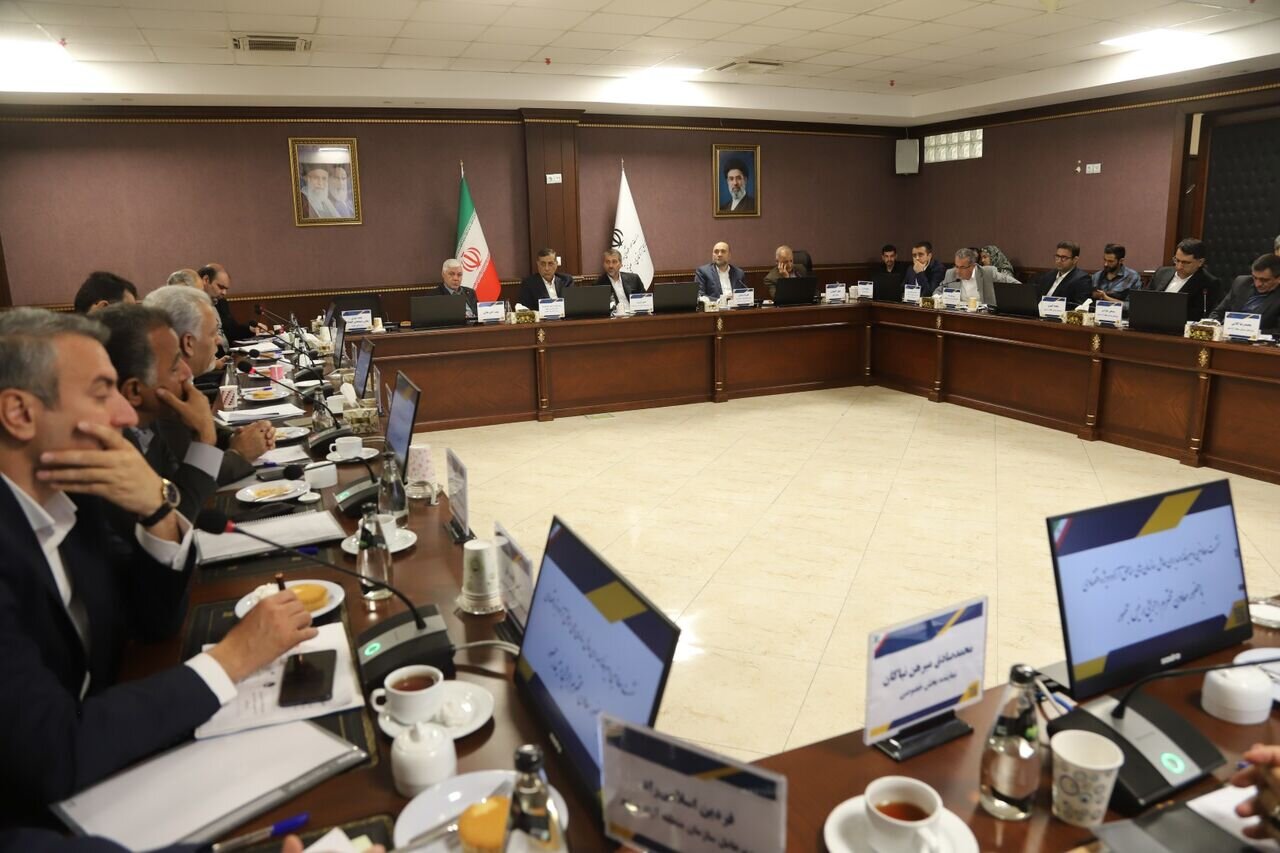
TEHRAN- The Secretary of the Supreme Council of Free and Special Economic Zones, emphasizing the capacity of free and special economic zones to strengthen the country’s economy, said: Increasing the authority of free zones and making broader use of the capacity and experience of the private sector can provide the basis for attracting investment, developing economic activities, and making more effective use of these zones’ capacities.
According to IRNA, citing the Secretariat of the Supreme Council of Free and Special Economic Zones, Hossein Forouzan said at a meeting of the deputies of the Secretariat and the CEOs of organizations of free and special economic zones, attended by Mohammad Jafar Ghaempanah, Executive Deputy of the President: The enemies expected Iran, like some other countries, to surrender to pressures, but the bravery, planning, and measures taken prevented this goal.
Forouzan added: Today, economic war is the issue, and in these conditions we must place greater trust in free zones. We ask the government to give free zones enough time and authority, and in return for these authorities, it should be confident that the managers of free zones will strive to achieve the set goals and will not disappoint the government.
He continued: We will work with all our strength and lovingly for the development of free zones and the country’s economy, and we believe that if more authority is given to free zones, existing capacities can be used to pass through difficult economic conditions.
The Secretary of the Supreme Council of Free and Special Economic Zones proposed that, if possible, the private sector’s share in the decision-making structure related to free zones be increased.
Forouzan said: I propose that, if such a possibility exists, in the five-member decision-making composition, at least two members be from the private sector, because private-sector actors can greatly help attract investment and solve economic problems.
He added: Instead of government managers seeking to attract investors, the capacity of private-sector actors should be used. The private sector has the experience, connections, and motivation needed to attract investment and can play a more effective role in this regard.
The Secretary of the Supreme Council of Free and Special Economic Zones, emphasizing the capacity of special economic zones, stated: Special economic zones are an important opportunity for the country, and this capacity must be used in the current economic conditions.
Forouzan, criticizing some restrictions created in the path of activity of special economic zones, said: Unfortunately, every day we face new issues in various areas, including land and banking issues, which make the activity process of these zones difficult.
He continued: The Central Bank, in some cases, instead of helping special economic zones use their capacities, has created restrictions, and even at times the cutting of resources of special economic zones has been raised.
The Secretary of the Supreme Council of Free and Special Economic Zones at the end called for the government to provide more opportunity for the activity of free and special economic zones and said: At least give us this opportunity that for a specified period we can use the capacities of free zones, so that it becomes clear to what extent these zones can play a role in the country’s economy.
Forouzan at the end emphasized: Our expectation is that the government trusts free zones and, in return for the authorities it gives them, evaluates their performance. We assure that we will use this trust for the development of the country and will try not to disappoint the government and the blood of the martyrs.
In continuation of this meeting, Morteza Safdarizadeh, CEO of Birjand and Sarv Urmia Special Economic Zone? referring to activities carried out in the Birjand and Sarv Urmia special economic zones, stated: Private-sector activity in these zones has provided employment for about 7,500 people in various industries, and this shows that there are considerable capacities for investment and employment in special economic zones.
Safdarizadeh, appreciating the government and the country’s officials for measures taken in the recent difficult conditions, added: At this time, when the country faced foreign pressures and special conditions, the government and officials tried to bring the country out of this bottleneck, and we hope that after passing through this passage, the position of Islamic Iran in the international arena will be strengthened more than before.
He further, referring to the issue of the incomplete implementation of Article 119 of the Development Plan Law, said: In this law, emphasis has been placed on elevating the position of the Secretariat of the Supreme Council of Free and Special Economic Zones, but the necessary mechanism for realizing this issue has not been fully implemented.
The CEO of the Birjand and Sarv Urmia Special Economic Zone continued: The position of the Secretariat of the Supreme Council of Free Zones has undergone changes at different times; in the past, the Secretary of the Supreme Council of Free Zones was at the position of deputy and advisor to the President, but later this body was defined under the Ministry of Economic Affairs and Finance.
Safdarizadeh, emphasizing the need for an expert review of the position of the Secretariat of the Supreme Council of Free and Special Economic Zones, stated: It must be examined to what extent these changes have been in the interest and expediency of the country. If a decision is to be made about the position of the Secretariat, its effects and consequences must be precisely examined.
Referring to the capacity of the country’s free and special economic zones, he stated: Free and special economic zones can be the best passage and path for solving part of the problems the country faces today, and the capacities of these zones must be used for the development of trade, investment, and relations with neighboring countries.
The CEO of the Birjand and Sarv Urmia Special Economic Zone, referring to the performance of the South Khorasan Special Economic Zone at the Iran-Afghanistan border, said: According to statistics, more than 55 percent of goods exported through Iran to Afghanistan or transited from the country toward Afghanistan pass through this route.
Safdarizadeh added: In this zone, we tried to create the needed infrastructure and facilities and, by governing the private sector’s view and management, direct the attention of Iranian and Afghan traders to this border.
Comparing this border with older borders of the country, he said: Compared with borders such as Dogharoun, which have several decades of activity, this border in a shorter time has been able to find its place and become one of the important routes of trade with Afghanistan.
The CEO of the Birjand and Sarv Urmia Special Economic Zone noted: Given the boom created at this border, the government also entered to complete road infrastructure and took necessary measures in this regard. On this path, the Afghan side also cooperated appropriately, and Afghan authorities were on board for the development of trade and border interactions.
Safdarizadeh, emphasizing the necessity of entrusting economic affairs to the private sector, said: Our view is that if we prepare a suitable ground, the private sector can carry out many affairs with more speed and productivity. Experience has shown that wherever the private sector has entered, in addition to creating benefit for itself, it has brought more benefits for the country.
He added: This model can be implemented in various sectors of the country’s economy. Today Iran has export relations with about 40 countries, and this shows the country is full of economic and trade opportunities.
EF/MA
Leave a Comment